Energy Encyclopedia

Curious minds welcome

Physics mysteries

Real questions from readers, answered in plain language by physicists. From household energy bills to black holes — explore what you have always wanted to know.

Want to ask something?

Send us an e-mail with the subject "Physics mysteries" to the address below, or use the contact form.

info@energyencyclopedia.com/

We can't wait to tackle your interesting questions!

Physics Mysteries

150 questions answered by our physicists

Page 1 of 8

Jaroslav Kores, Ph.D.

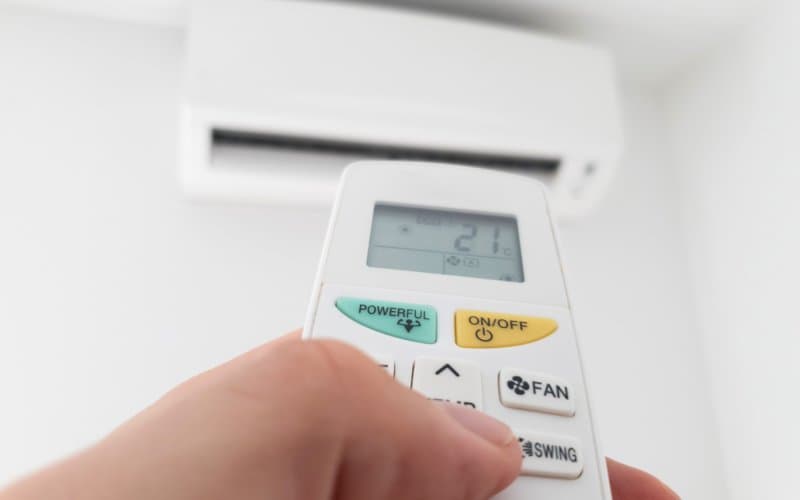
What consumes the most energy in a household?

The highest energy consumption in a household comes from appliances that produce heat and/or cooling. So it typically involves heating, air conditioning, stoves, cookers, microwaves, or kettles. Based on how much the dev…

Read the answer

Jaroslav Kores, Ph.D.

Is hydrogen the energy fuel of the future?

Generally, it's hard to say. The development of technology is influenced by more aspects than just a physical perspective. In any case, hydrogen appears to be a suitable fuel for two reasons — it has the highest calorifi…

Read the answer

Jaroslav Kores, Ph.D.

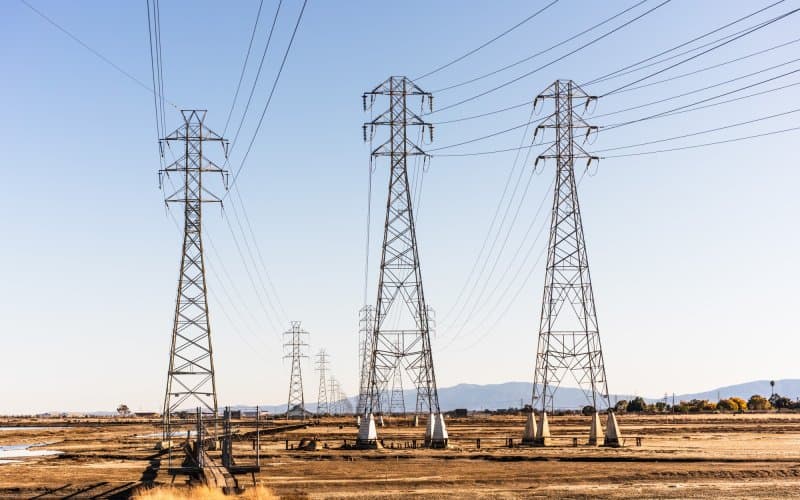
What is a smart grid and how does it work?

With the rapid development of renewable energy sources and their connection to the transmission system, new requirements for its operation have emerged. For us as consumers, they're not really new — we expect to have ele…

Read the answer

Edita Bromova

Atom

Its name means "indivisible". This concept was introduced some 400 years before our era by the Greek scholar Democritus, who was considering whether matter could be divided indefinitely or not. He came to the conclusion…

Read the answer

Jan Jirmus

Pressure Cooker — Why Does It Cook Faster?

Physics in the kitchen Everyone knows that water boils at 100 °C. That's true – but only at the air pressure we have "at sea level." If the pressure is increased, water doesn't start boiling at 100 °C but at a higher tem…

Read the answer

Jaroslav Kores, Ph.D.

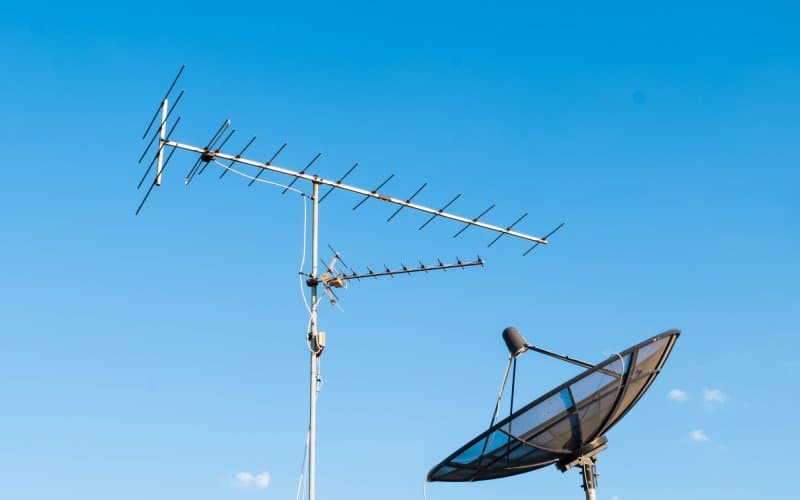
Why are satellite antennas pointed south?

Why is this the case? Satellite reception is provided (unsurprisingly) by satellites — transmitters that orbit the Earth. One satellite that we are all familiar with is the Moon. It also orbits the Earth. Its period (the…

Read the answer

Jaroslav Kores, Ph.D.

Could the Earth be a black hole?

Gravitational force depends on the mass of Earth (6 × 1024 kg) and its radius (6,378 km), while centrifugal force depends on the radius of rotation (i.e., the radius of Earth) and the square of the speed—in the cas…

Read the answer

Jaroslav Kores, Ph.D.

Why is a black hole black?

We can determine the value of the force of gravity from Newton's law of gravity, from which we can also determine the value of the gravitational field intensity around each body. We all know from experience that if we th…

Read the answer

Want to ask something?

Send us an e-mail with the subject "Physics mysteries" to the address below, or use the contact form.

info@energyencyclopedia.com/

We can't wait to tackle your interesting questions!