Jaroslav Kores, Ph.D.
When will we run out of coal and other fossil fuels at the current rate of consumption?
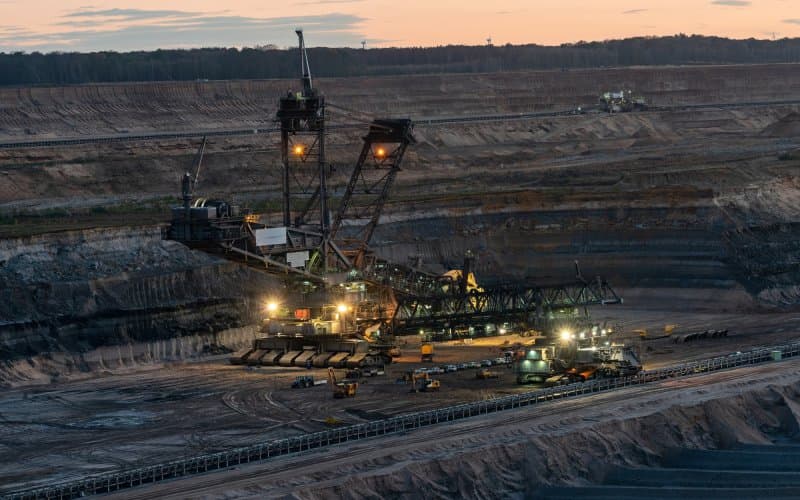
It's impossible to give a precise answer for several reasons. Global energy consumption is still growing, new fossil fuel deposits may be discovered, extraction efficiency from existing reserves can improve, and previously unused resources — such as shale gas — may become economically viable.
However, if we disregard these factors, the estimates are not particularly optimistic. Natural gas and oil could last for about 50 years, uranium for around 100 years, and coal reserves, which are the most abundant, roughly 150 years at current consumption levels.
It is therefore clear that in the near future we will need to address the question of how to "fuel" our modern civilization. Part of the solution may come from technological advances. For example, fourth-generation nuclear reactors are expected to utilize both spent nuclear fuel from current reactors and less-enriched uranium, potentially extending uranium reserves by at least a factor of ten. Environmental advocates might also appreciate the idea of using uranium from dismantled nuclear warheads, which is much purer than reactor-grade uranium (power plants typically need only about 5% enrichment).
We are also seeing a shift towards the electrification of transport, which currently accounts for roughly 60% of global oil consumption. If we successfully transition to electric mobility, we could potentially double the lifetime of oil reserves.
At the same time, we are expanding the share of renewable energy sources such as hydropower, solar, and photovoltaic systems. This year, renewables generated more electricity globally than coal for the first time. Yet, renewables come with their own challenges: intermittency, large land requirements per installed kilowatt, and the need for efficient energy storage. We also continue to focus on improving energy efficiency and reducing energy waste across all sectors.
Although these numbers might sound alarming, there's no reason to fear that in 50 years all vehicles will stop and we'll have to walk everywhere. As in the past, humanity will be forced to find new ways to meet its energy needs. Just as we once transitioned from biomass to coal (when forests around cities were depleted), we will again transition to a new energy source. Perhaps we will finally succeed in achieving commercial nuclear fusion, a milestone that could provide us with an (almost) unlimited supply of clean energy.
More mysteries
Keep exploring questions other readers asked.

Jan Jirmus
Pressure Cooker — Why Does It Cook Faster?
Physics in the kitchen Everyone knows that water boils at 100 °C. That's true – but only at the air pressure we have "at sea level." If the pressure is increased, water doesn't start boiling at 100 °C but at a higher tem…
Read the answer
Jaroslav Kores, Ph.D.
Why are satellite antennas pointed south?
Why is this the case? Satellite reception is provided (unsurprisingly) by satellites — transmitters that orbit the Earth. One satellite that we are all familiar with is the Moon. It also orbits the Earth. Its period (the…
Read the answer
Jaroslav Kores, Ph.D.
Could the Earth be a black hole?
Gravitational force depends on the mass of Earth (6 × 1024 kg) and its radius (6,378 km), while centrifugal force depends on the radius of rotation (i.e., the radius of Earth) and the square of the speed—in the cas…
Read the answerWant to ask something?
Send us an e-mail with the subject "Physics mysteries" to the address below, or use the contact form.
We can't wait to tackle your interesting questions!