Jaroslav Kores, Ph.D.
Is it feasible to store spent nuclear fuel on an uninhabited planet, moon, or in space in the near future?
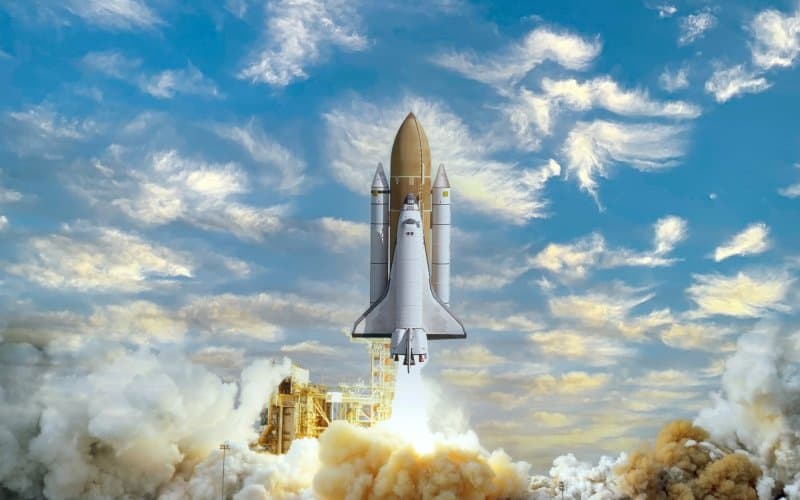
Technically, it already was and is feasible but the problem lies in the economic aspect. Simply put, radioactive waste can be disposed of quite safely by launching it into Earth's orbit and then "shooting" it out of the Earth's gravitational field. This requires a rocket and a simple device to launch a capsule containing radioactive fuel. If the capsule has a higher velocity than the second cosmic velocity or approximately 4 km/s in geostationary orbit, it will leave the Earth's gravitational field and fly into space. This seems like a large number, but considering the lower gravity and absence of drag forces, it's not a technically challenging task — at least from the perspective of a physics teacher :D. It might be possible to aim the capsule so that it lands at a selected location (the moon, a planet, the sun).
So why aren't we doing that now and instead dealing with deep geological repositories? Simply because launching 1 kg (of anything) into Earth's orbit is expensive. It's estimated that the cost of that kilogram is over US,000. Although costs are decreasing with the advent of new rockets (Saturn rockets cost US,000/kg, new Falcon Heavy rockets cost around 2,000 USD/kg in 2025 and Starship rocket predictions may even be below US,000/kg), it is still a very financially demanding method.
The cost of building a deep geological repository ranges from USD 500/kg (Czech Republic estimate) to USD 2,000/kg (Switzerland) and USD 2,500/kg (France). At current prices, it is therefore at least 4 times more advantageous to manage spent fuel thru deep geological repositories. This method also has the advantage that we have control over the radioactive material throughout the entire process. While the transportation of materials into space is well-managed, it is not perfectly reliable. There is a risk of an accident, which could lead to an uncontrolled release of radiation. That's why flights of rockets with radioactive propulsion are very limited.
Another reason for leaving spent fuel on Earth is the possibility of its further use in new-generation reactors, thereby extending the lifespan of nuclear power plants.
Just for interest's sake, I'll add that in the event of significant progress in alternative methods of transporting cargo into orbit (space elevator, space catapults), the cost of transporting 1 kg into space could be reduced to around USD per kilogram! Then it would be much more advantageous to "throw" radioactive waste into space.
More mysteries
Keep exploring questions other readers asked.
Jaroslav Kores, Ph.D.
What are the future energy consumption estimates?
Because these are estimates, several different scenarios can be found and they are quite different. In principle, I believe we can expect energy consumption to increase, particularly due to the rise in energy consumption…
Read the answer
Jaroslav Kores, Ph.D.
What is the current progress in energy storage technologies?
The development and expansion of energy storage systems are closely tied to the transition toward renewable energy sources. Renewables supply energy only under suitable environmental conditions (when the sun shines or th…
Read the answer
Jaroslav Kores, Ph.D.
What is the current ratio of fossil fuel consumption — coal, oil, natural gas — compared to renewable energy sources (such as solar, hydro, etc.)?
Let me first clarify that by fuel consumption, I mean the total energy use across all sectors, not just electricity generation. This distinction is important especially for oil, which is used primarily in transportation…
Read the answerWant to ask something?
Send us an e-mail with the subject "Physics mysteries" to the address below, or use the contact form.
We can't wait to tackle your interesting questions!