High Temperature Reactor (HTGR)
3 min read · Energy Atlas Editorial
In a High Temperature Gas-cooled Reactor (HTGR), the highly enriched uranium spheres are dispersed in graphite (moderator) balls. Helium is a coolant.
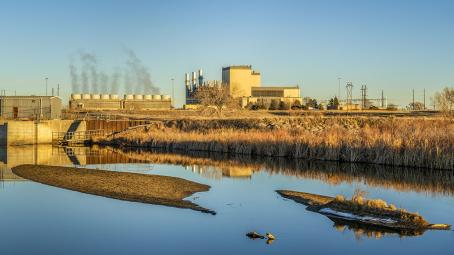
Modern High Temperature Gas-cooled Reactors (HTGRs) can achieve high thermal-to-electric conversion efficiencies of around 40%. Today, HTGR technology is represented mainly by experimental and demonstration reactors. China's commercial demonstration HTR-PM reactor at the Shidao Bay Nuclear Power Plant entered full commercial operation in 2023.
The fuel consists of TRISO particles containing uranium oxide or uranium oxycarbide. Each fuel kernel, approximately 0.5 mm in diameter, is surrounded by several protective layers of pyrolytic carbon and silicon carbide. After coating, the particles are about 1 mm in diameter and are embedded in graphite fuel elements. In pebble-bed reactors, these take the form of graphite spheres about the size of a tennis ball, known as fuel pebbles. The fuel is continuously loaded into the reactor from above and removed from the bottom after passing through the core. Another design uses hexagonal graphite blocks containing the fuel, an arrangement used particularly in American reactor designs.
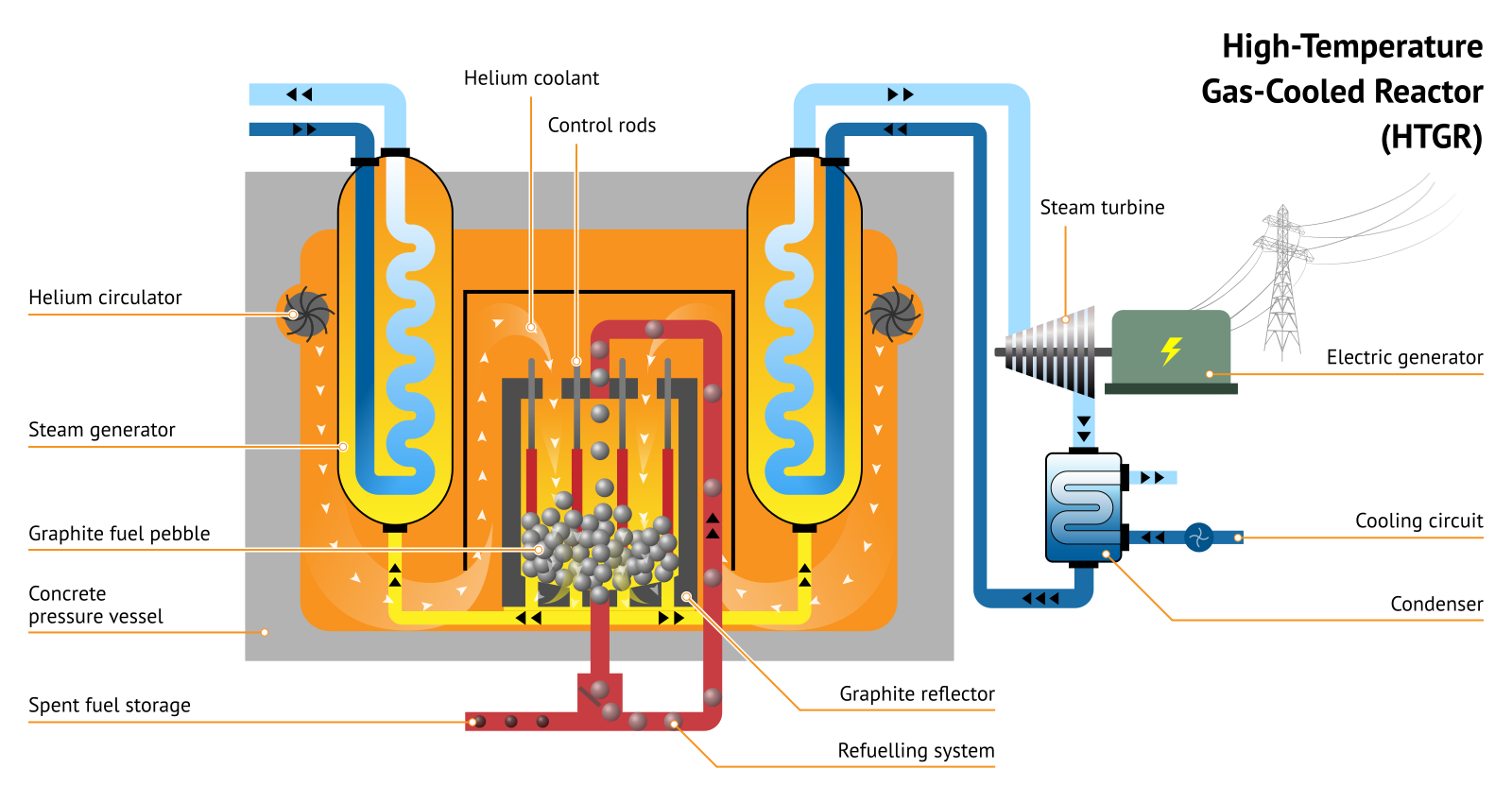
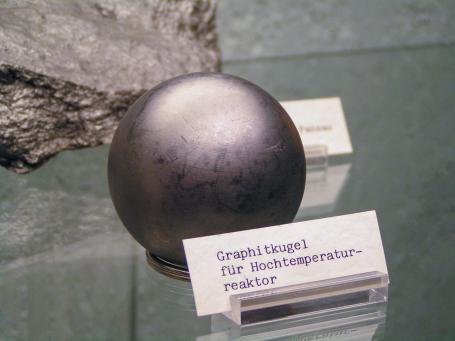
Graphite is used as the moderator and also forms a protective matrix surrounding the fuel particles. Helium is circulated through the reactor core as the coolant. Depending on the reactor design, its outlet temperature may range from around 700 °C to 900 °C or more. The thermal energy carried by the helium can be used directly in a gas-turbine Brayton cycle or transferred in a steam generator to produce steam for a steam turbine. The high outlet temperature also makes HTGRs suitable for high-temperature industrial processes, including hydrogen production.
TRISO fuel is one of the most robust types of nuclear fuel. Each fuel kernel is enclosed within several protective layers that act as a miniature containment system and retain fission products even at very high temperatures. TRISO fuel has demonstrated excellent performance in accident testing at temperatures of around 1,600 °C. Together with the low power density and passive heat-removal characteristics of HTGRs, this provides a high degree of inherent resistance to severe fuel overheating.
Keep reading
Articles
The Nuclear Power Plant — How it Works
Inside the nuclear power plant reactor, a controlled fission reaction takes place. Heat removed by coolant is used to produce steam to propel the turbine.
5 min read
The First Reactor
The first fission reactor was Chicago Pile No. 1, constructed by Enrico Fermi (2.12.1942). The first experimental nuclear power plant was the EBR-1.
3 min read
Pressurized Water Reactor (PWR)
The pressurized water reactor (PWR) uses light water at a pressure of 15.7 MPa as a coolant. Steam in the secondary circuit propels the turbine.
3 min read
Boiling Water Reactor (BWR)
In a boiling water reactor (BWR), the water boils directly inside the reactor. Dried steam propels the turbogenerator. It is a single-circuit power plant.
3 min read
Heavy Water Reactor (PHWR)
The pressurized heavy water reactor (PHWR) uses natural uranium as fuel and heavy water as coolant and moderator. Most of them are of the CANDU type.
3 min read
Gas-cooled Reactor (GCR) and Advanced Gas-cooled Reactor (AGR)
Gas cooled reactors (GCR), used in Japan and the UK, use graphite as a moderator and pressurized CO2 as a coolant. It is a double-circuit power plant.
3 min read
RBMK Type Reactor
The Soviet RBMK reactor uses graphite as a moderator and light water, that boils in the channels, as a coolant. Chernobyl reactor was of RBMK type.
3 min read
Reactor Using Fast Neutrons (FR)
A reactor using fast neutron (FR) burns a mixture of uranium and plutonium. Fast breeder reactors (FBR) produce more plutonium than they consume.
3 min read
Small Modular Reactors
Inside a nuclear reactor, a fission reaction takes place. Released energy is removed by coolant and used to generate electricity. A common reactor is PWR.
16 min read
The Future of Fission Reactors
Several types of Generation IV reactors are under development: fast reactors cooled by lead, molten salts, or sodium; HTGR, or supercritical water reactor.
4 min read