Boiling Water Reactor (BWR)
3 min read · Energy Atlas Editorial
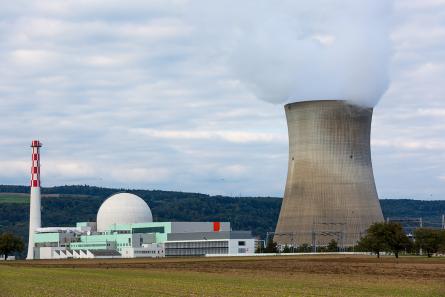
In a boiling water reactor (BWR), the water boils directly inside the reactor. Dried steam propels the turbogenerator. It is a single-circuit power plant.
The boiling water reactor (BWR) is the second most common type of nuclear power reactor in the world. BWRs account for around 15% of the world's operating power reactors.
The fuel is similar to that used in a PWR. Ceramic uranium dioxide pellets, typically containing uranium enriched to around 3%—5% in uranium-235, are inserted into fuel rods that are assembled into fuel assemblies about 4 metres long. Each fuel assembly is surrounded by a channel that guides the flow of coolant through the core. The reactor core is housed in a large steel pressure vessel and is typically about 3.5 metres high and 4.5 metres in diameter. The reactor is periodically shut down for refuelling, typically every 12 to 24 months, when a portion of the fuel assemblies is replaced.
Light water is used as both the moderator and the coolant. The water boils directly inside the reactor core, producing a mixture of water and steam. The formation of steam bubbles also contributes to the inherent regulation of reactor power. Because steam is less effective than liquid water as a neutron moderator, an increase in the proportion of steam reduces reactivity and tends to decrease reactor power. The water pressure is about 7 MPa and its temperature is approximately 285 °C. The steam generated inside the reactor is separated from the water, dried and supplied directly to a turbine. A BWR nuclear power plant therefore uses a single-circuit arrangement.
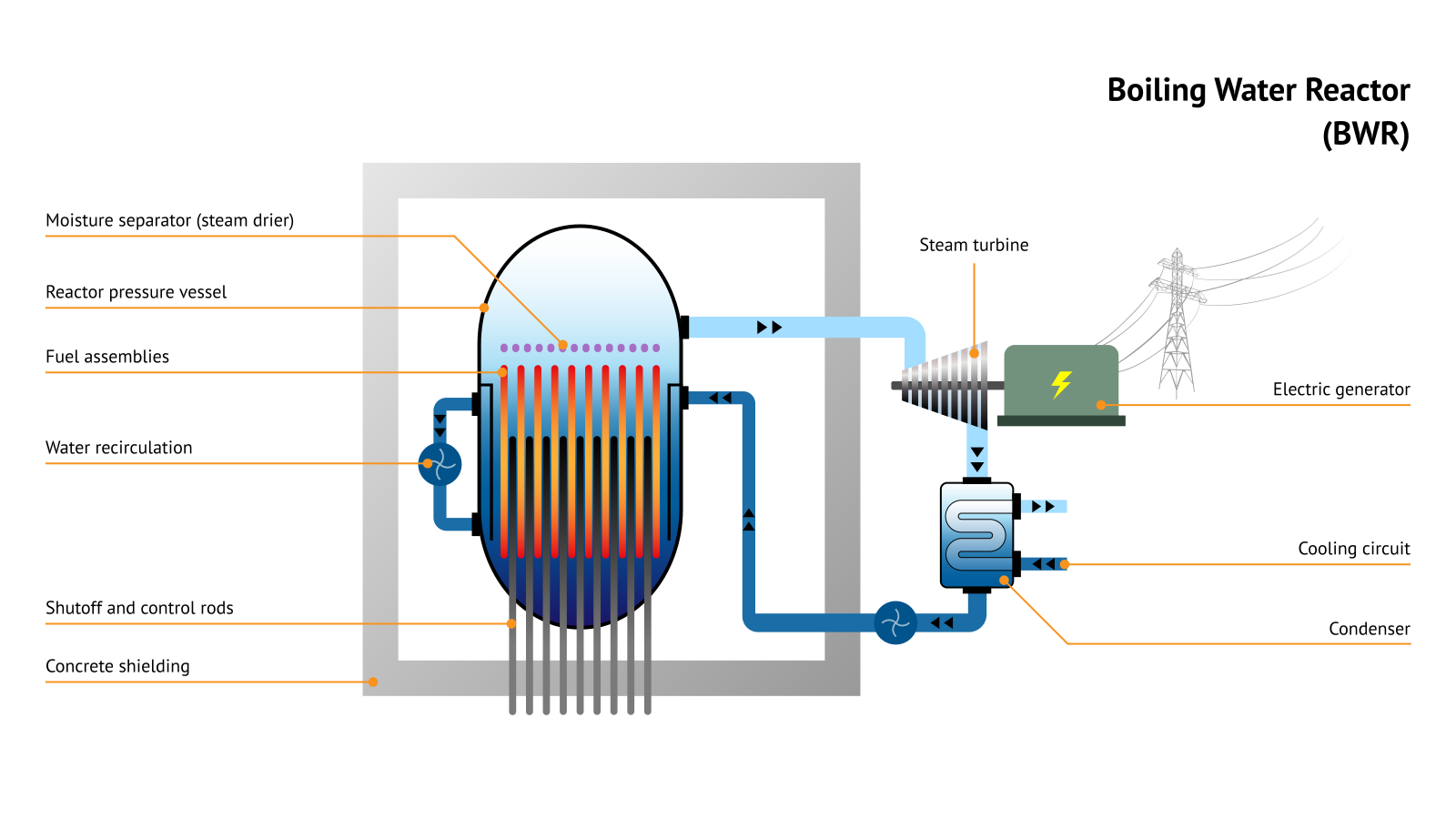
The control rods of most BWRs are inserted into the reactor core from below, unlike those of PWRs, which are generally inserted from above.
Keep reading
Articles
The Nuclear Power Plant — How it Works
Inside the nuclear power plant reactor, a controlled fission reaction takes place. Heat removed by coolant is used to produce steam to propel the turbine.
5 min read
The First Reactor
The first fission reactor was Chicago Pile No. 1, constructed by Enrico Fermi (2.12.1942). The first experimental nuclear power plant was the EBR-1.
3 min read
Pressurized Water Reactor (PWR)
The pressurized water reactor (PWR) uses light water at a pressure of 15.7 MPa as a coolant. Steam in the secondary circuit propels the turbine.
3 min read
Heavy Water Reactor (PHWR)
The pressurized heavy water reactor (PHWR) uses natural uranium as fuel and heavy water as coolant and moderator. Most of them are of the CANDU type.
3 min read
Gas-cooled Reactor (GCR) and Advanced Gas-cooled Reactor (AGR)
Gas cooled reactors (GCR), used in Japan and the UK, use graphite as a moderator and pressurized CO2 as a coolant. It is a double-circuit power plant.
3 min read
RBMK Type Reactor
The Soviet RBMK reactor uses graphite as a moderator and light water, that boils in the channels, as a coolant. Chernobyl reactor was of RBMK type.
3 min read
High Temperature Reactor (HTGR)
In a High Temperature Gas-cooled Reactor (HTGR), the highly enriched uranium spheres are dispersed in graphite (moderator) balls. Helium is a coolant.
3 min read
Reactor Using Fast Neutrons (FR)
A reactor using fast neutron (FR) burns a mixture of uranium and plutonium. Fast breeder reactors (FBR) produce more plutonium than they consume.
3 min read
Small Modular Reactors
Inside a nuclear reactor, a fission reaction takes place. Released energy is removed by coolant and used to generate electricity. A common reactor is PWR.
16 min read
The Future of Fission Reactors
Several types of Generation IV reactors are under development: fast reactors cooled by lead, molten salts, or sodium; HTGR, or supercritical water reactor.
4 min read
Questions
How does a nuclear reactor generate electricity?
Fission heat raises steam. A turbine-generator does what it does in any thermal plant.