Reactor Using Fast Neutrons (FR)
3 min read · Energy Atlas Editorial
A reactor using fast neutron (FR) burns a mixture of uranium and plutonium. Fast breeder reactors (FBR) produce more plutonium than they consume.
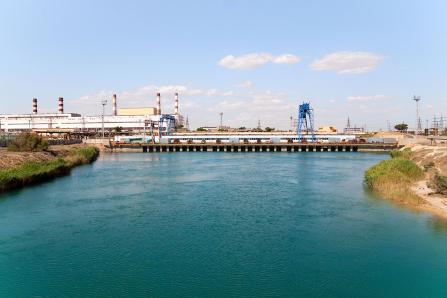
Fast reactors (FRs) sustain the fission chain reaction primarily with fast neutrons and are considered an important technology for the long-term sustainability of nuclear energy. Unlike conventional thermal reactors, they can make much more efficient use of uranium resources and can also be designed to transmute some of the long-lived actinides contained in spent nuclear fuel. A number of fast reactors have been built, mostly as experimental, prototype or demonstration reactors. Today, fast reactors are operated or being commissioned primarily in Russia, China and India.
Fast reactors operating in a closed nuclear fuel cycle could extract around 60—70 times more energy from uranium than today's thermal reactors.
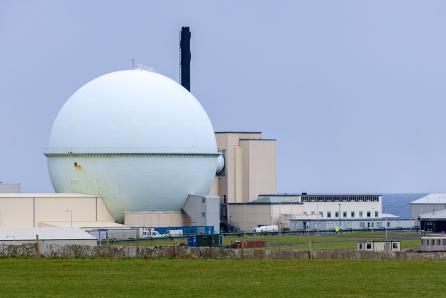
Fast reactors can use several types of fuel, including mixed uranium-plutonium oxide (MOX), enriched uranium or metallic fuels. One of their major advantages is their ability to convert fertile uranium-238 into fissile plutonium-239 through neutron capture and subsequent radioactive decay. Reactors designed to produce more fissile material than they consume are known as fast breeder reactors (FBRs). In some designs, the reactor core is surrounded by a breeding blanket containing depleted uranium, in which additional plutonium is produced.
Fast reactors can be operated in different fuel-cycle configurations. In addition to breeding new fissile material, they can be designed to consume plutonium and other transuranic elements recovered from spent nuclear fuel. In combination with a closed nuclear fuel cycle, this could improve the utilisation of uranium resources and reduce the quantity of long-lived actinides requiring geological disposal. Fast reactor cores typically have a much higher power density than those of conventional light water reactors and can therefore be relatively compact.
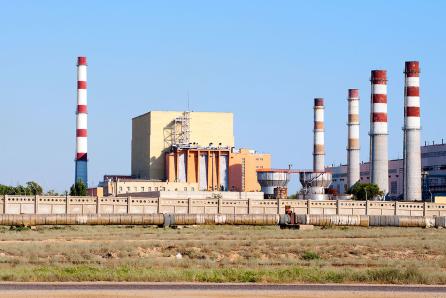
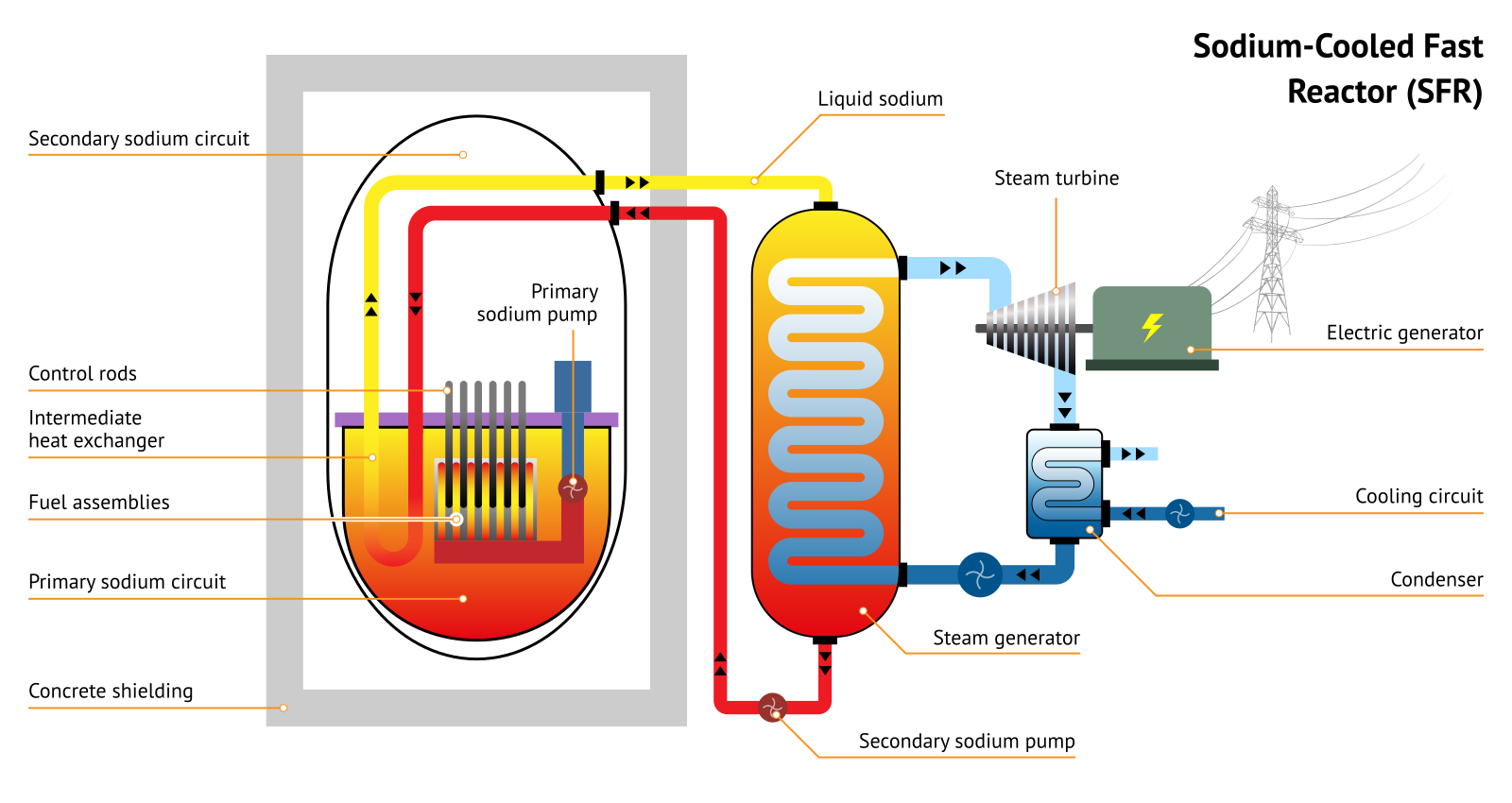
Because fast reactors sustain the chain reaction with fast neutrons, they do not require a neutron moderator. Liquid sodium is the most widely used coolant in fast reactors because of its excellent heat-transfer properties and its low neutron moderation. However, sodium reacts vigorously with air and water. Sodium-cooled fast reactor power plants therefore commonly use an intermediate secondary sodium circuit, which separates the radioactive primary sodium from the water-steam circuit. Heat from the primary sodium is transferred to the secondary sodium in an intermediate heat exchanger and then to water in a steam generator. The resulting steam drives a turbine. Sodium typically leaves the reactor core at a temperature of around 500—550 °C and, because of its high boiling point, the primary circuit can operate at relatively low pressure.
Sodium boils at about 883 °C at atmospheric pressure, far above the normal operating temperature of a sodium-cooled fast reactor. This allows the primary coolant system to operate at relatively low pressure.
Keep reading
Articles
The Nuclear Power Plant — How it Works
Inside the nuclear power plant reactor, a controlled fission reaction takes place. Heat removed by coolant is used to produce steam to propel the turbine.
5 min read
The First Reactor
The first fission reactor was Chicago Pile No. 1, constructed by Enrico Fermi (2.12.1942). The first experimental nuclear power plant was the EBR-1.
3 min read
Pressurized Water Reactor (PWR)
The pressurized water reactor (PWR) uses light water at a pressure of 15.7 MPa as a coolant. Steam in the secondary circuit propels the turbine.
3 min read
Boiling Water Reactor (BWR)
In a boiling water reactor (BWR), the water boils directly inside the reactor. Dried steam propels the turbogenerator. It is a single-circuit power plant.
3 min read
Heavy Water Reactor (PHWR)
The pressurized heavy water reactor (PHWR) uses natural uranium as fuel and heavy water as coolant and moderator. Most of them are of the CANDU type.
3 min read
Gas-cooled Reactor (GCR) and Advanced Gas-cooled Reactor (AGR)
Gas cooled reactors (GCR), used in Japan and the UK, use graphite as a moderator and pressurized CO2 as a coolant. It is a double-circuit power plant.
3 min read
RBMK Type Reactor
The Soviet RBMK reactor uses graphite as a moderator and light water, that boils in the channels, as a coolant. Chernobyl reactor was of RBMK type.
3 min read
High Temperature Reactor (HTGR)
In a High Temperature Gas-cooled Reactor (HTGR), the highly enriched uranium spheres are dispersed in graphite (moderator) balls. Helium is a coolant.
3 min read
Small Modular Reactors
Inside a nuclear reactor, a fission reaction takes place. Released energy is removed by coolant and used to generate electricity. A common reactor is PWR.
16 min read
The Future of Fission Reactors
Several types of Generation IV reactors are under development: fast reactors cooled by lead, molten salts, or sodium; HTGR, or supercritical water reactor.
4 min read