The Future of Fission Reactors
4 min read · Energy Atlas Editorial
Several types of Generation IV reactors are under development: fast reactors cooled by lead, molten salts, or sodium; HTGR, or supercritical water reactor.
Generation I nuclear reactors the early prototype and commercial reactors developed mainly during the 1950s and 1960s. Most reactors operating today belong to Generation II, although several Generation III and III+ reactors are also in commercial operation. Generation III reactors represent an evolutionary development of proven reactor technologies, incorporating improved safety systems, greater standardisation, longer design lifetimes and improved operating performance. Generation IV encompasses a group of more advanced nuclear energy systems currently under research and development, with some designs potentially entering commercial deployment from around 2030.
Generation III Reactors
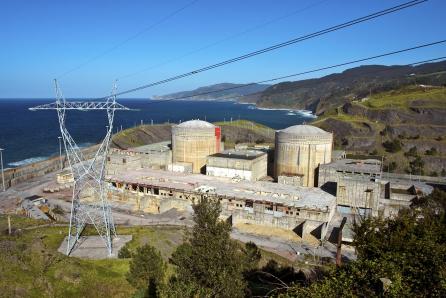
Generation III and III+ reactors are evolutionary developments of established reactor technologies. Their designs incorporate improved safety features, greater standardisation, longer operating lifetimes and, in many cases, simpler construction and operation. Many designs make extensive use of passive safety systems that rely on natural forces such as gravity, natural circulation and stored energy, reducing their dependence on active equipment and operator actions during accidents. Their design operating life is typically 60 years or more. Modern reactors can also provide flexible operation to respond to changing electricity demand, although their load-following capabilities vary between individual designs.
Examples include the AP1000 pressurised water reactor developed by Westinghouse, the EPR pressurised water reactor developed in Europe, and the Advanced Boiling Water Reactor (ABWR) developed by GE and its partners. All of these reactor types have reached commercial operation.
Generation IV Reactors
The Generation IV International Forum (GIF) has selected six nuclear energy systems for international research and development. Their goals include improved sustainability, safety and reliability, economic competitiveness, proliferation resistance and physical protection. Several systems operate at substantially higher temperatures than today's light water reactors, enabling higher thermal efficiency and potential applications such as industrial process heat and hydrogen production. Three of the six systems are fast-spectrum reactors, while some of the others can be designed with either a thermal or fast neutron spectrum.
Gas-Cooled Fast Reactor (GFR)
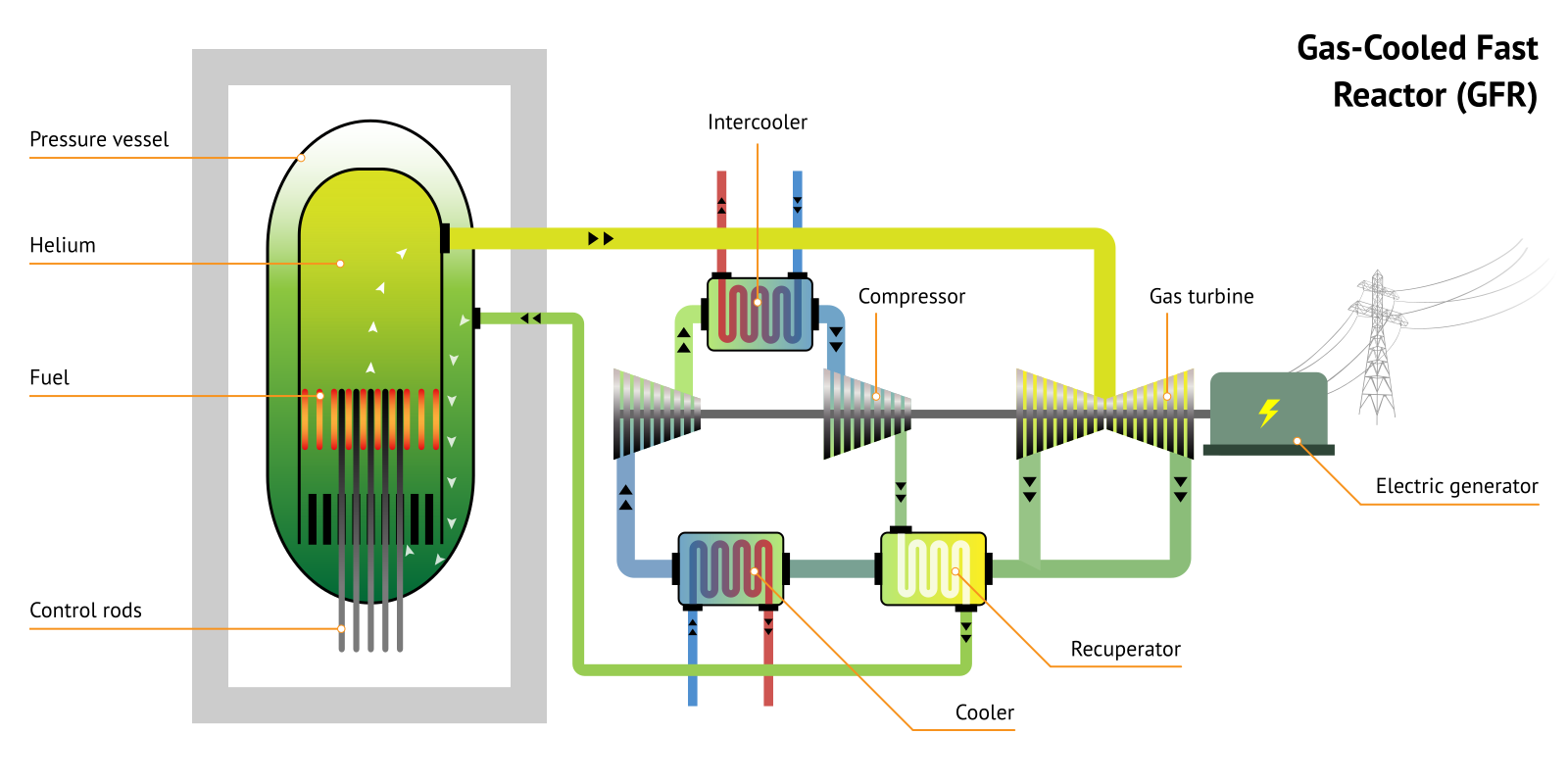
The Gas-cooled Fast Reactor (GFR) combines a fast neutron spectrum with helium cooling and a closed fuel cycle. Because it contains no neutron moderator, it can efficiently utilise fissile and fertile materials and potentially recycle actinides. The reference concept uses refractory fuel capable of withstanding high temperatures and helium with a reactor outlet temperature of about 850 °C. The high-temperature coolant can provide efficient electricity generation and potentially supply industrial process heat. GIF reference studies consider a reactor with an electrical output of about 1,200 MWe.
Lead-Cooled Fast Reactor (LFR)
The Lead-cooled Fast Reactor (LFR) uses a fast neutron spectrum and liquid lead, or in some concepts a lead-bismuth alloy, as the coolant. The coolant operates at low pressure and has a high boiling point. Lead-cooled reactors are being considered in a wide range of sizes, from small modular systems to large power reactors. Typical outlet temperatures are around 480—570 °C, although higher temperatures could eventually enable more efficient electricity generation and industrial process heat applications. A closed fuel cycle could allow plutonium and other actinides to be recycled.
Molten Salt Reactor (MSR)
Molten Salt Reactors (MSRs) use molten fluoride or chloride salts as either the reactor coolant or, in liquid-fuel designs, as a medium in which the nuclear fuel is dissolved. Depending on the design, an MSR may operate with a thermal or fast neutron spectrum. Liquid-fuel concepts can potentially allow fuel processing and the removal of selected fission products during operation, while other designs use solid fuel with molten salt solely as the coolant. MSRs operate at high temperatures but relatively low pressures, with typical reference outlet temperatures of around 700—800 °C.
Sodium-Cooled Fast Reactor (SFR)
The Sodium-cooled Fast Reactor (SFR) builds on decades of experience with sodium-cooled fast reactors. It uses a fast neutron spectrum, liquid sodium coolant and, in most Generation IV concepts, a closed fuel cycle that enables recycling of plutonium and other actinides. Sodium typically leaves the reactor at a temperature of around 500—550 °C. Most designs use an intermediate secondary sodium circuit to separate the radioactive primary coolant from the water-steam system. SFR concepts range from small modular reactors to large power reactors.
Supercritical-Water-Cooled Reactor (SCWR)
The Supercritical-Water-Cooled Reactor (SCWR) uses water at pressures and temperatures above its thermodynamic critical point of 374 °C and 22.1 MPa. Reference designs operate at about 25 MPa and outlet temperatures of approximately 510—625 °C, enabling significantly higher thermal efficiency than conventional light water reactors. Both thermal-spectrum and fast-spectrum concepts have been studied. In direct-cycle designs, supercritical water leaving the reactor is supplied directly to the turbine, eliminating the need for steam generators and steam separators.
Very-High-Temperature Reactor (VHTR)
Video: Model of the ALLEGRO gas-cooled fast reactor (GFR) demonstrator.
The Very-High-Temperature Reactor (VHTR) is an advanced development of high-temperature gas-cooled reactor technology. It uses graphite as the moderator, helium as the coolant and TRISO particles containing low-enriched uranium as fuel. The fuel may be arranged in graphite pebbles or prismatic graphite blocks. The original Generation IV concept envisaged outlet temperatures of 900—1,000 °C, although current development also focuses on lower temperatures of around 700—850 °C to reduce technical challenges. The high-temperature helium can be used for efficient electricity generation as well as industrial process heat and hydrogen production.
The six Generation IV reactor systems were selected from around 130 concepts evaluated by international experts. Their development is coordinated through the Generation IV International Forum, established in 2001.
Keep reading
Articles
The Nuclear Power Plant — How it Works
Inside the nuclear power plant reactor, a controlled fission reaction takes place. Heat removed by coolant is used to produce steam to propel the turbine.
5 min read
The First Reactor
The first fission reactor was Chicago Pile No. 1, constructed by Enrico Fermi (2.12.1942). The first experimental nuclear power plant was the EBR-1.
3 min read
Pressurized Water Reactor (PWR)
The pressurized water reactor (PWR) uses light water at a pressure of 15.7 MPa as a coolant. Steam in the secondary circuit propels the turbine.
3 min read
Boiling Water Reactor (BWR)
In a boiling water reactor (BWR), the water boils directly inside the reactor. Dried steam propels the turbogenerator. It is a single-circuit power plant.
3 min read
Heavy Water Reactor (PHWR)
The pressurized heavy water reactor (PHWR) uses natural uranium as fuel and heavy water as coolant and moderator. Most of them are of the CANDU type.
3 min read
Gas-cooled Reactor (GCR) and Advanced Gas-cooled Reactor (AGR)
Gas cooled reactors (GCR), used in Japan and the UK, use graphite as a moderator and pressurized CO2 as a coolant. It is a double-circuit power plant.
3 min read
RBMK Type Reactor
The Soviet RBMK reactor uses graphite as a moderator and light water, that boils in the channels, as a coolant. Chernobyl reactor was of RBMK type.
3 min read
High Temperature Reactor (HTGR)
In a High Temperature Gas-cooled Reactor (HTGR), the highly enriched uranium spheres are dispersed in graphite (moderator) balls. Helium is a coolant.
3 min read
Reactor Using Fast Neutrons (FR)
A reactor using fast neutron (FR) burns a mixture of uranium and plutonium. Fast breeder reactors (FBR) produce more plutonium than they consume.
3 min read
Small Modular Reactors
Inside a nuclear reactor, a fission reaction takes place. Released energy is removed by coolant and used to generate electricity. A common reactor is PWR.
16 min read