Moderator
3 min read · Energy Atlas Editorial
To increase the chance of fission, the moderator slows down neutrons by collisions. The usual moderators are water, heavy water, and graphite.
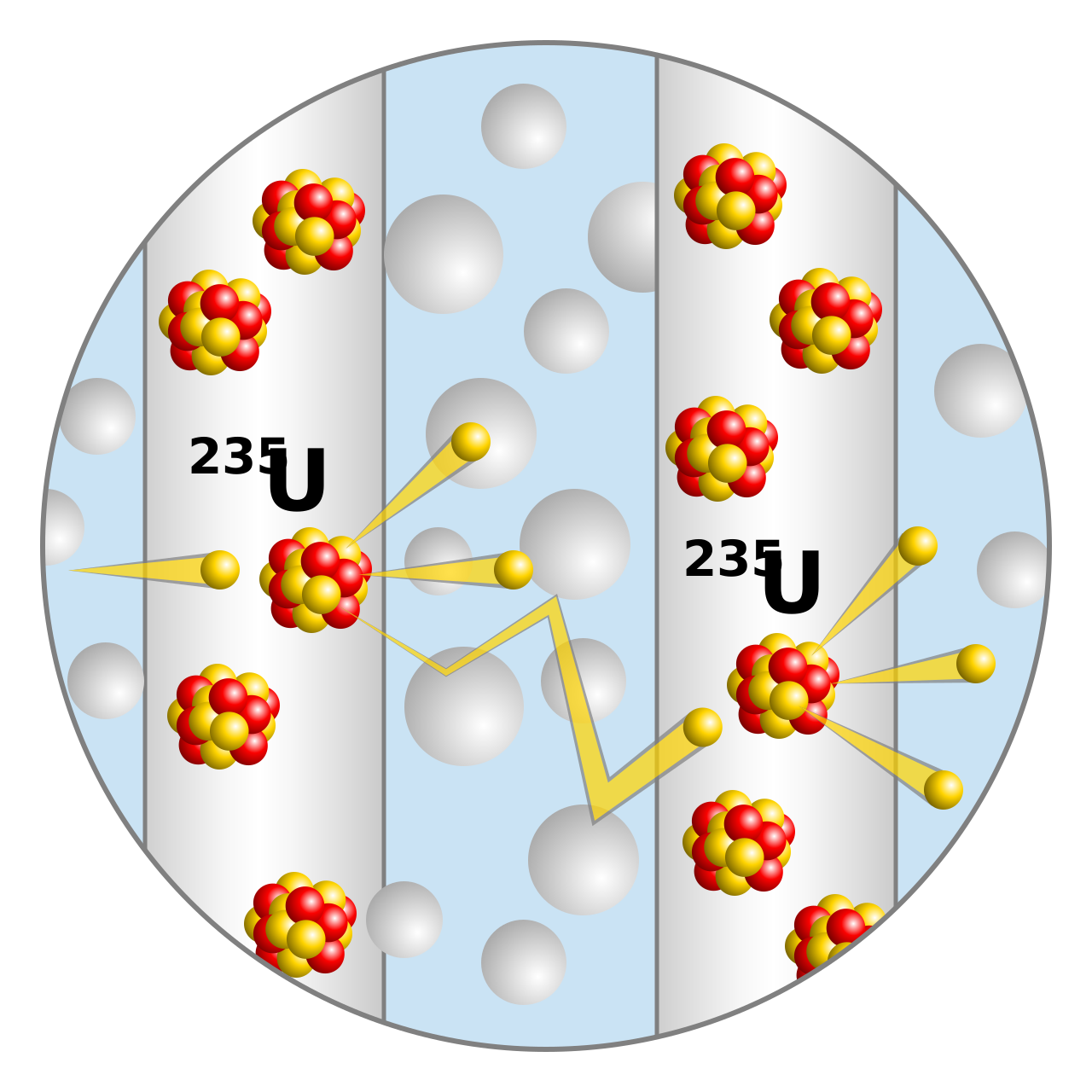
To increase the probability that a neutron will cause fission in a 235U nucleus, fast neutrons produced by fission must be slowed down to thermal energies. Fission neutrons typically have energies in the MeV range, while thermal neutrons at room temperature have an energy of about 0.025 eV. Once slowed down, thermal neutrons have a much greater probability of being absorbed by 235U and causing fission. A moderator is a material that slows down fast neutrons while absorbing as few of them as possible. In thermal reactors, moderation increases the probability that neutrons will cause further fissions and thus helps sustain the chain reaction.
Neutrons lose the greatest fraction of their kinetic energy in elastic collisions with nuclei of similar mass, particularly hydrogen nuclei (protons). Effective moderators contain relatively light nuclei and have a low probability of absorbing neutrons. Common moderator materials include light water, heavy water and graphite.
The term moderator comes from the Latin moderari, meaning to regulate, restrain or moderate.
Light water
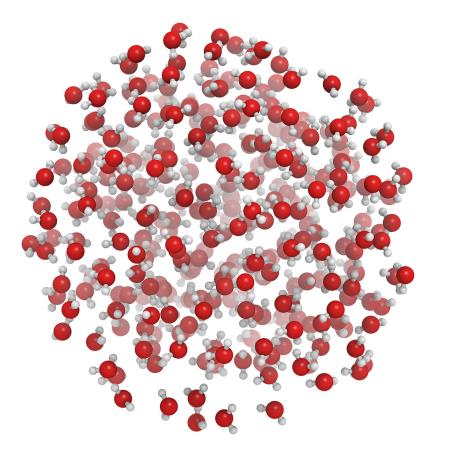
Light water is used as a moderator in most power reactors fuelled with enriched uranium. It is readily available, does not require special handling and can also serve as the reactor coolant.
Heavy Water
A molecule of heavy water (D2O) contains two deuterium atoms instead of the two ordinary hydrogen atoms found in light water. The nucleus of deuterium contains one proton and one neutron. Heavy water must be specially produced, but it absorbs far fewer neutrons than light water. This makes it suitable as a moderator in reactors fuelled with natural or low-enriched uranium.
Graphite
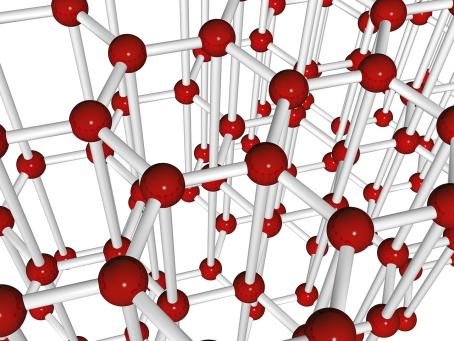
Because graphite has a low neutron absorption cross-section and good moderating properties, it can be used in reactors fuelled with natural or low-enriched uranium. Since graphite is a solid, graphite-moderated reactors use a separate fluid as the coolant. At sufficiently high temperatures, graphite can oxidise in the presence of air, which must be taken into account in reactor safety. Nevertheless, graphite continues to be used as a moderator in several reactor types, including modern high-temperature gas-cooled reactors.
Without Moderator
Fast reactors are designed to maintain a fast neutron spectrum and therefore do not use a moderator in the reactor core.
6 pictures 6 pictures
Some thermal-spectrum molten salt reactor concepts use graphite as a moderator, while fast-spectrum molten salt reactors operate without a moderator.
Keep reading
Articles
Principle of Operation
The binding energy that holds nucleons together is different for each isotope. When fusing light nuclei or splitting heavy nuclei, energy is released.
3 min read
Types of Nuclear Reactions
Nuclear reactions can lead to scattering, capture, or splitting depending on neutron velocity. So-called "slow" neutrons (0.02 eV) can split 235U nuclei.
3 min read
Fission Chain Reaction
When a neutron splits the 235U nucleus, 2-3 neutrons are released. The fission chain reaction occurs when they split other nuclei, releasing more neutrons.
3 min read
Control and Reaction States
The chain fission reaction in a nuclear reactor is controlled by the neutron absorber content. The reactor can be subcritical, critical, or supercritical.
3 min read
Absorber
The absorber (boron, cadmium) captures the neutrons and thus regulates the nuclear reactor output. It can be part of the coolant or control rods.
3 min read
Coolant
The coolant removes heat from the fission reaction. The most commonly used is water, but also helium, CO2, molten sodium, lead, or fluoride salts are used.
3 min read
Fission Products
After fission, the uranium nucleus decays into two approximately equal halves. Typical products are iodine and cesium, but other ways of decay exist.
3 min read
The Largest Nuclear Power Plants
In 2012, there were 436 reactors in use worldwide. The largest nuclear power plant is Japan's Kashiwazaki Kariwa with 7,965 MW of installed power output.
3 min read
Questions
How does a nuclear reactor generate electricity?
Fission heat raises steam. A turbine-generator does what it does in any thermal plant.