Disruptions and Instabilities
3 min read · Energy Atlas Editorial
Plasma never behaves calmly and shortly after its creation begins to show an assortment of instabilities.
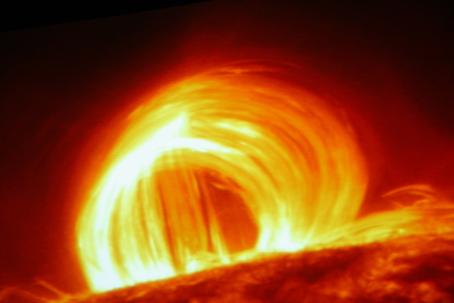
Plasma never behaves calmly and shortly after its creation begins to show an assortment of instabilities. Its smooth surface — as is usually drawn in artist's impressions of tokamaks — is disturbed by kinks, loops, constrictions, wrinkles or in some cases by events resembling small solar eruptions. When such instability occurs, plasma has the annoying habit of magnifying it, so a small perturbation in the magnetic field leads to bigger perturbation in the magnetic field and instability increases. Instabilities could complicate plasma confinement and could lead to energy losses, so tokamak operators need to somehow deal with all of them. But the most important are the instabilities that could cause serious harm to the vacuum vessel by letting out significant amounts of energetic particles from the plasma column toward the vessel wall.
Edge Localised Modes
For the ITER tokamak the most dangerous could be so called ELMs, Edge Localised Modes. This phenomenon was first observed in a German fusion experiment, ASDEX, in 1981 and usually occurs when tokamak enters H-mode, the regime with significantly better particle confinement. ELMs behave like solar flares, creating repetitive bursts of energy on the plasma edge. Though ELMs-free H-mode can be reached (it is called Quiescent H-mode), the one with ELMs is preferred. Plasma ejections toward the divertor and walls can help with the removal of impurities that would otherwise accumulate in the plasma core. The challenge is how to manage the ELMs so as not to do too much harm. Two ways of ELMs mitigation will be tried on ITER — resonant magnetic perturbations and pellet injection.
Resonant Magnetic Perturbation
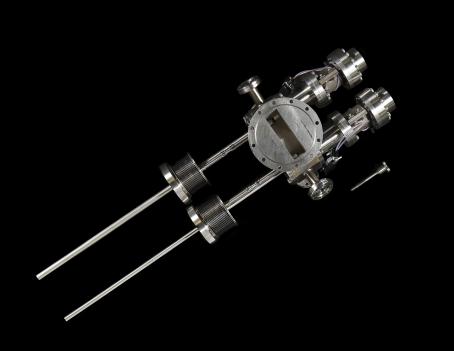
Resonant magnetic perturbation will be realized by a set of 27 special in-vessel coils. They will create a small magnetic field around tokamak that will slightly change the routes of some particles and throw them off course as they move around the magnetic field lines in the plasma. The same particles will then end up outside the field lines. This will decrease the pressure threshold at which ELMs are triggered and instead of one potentially damaging ELM a set of smaller ones arise.
Pellet Injection
Pellet injection is supposed to disturb the edge regions of the plasma by the injection of small pellets of frozen deuterium. This will decrease the magnitude of energy fluxes in one ELM while increasing their frequency. Such ELMs will be mostly harmless, effectively drain impurities from plasma while not causing erosion of the divertor and the first wall's components.
Disruptions
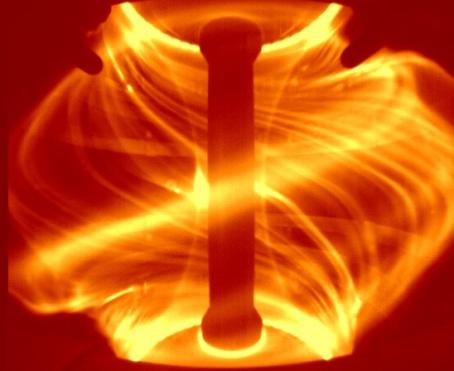
The more dangerous threat facing the ITER comes from disruption. This event means termination of plasma discharge when some instability in the tokamak plasma grows to a point where there is a rapid loss of the stored thermal and magnetic energy. In normal stable fusion plasma fast moving electrons are slowed down by collisions. Their acceleration by an electromagnetic field and deceleration is in balance, but during disruption the slowing down effect is largely diminished and tokamak could act as a particle accelerator, accelerating electrons nearly to the speed of light. Such runaway electrons possess enormous energy and can cause significant damage to the interior surfaces, even melting the first wall.
Runaway Electrons Mitigation
In order to mitigate runaway electrons during disruption there has to be a way to cool and slow down electrons in less than 5 ms when such a situation arises. This will be done by the injection of large pellets of frozen deuterium and neon. The biggest one is larger than a wine cork, but despite their size several pellets need to be fired at once to stop the worst-case runaway electron beam in the ITER. The system allows the injection of up to 32 pellets from equatorial ports at three different toroidal locations and three pellets from different upper ports. To ensure that the plasma can assimilate the content of huge pellets properly, the pellets are shattered into small pieces just before they enter the vacuum vessel. Another system could be DMS (disruption mitigation system), a gun that would deliver high-pressure gas puffs repetitively into the ITER plasma.
Keep reading
Articles
The Next Step on the Way Toward a Thermonuclear Fusion Power Plant
In the beginning of the 20th century, the potential energy of the atom was discovered.
3 min read
Main Parameters
The ITER is an experimental device designed to demonstrate the possibility of harnessing energy from thermonuclear fusion.
3 min read
Timeline
From 1985 to 2050 ...
3 min read
Record Breakers
Being the largest tokamak ever built, the ITER is a record holder in many ways.
3 min read
Magnets
The ITER magnet system will be the largest and most integrated superconducting magnet system ever built. It will produce magnetic fields that will initiate, confine, shape and control the ITER plasma.
5 min read
Vacuum Vessel
Plasma will be held inside a steel torus called a vacuum vessel. It was proven that the bigger the plasma volume, the better the confinement, so the ITER vacuum vessel will be really big.
3 min read
Blanket
Blanket protects vacuum vessel from harsh conditions provided by fusion plasma. Because the vessel cannot be replaced, any damage to it will incur would cause termination of experiments.
3 min read
Divertor
For a successful fusion reaction only the presence of fuel (deuterium and tritium in the case of ITER) in the plasma core is needed; all other particles, whether impurities or helium ash, are unwanted and need to be diverted away from the plasma, because they could cause energ…
3 min read
Cryostat
During ITER operation the 150 million kelvin hot plasma core will be just a few meters away from only 4 Kelvin cold toroidal magnetic coils.
3 min read
Tritium Production
The ITER machine will be the first thermonuclear reactor fully designed to operate with deuterium-tritium fusion reaction.
4 min read
Cooling
Tokamak ITER operation would not be possible without several types of cooling methods, because heat generated by fusion must be discarded.
3 min read
Diagnostics
The main goal of the ITER is not to just create fusion plasma but to get as much information about such plasma as possible.
4 min read
External Heating
Successful deuterium-tritium fusion reaction requires 150 million Kelvin, a temperature that is not easy to reach.
3 min read
The ITER Site
The ITER 180-hectare site is located near Saint Paul-lez-Durance, southern France.
3 min read