Quantities and Units
4 min read · Energy Atlas Editorial
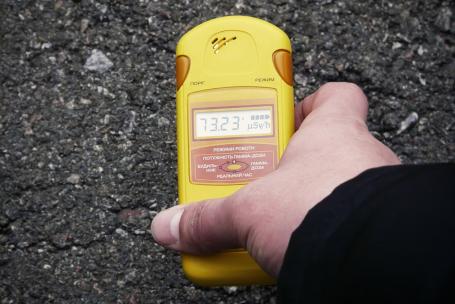
The radioactivity and its effects are measured by detectors and dosimeters (activity in becquerels, dose in grays, equivalent dose in sieverts).
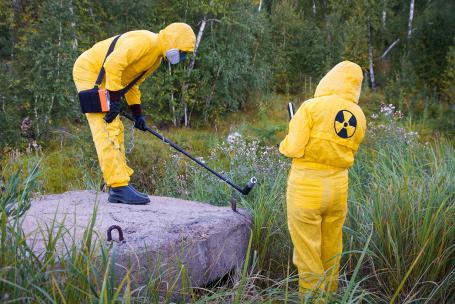
The effects of radioactivity and ionising radiation are measured and expressed using appropriate physical quantities and units. Activity describes the rate of radioactive decay, absorbed dose describes the amount of radiation energy absorbed per unit mass, and equivalent dose takes into account the different biological effectiveness of different types of radiation.
Activity
The basic property of a radioactive material is its activity, measured in becquerels (Bq). One becquerel corresponds to one radioactive decay per second. It is a very small unit: thousands of 40K nuclei decay naturally in the human body every second. Activities are therefore often expressed in kilobecquerels, megabecquerels or gigabecquerels. The older non-SI unit curie (Ci) may also still be encountered.
1 Ci = 3.7 × 10¹⁰ Bq
Absorbed Dose
Absorbed dose describes the amount of energy imparted by ionising radiation per unit mass of matter. Its SI unit is the gray (Gy). One gray corresponds to one joule of energy absorbed per kilogram of matter. The older non-SI unit rad may also still be encountered.
1 Gy = 1 J/kg
1 rad = 0.01 Gy
Equivalent Dose
Different types of ionising radiation can have different biological effects for the same absorbed dose. Equivalent dose takes this into account by multiplying the absorbed dose in an organ or tissue by a radiation weighting factor that depends on the type and, in the case of neutrons, the energy of the radiation. Its unit is the sievert (Sv).
Radiation weighting factors:
- Photons (X-rays, gamma rays): 1
- Electrons (beta radiation): 1
- Protons: 2
- Alpha particles: 20
- Neutrons: depends on neutron energy
Because the sievert is a relatively large unit, equivalent doses are commonly expressed in millisieverts (mSv) or microsieverts (μSv). The older non-SI unit rem may also still be encountered.
1 rem = 0.01 Sv
Dose Rate
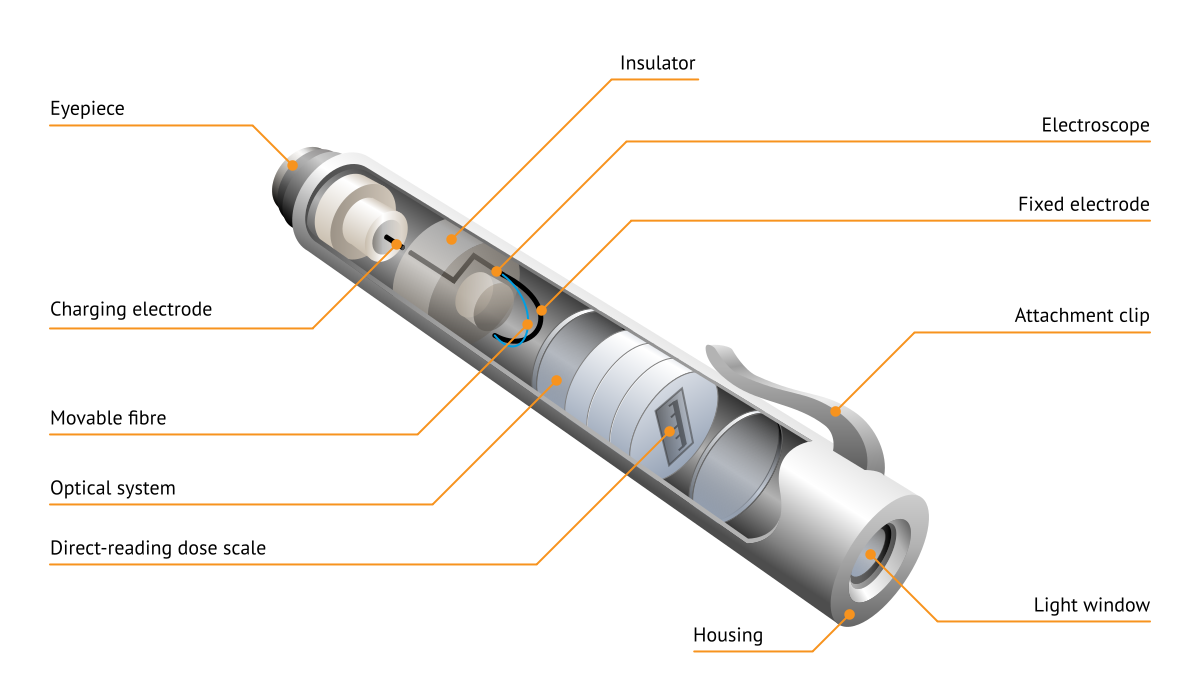
Video: Model of a personal dosimeter.
The biological effects of radiation can depend not only on the dose received but also on the time over which it is delivered. Dose rate expresses the amount of radiation dose received per unit of time. Absorbed dose rate may be expressed, for example, in Gy/s or Gy/h, while equivalent dose rate may be expressed in Sv/h, mSv/h or μSv/h.
Detectors and Dosimeters
Various types of detectors are used to detect and measure ionizing radiation. Dosimeters are used to measure or estimate the radiation dose received by a person. Radiation interacting with a detector produces a physical effect that can be measured and related to the properties of the radiation.
Scintillation detectors incident radiation deposits energy in a scintillating material, producing flashes of light that are detected and converted into electrical signals.
Ionisation chambers radiation passing through a gas produces ions and electrons. An applied electric field collects these charges, producing a measurable electric current proportional to the energy deposited in the gas.
Geiger-Müller counters gas-filled detectors in which ionising radiation initiates a large electrical discharge. They are highly sensitive for detecting and counting radiation events but generally provide little information about the energy of the incident radiation.
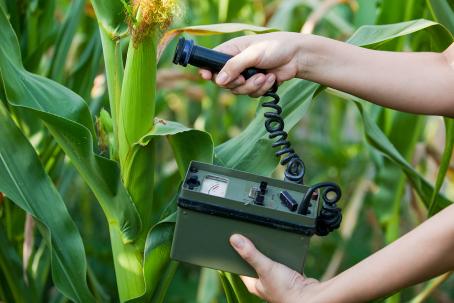
Proportional counters gas-filled detectors operating at a higher voltage than ionisation chambers. The primary ionisation produced by radiation initiates an avalanche of secondary ionisation, generating a pulse whose amplitude is proportional to the energy deposited in the detector.
Trace detector used, for example, for long-term measurements of radon exposure. Charged particles produce microscopic damage tracks in a suitable detector material. After exposure for a specified period, the tracks are chemically developed and counted.
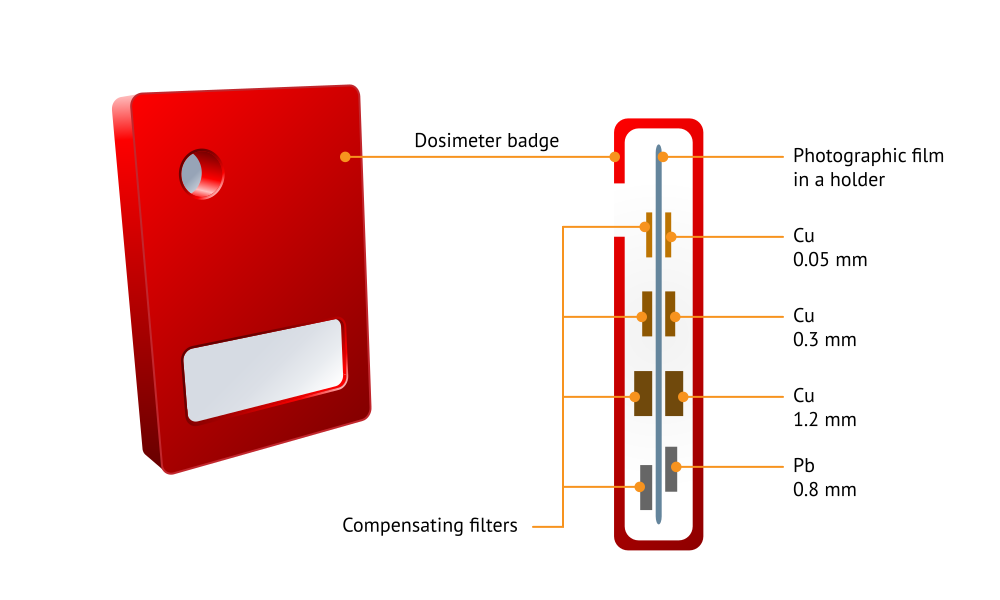
Film dosimeter ionising radiation exposes photographic film contained in a badge worn by a person. The degree of film darkening after development provides a measure of the radiation exposure.
Calorimeter measure the small increase in temperature produced when radiation energy is absorbed by a material.
Thermoluminescent dosimeter absorbed radiation traps electrons in metastable states within the detector material. When the material is subsequently heated, the electrons are released and emit light whose intensity is related to the absorbed dose.
Semiconductor detectors radiation interacting with a semiconductor creates electron-hole pairs. An applied electric field causes these charges to move through the material, producing an electrical signal that can be measured.
Wilson cloud chamber makes the tracks of charged particles visible in a supersaturated vapour. Ions produced along the path of a charged particle act as condensation centres, causing tiny droplets to form and reveal the particle's track. A bubble chamber works on a related principle: charged particles passing through a superheated liquid produce trails of tiny bubbles along their paths.
9 pictures 9 pictures
The curie was historically based on the activity of radium and was later defined as exactly 3.7 × 10¹⁰ radioactive decays per second.
Keep reading
Articles
Radioactivity
Radioactivity is a natural phenomenon. Unstable atom nuclei release particles: helium nuclei (alpha); electrons or positrons (beta); photons (gamma).
5 min read
Ionising Radiation
Ionizing radiation can be classified into alpha, beta, gamma, X-rays, and neutrons, while cosmic radiation is composed primarily of high-energy protons.
4 min read
Natural Sources
Natural sources of radioactivity can be found in the air, soil, cosmic rays, or humans. The annual dose received from them is called "natural background".
4 min read
Man-made Sources
Man-made radioactivity sources are mostly used in medicine for diagnostics and treatment. Coal and nuclear plants produce radioactive waste.
4 min read
Decay Series
Unstable isotopes decay in four decay series (thorium, neptunium, uranium, actinium) into other radionuclides and finally into stable atoms.
3 min read
Effects of Ionising Radiation
Ionising radiation could change material properties. In living tissue, it could damage DNA and lead to cell death. This is used in tumor treatment.
3 min read
Radiation Doses and Activities
A chart of the radioactivity of various objects (e.g., nuts or coal) and the doses produced by some activities (like eating bananas or visiting Chernobyl).
3 min read
Nuclear Power Summary
Nuclear energy originates from the makeup of the atom. Ionizing radiation caused by decay of the atom nuclei is a natural part of our environment.
17 min read