Decay Series
3 min read · Energy Atlas Editorial
Unstable isotopes decay in four decay series (thorium, neptunium, uranium, actinium) into other radionuclides and finally into stable atoms.
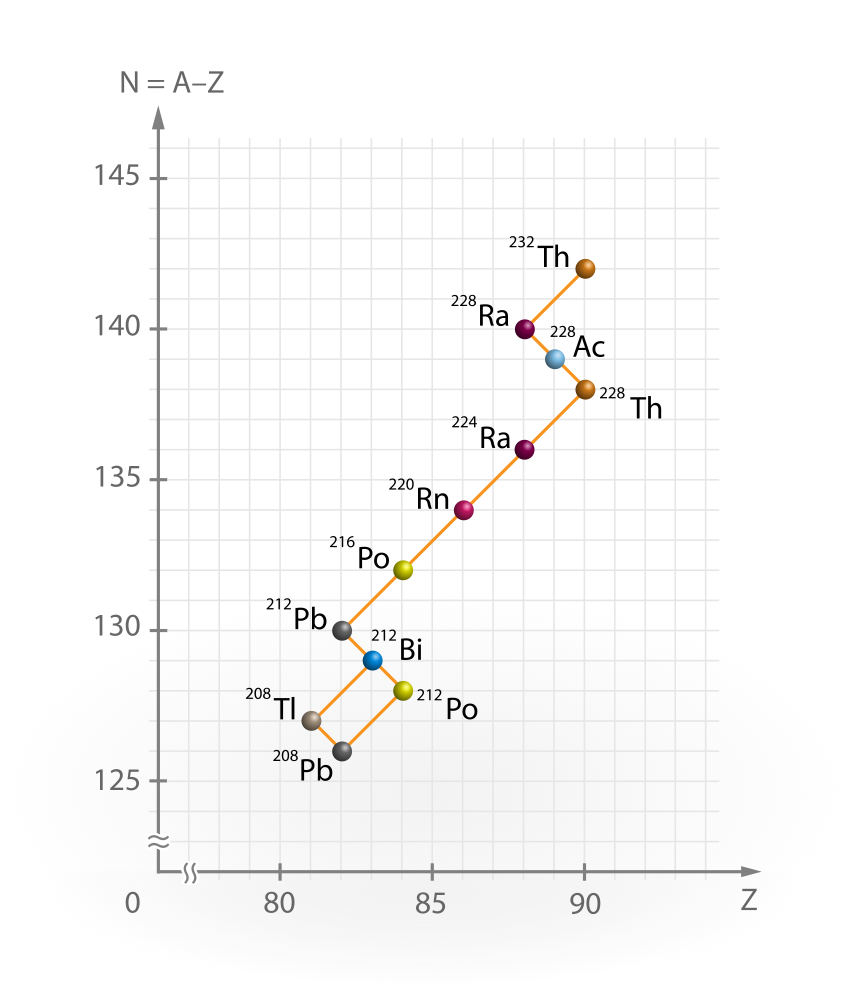
Thorium decay series.
Unstable nuclei (radionuclides) do not necessarily decay directly into stable nuclides. They often decay into other radionuclides, which subsequently undergo further radioactive decay. The sequence of transformations between the original radionuclide and the final stable nuclide is known as a decay series.
Four principal radioactive decay series are recognised: the thorium, neptunium, uranium (or uranium-radium) and actinium (or uranium-actinium) series. They originate from 232Th, 237Np, 238U and 235U, respectively. Successive transformations within these series occur mainly through alpha and beta decay. In alpha decay, the mass number decreases by four, whereas in beta decay it remains unchanged. Gamma radiation may also be emitted as excited daughter nuclei lose excess energy.
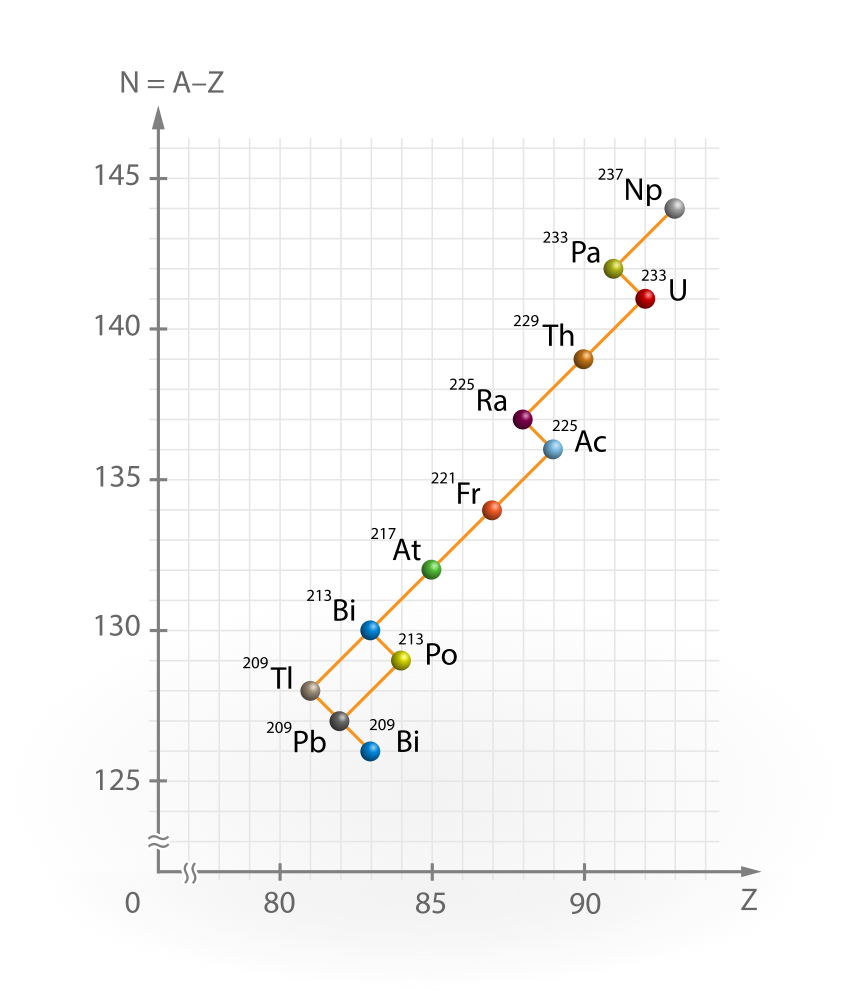
Neptunium decay series.
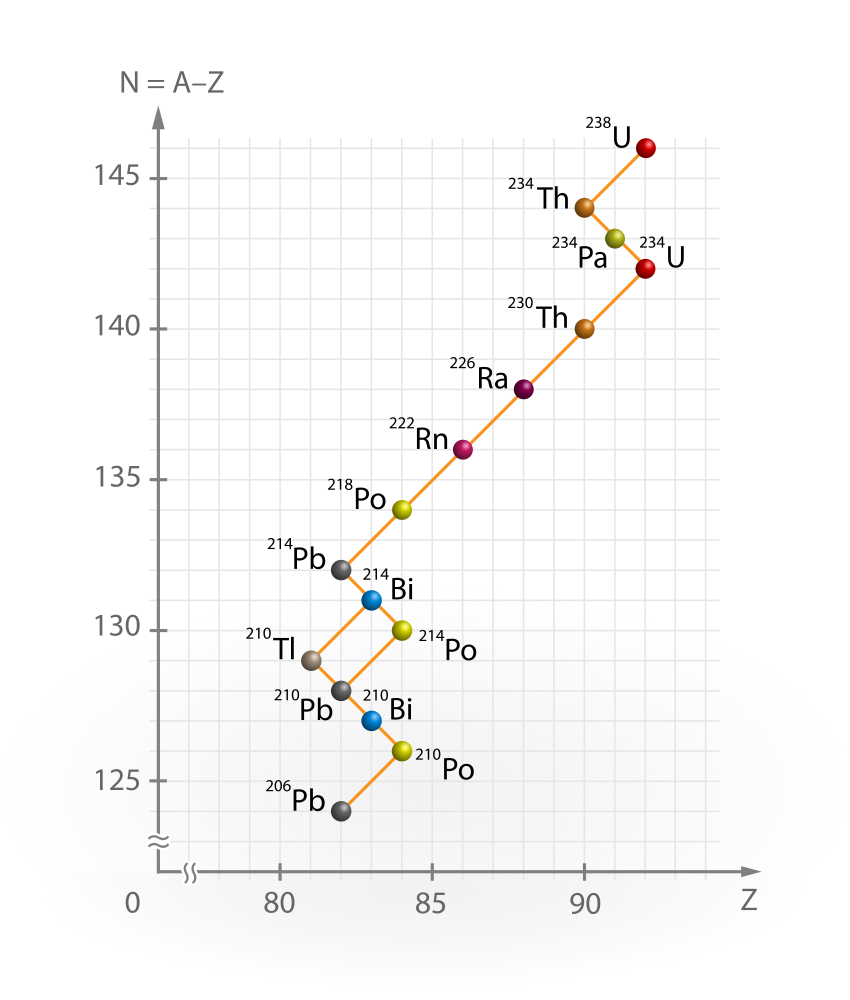
Uranium decay series.
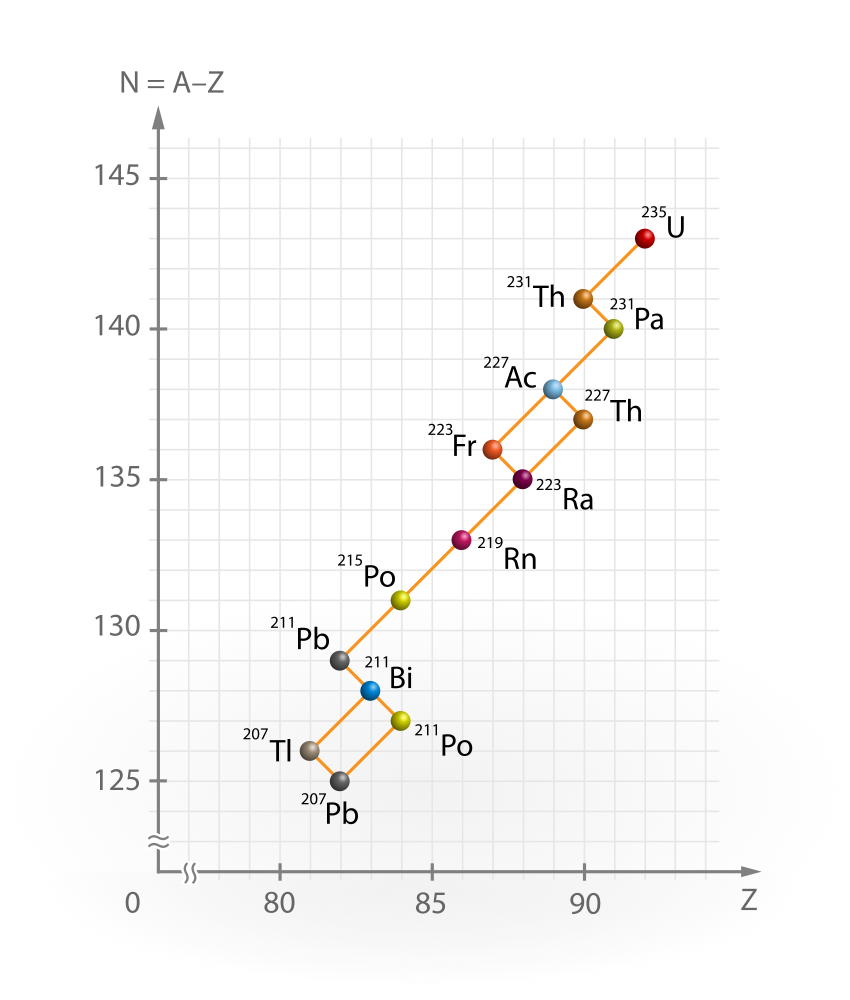
Actinium decay series.
Because alpha decay changes the mass number by four and beta decay does not change it, each series retains its characteristic mass-number relationship: 4n, 4n+1, 4n+2 or 4n+3. The four decay series therefore remain distinct and do not merge.
Decay series contain radionuclides with widely differing half-lives and describe their successive transformations. Some stages of a decay series can branch because a radionuclide may decay by more than one mode. Knowledge of decay series and the relationships between parent and daughter nuclides is important in geochronology and in studies of the origin and history of geological materials.
The neptunium decay series is virtually absent from nature today because its longest-lived member, 237Np, has a half-life of only about 2.14 million years. Any primordial 237Np has therefore long since decayed.
Keep reading
Articles
Radioactivity
Radioactivity is a natural phenomenon. Unstable atom nuclei release particles: helium nuclei (alpha); electrons or positrons (beta); photons (gamma).
5 min read
Ionising Radiation
Ionizing radiation can be classified into alpha, beta, gamma, X-rays, and neutrons, while cosmic radiation is composed primarily of high-energy protons.
4 min read
Natural Sources
Natural sources of radioactivity can be found in the air, soil, cosmic rays, or humans. The annual dose received from them is called "natural background".
4 min read
Man-made Sources
Man-made radioactivity sources are mostly used in medicine for diagnostics and treatment. Coal and nuclear plants produce radioactive waste.
4 min read
Quantities and Units
The radioactivity and its effects are measured by detectors and dosimeters (activity in becquerels, dose in grays, equivalent dose in sieverts).
4 min read
Effects of Ionising Radiation
Ionising radiation could change material properties. In living tissue, it could damage DNA and lead to cell death. This is used in tumor treatment.
3 min read
Radiation Doses and Activities
A chart of the radioactivity of various objects (e.g., nuts or coal) and the doses produced by some activities (like eating bananas or visiting Chernobyl).
3 min read
Nuclear Power Summary
Nuclear energy originates from the makeup of the atom. Ionizing radiation caused by decay of the atom nuclei is a natural part of our environment.
17 min read