
Half-life
3 min read · Energy Atlas Editorial
A half-life is a period after which half of the radioactive material has decayed. The half-life of isotopes is used in medicine or radiocarbon dating.
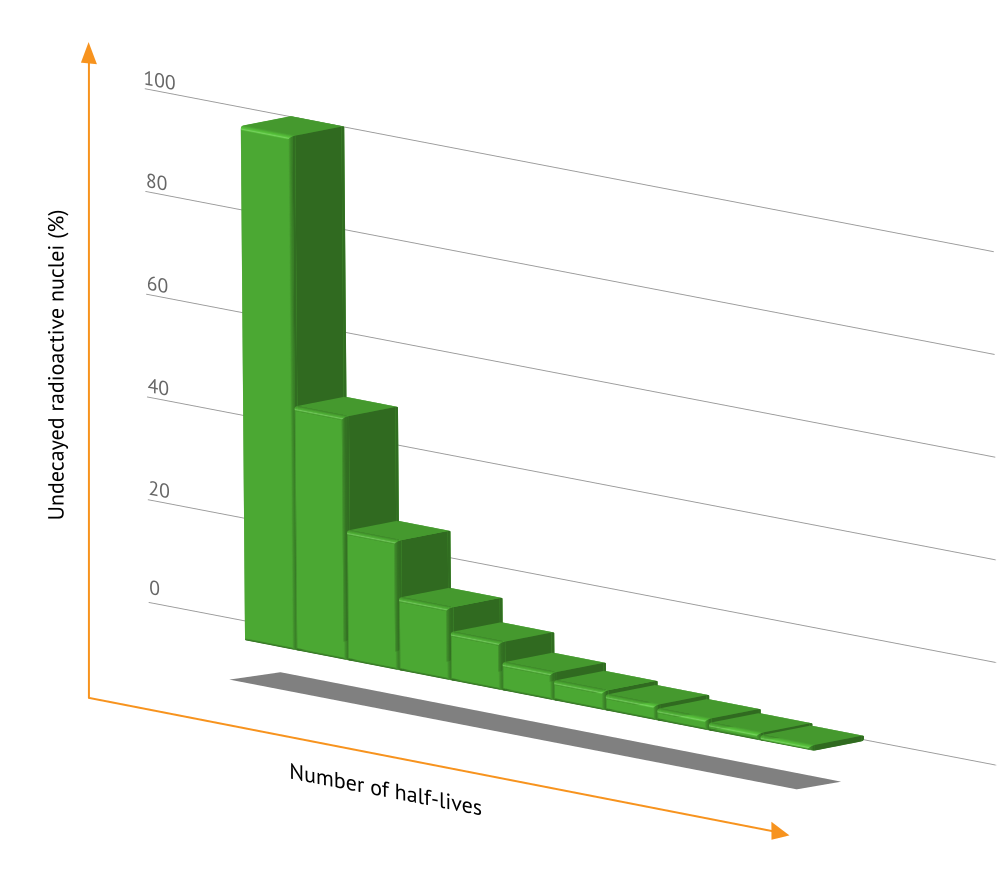
It is impossible to predict when a particular radioactive nucleus will decay. Radioactive decay is a random process, but for a large number of nuclei its behaviour can be described statistically. The half-life is the time required for half of the radioactive nuclei in a sample to decay. During the next half-life, half of the remaining nuclei decay, leaving one quarter of the original number. After ten half-lives, approximately 99.9% of the original radioactive nuclei have decayed. Each radionuclide has its own characteristic half-life, ranging from fractions of a second to billions of years.
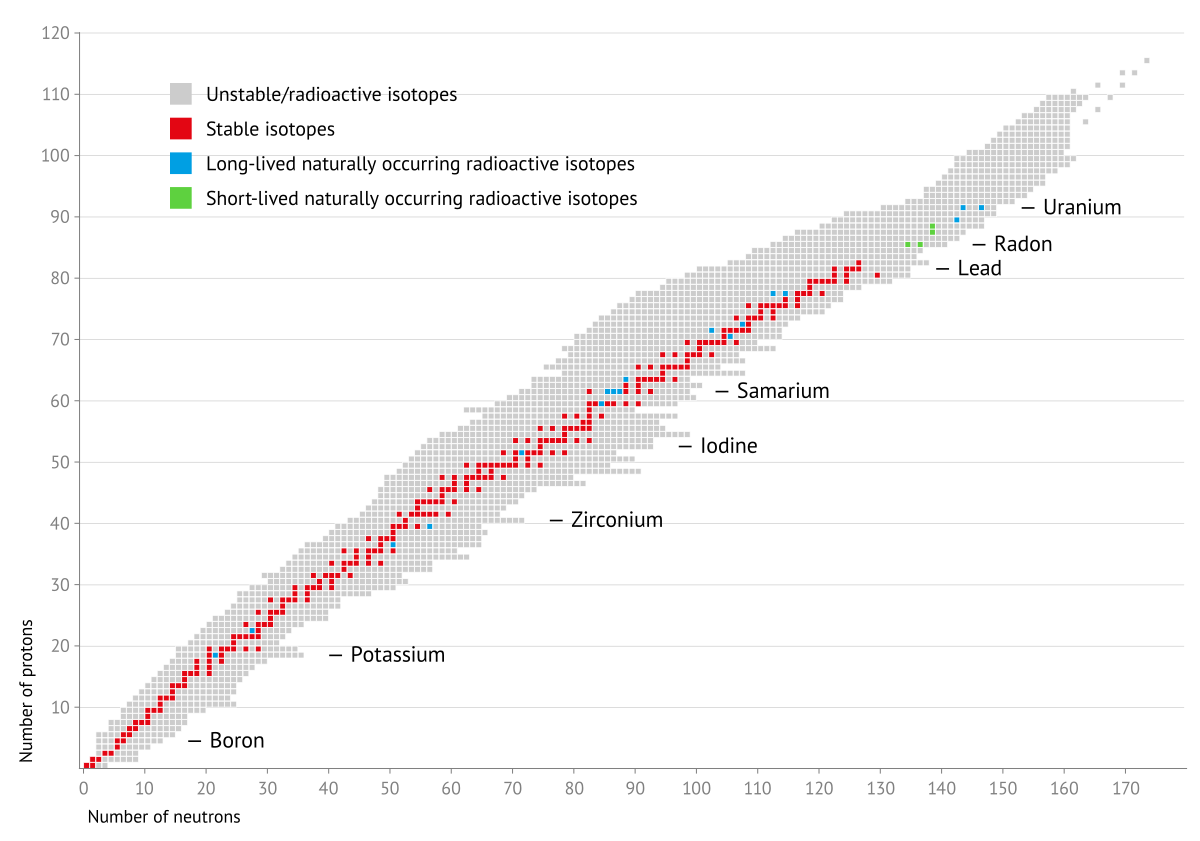
According to some theories, even atoms considered stable may ultimately decay, but their lifetimes could be so long that such decay has never been observed.

Short-lived Radionuclides
Radionuclides with relatively short half-lives, particularly 99mTc and 131I, are widely used in nuclear medicine. They can be incorporated into radiopharmaceuticals used for diagnostic imaging, assessment of organ function or treatment. Their relatively rapid decay helps to limit the duration of radiation exposure in the patient's body.
Radiocarbon Dating
Radiocarbon dating is based on the radioactive decay of the carbon isotope 14C. Living organisms continuously exchange carbon with their environment and therefore contain a small proportion of radioactive 14C. When an organism dies, this exchange stops and the 14C already present gradually decays. After one half-life, approximately 5,730 years, only half of the original 14C remains. By measuring the amount of 14C remaining in organic material, its age can be estimated. Radiocarbon dating can therefore be used to determine the age of archaeological remains, wood and many other materials of biological origin.
The half-life of 223Th is about 0.6 seconds, that of 131I about 8 days, that of 14C about 5,730 years, that of 238U about 4.5 billion years and that of 232Th about 14 billion years.
Dating of Rocks

Radiocarbon dating is suitable mainly for organic materials up to about 50,000—60,000 years old. Much older rocks and minerals can be dated using radionuclides with much longer half-lives. One important method is uranium-lead dating, based on the decay of 238U to 206Pb and 235U to 207Pb. By measuring the proportions of parent uranium isotopes and their daughter lead isotopes in suitable minerals, scientists can determine ages reaching billions of years.
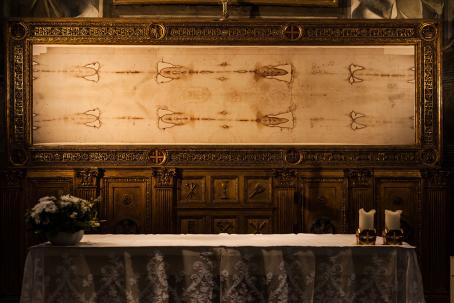
In 1988, samples from the Shroud of Turin were subjected to radiocarbon dating by three laboratories. The measurements dated the linen to AD 1260—1390.
7 pictures 7 pictures