Man-made Sources
4 min read · Energy Atlas Editorial
Man-made radioactivity sources are mostly used in medicine for diagnostics and treatment. Coal and nuclear plants produce radioactive waste.
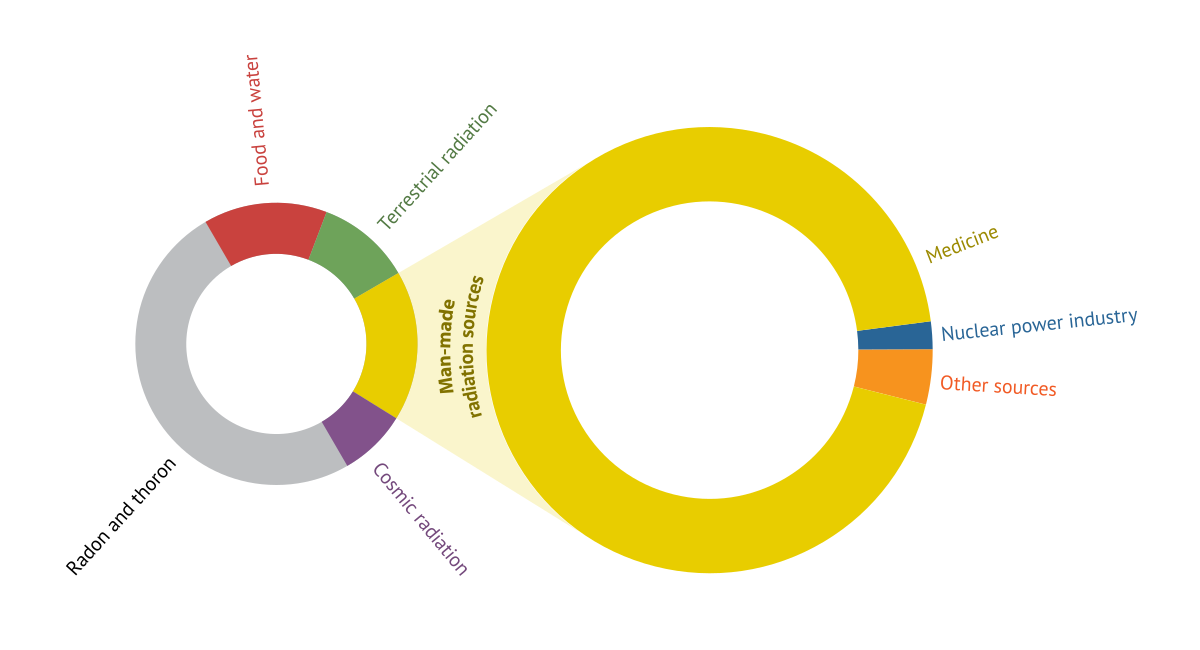
With the discovery and increasing use of ionising radiation, numerous artificial sources of radiation have become part of modern life. They are used primarily in medicine for diagnosis and treatment, but also in industry, scientific research, agriculture and many other fields. Some are encountered in everyday life, for example in certain types of household smoke detectors. Medical procedures account for by far the largest contribution to public exposure from man-made sources. The worldwide average annual effective dose from diagnostic medical exposure is approximately 0.6 mSv per person, although the dose received by an individual varies greatly depending on the number and type of medical examinations undergone.
Medicine
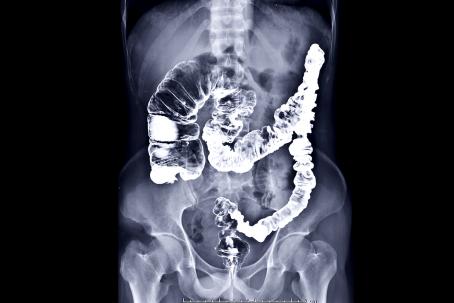
Medicine is the most important field in which people are exposed to man-made sources of ionising radiation. X-rays are widely used for diagnostic imaging, including conventional radiography and computed tomography (CT). Nuclear medicine uses small quantities of radioactive substances known as radiopharmaceuticals, which are introduced into the body and accumulate in particular organs or tissues. The radiation they emit can then be detected using gamma cameras, SPECT or PET systems to provide information about the structure and function of organs. Ionising radiation is also used therapeutically. In radiotherapy, carefully controlled doses of radiation are delivered to tumours to destroy cancer cells while minimising damage to surrounding healthy tissue.
Video: Model of a medical X-ray device used for mammography.
Video: Model of a diagnostic X-ray device used for dental imaging.

Sterilisation
Strong sources of gamma radiation, particularly 60Co, are used to destroy microorganisms. Gamma irradiation can be used to sterilise medical equipment, protect cultural heritage objects against insects and microorganisms, extend the shelf life of certain foods and inhibit sprouting in crops such as potatoes and onions.
Radiotracers
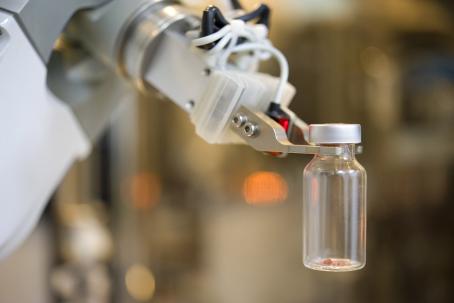
Because even very small quantities of radioactive substances can be detected, radionuclides can be used as tracers. For example, a radiotracer introduced into a pipeline can be monitored to locate leaks or investigate the movement of liquids. In medical and pharmaceutical research, molecules can be labelled with suitable radionuclides so that their distribution, uptake and elimination can be studied. Radiotracers are also used in agriculture to investigate how nutrients and fertilisers are absorbed and distributed within plants.
Industrial Applications
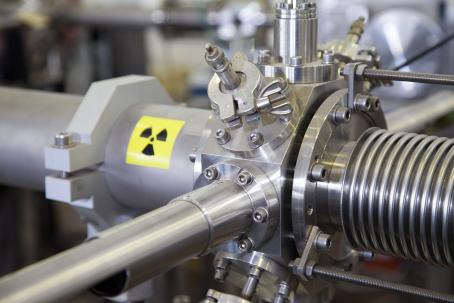
Sources of ionising radiation are widely used in industry for measurement and non-destructive testing. Radiation gauges can measure the thickness, density or level of materials, while industrial radiography uses penetrating gamma rays or X-rays to reveal internal defects and inspect welds and components without damaging them. Neutron-based instruments can be used to determine moisture content and investigate the composition of materials, with applications in construction, mining, agriculture and other industries.
Voyager 1 and Voyager 2, launched in 1977, continue to operate using electricity supplied by radioisotope thermoelectric generators (RTGs) powered by the decay of 238Pu.
Nuclear Fuel and Coal
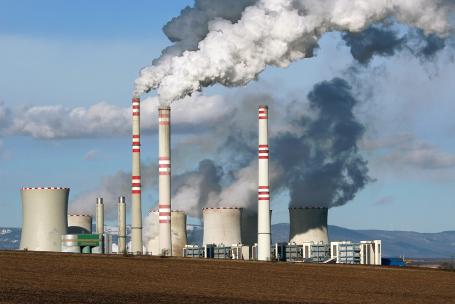
Spent nuclear fuel is a strong source of ionising radiation and must therefore be carefully contained and shielded. It is handled and stored under strict regulatory control, and its contribution to radiation exposure of the general public during normal operation and storage is very small. Coal, although not an artificial radioactive material, naturally contains trace amounts of uranium, thorium, radium, potassium and other radionuclides. During combustion, some of these radionuclides become concentrated in fly ash and other coal combustion residues. Such materials are classified as naturally occurring radioactive material (NORM), or as technologically enhanced naturally occurring radioactive material (TENORM) when industrial processes increase their concentration or potential for exposure.
270 million tonnes of coal may contain approximately 500 tonnes of uranium and 800 tonnes of thorium, although the concentrations of these elements vary considerably between different coal deposits.
Other Sources
Small radioactive sources are also used in some consumer products. Ionisation smoke detectors, for example, contain a very small quantity of 241Am. The alpha particles emitted by the source ionise the air between two electrodes, allowing a small electric current to flow. When smoke enters the detector, smoke particles disrupt the flow of ions and reduce the current. The electronics detect this change and trigger the alarm. Radioactive materials have also historically been used in luminous paints for watches and instruments. Other manufactured products may contain naturally occurring radioactive materials, for example uranium glass or certain phosphate-based products.
5 pictures 5 pictures
If coal contains 1 ppm of uranium, the uranium in one tonne of coal contains more potential fission energy than the chemical energy released by burning the coal, provided that the uranium could be utilised efficiently in a closed nuclear fuel cycle.
Keep reading
Articles
Radioactivity
Radioactivity is a natural phenomenon. Unstable atom nuclei release particles: helium nuclei (alpha); electrons or positrons (beta); photons (gamma).
5 min read
Ionising Radiation
Ionizing radiation can be classified into alpha, beta, gamma, X-rays, and neutrons, while cosmic radiation is composed primarily of high-energy protons.
4 min read
Natural Sources
Natural sources of radioactivity can be found in the air, soil, cosmic rays, or humans. The annual dose received from them is called "natural background".
4 min read
Decay Series
Unstable isotopes decay in four decay series (thorium, neptunium, uranium, actinium) into other radionuclides and finally into stable atoms.
3 min read
Quantities and Units
The radioactivity and its effects are measured by detectors and dosimeters (activity in becquerels, dose in grays, equivalent dose in sieverts).
4 min read
Effects of Ionising Radiation
Ionising radiation could change material properties. In living tissue, it could damage DNA and lead to cell death. This is used in tumor treatment.
3 min read
Radiation Doses and Activities
A chart of the radioactivity of various objects (e.g., nuts or coal) and the doses produced by some activities (like eating bananas or visiting Chernobyl).
3 min read
Nuclear Power Summary
Nuclear energy originates from the makeup of the atom. Ionizing radiation caused by decay of the atom nuclei is a natural part of our environment.
17 min read