Fuel Production
3 min read · Energy Atlas Editorial
Uranium ore is turned into U3O8 (yellowcake) or UF6 (hex), enriched up to 3—5% of 235U, and as a UO2 compressed into pellets inserted into zircalloy tubes.
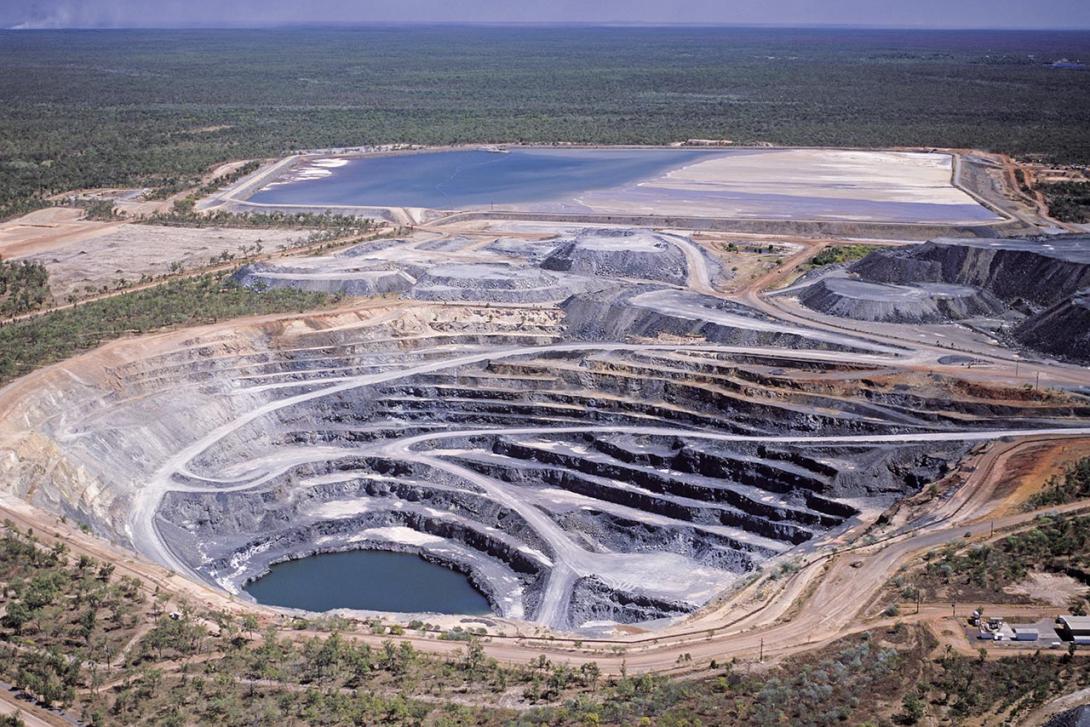
Uranium is a relatively abundant element found in the Earth's crust. Deposits of uranium ore can be found throughout the world. The largest identified recoverable uranium resources are found in Australia (28% of the global total), followed by Kazakhstan (14%) and Canada (10%). Some Canadian deposits contain exceptionally high-grade uranium ore, with uranium concentrations reaching more than 20%. Around 60,000 tonnes of uranium are currently mined worldwide each year, while the world's nuclear reactors require approximately 69,000 tonnes annually. The difference is covered by secondary supplies, including existing uranium inventories and recycled nuclear materials.
Mining
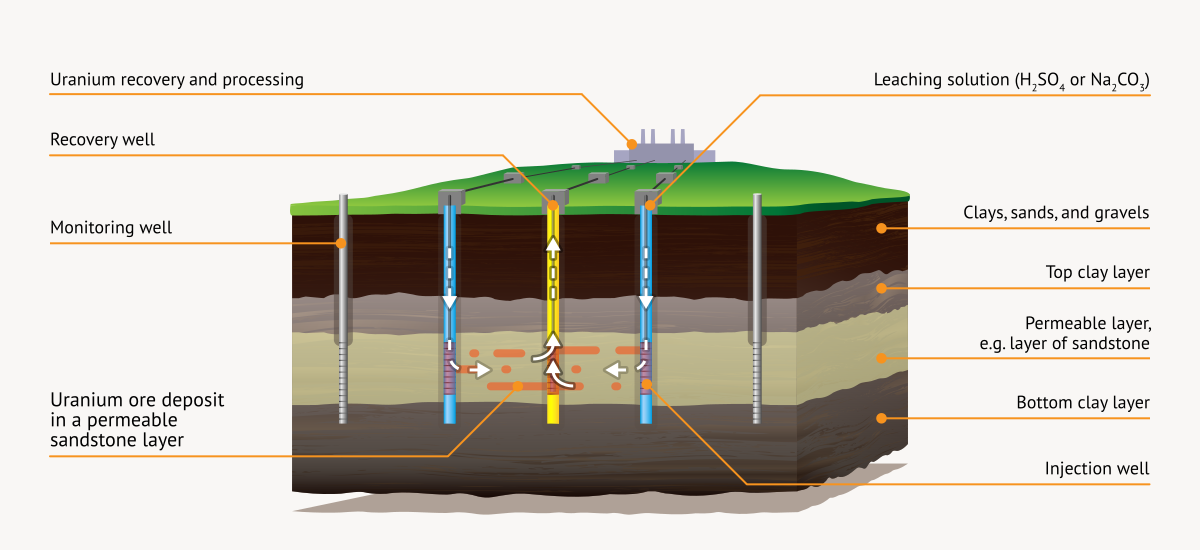
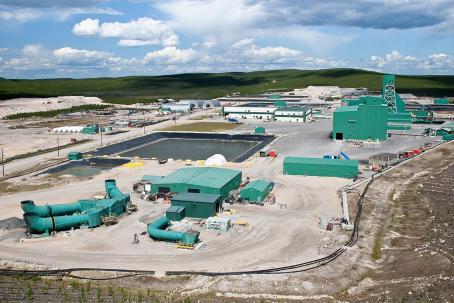
Uranium ore is mined in open-pit or underground mines, or recovered by in situ leaching (ISL), also known as in situ recovery (ISR). Underground mines must be well ventilated to prevent the accumulation of radioactive radon gas. In conventional mining, the extracted ore is crushed and ground and the uranium is then chemically leached, usually using acidic or alkaline solutions depending on the composition of the ore. The uranium is recovered from the leach solution, purified and concentrated to produce uranium concentrate, commonly known as yellowcake. The concentrate consists mainly of uranium oxides, typically represented as U3O8, and is then sent for further refining and conversion.
On Earth, there is 1,000 times more uranium than gold, 30 times more than silver, and as much as zinc, lead, boron, and molybdenum.
Enrichment
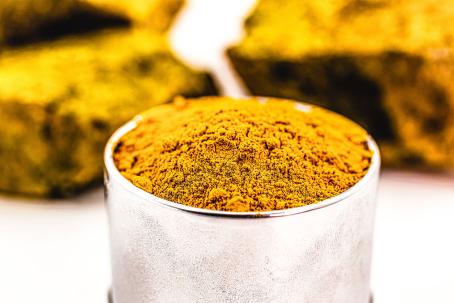
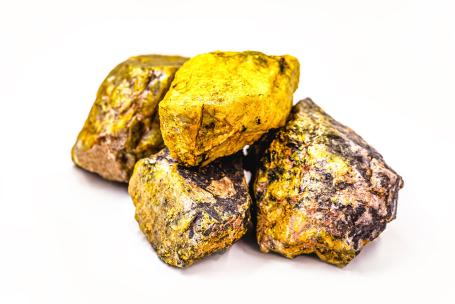
Uranium concentrate, typically represented as uranium oxide U3O8, is commonly known as yellowcake, a name derived from the colour of some forms of the product.
For most nuclear power reactors, the proportion of the uranium isotope 235U must be increased. Since 235U and 238U have virtually identical chemical properties and differ mainly in their mass, they cannot be separated by ordinary chemical methods. Uranium intended for enrichment is therefore converted to uranium hexafluoride (UF6), which can readily be transformed into a gas. Today, enrichment is carried out predominantly using gas centrifuges, which separate the uranium isotopes according to their small difference in mass. Uranium used in conventional light water reactor fuel is typically enriched to about 3—5% 235U. Reactors designed to use natural uranium, such as most PHWRs, do not require enrichment.
Fuel Fabrication
The enriched UF6 is converted to uranium dioxide (UO2) powder, which is pressed into pellets. The pellets are sintered at temperatures above 1,400 °C to form dense ceramic cylinders and are then ground to the required dimensions. In some fuel, a burnable absorber such as gadolinium oxide is added to the uranium dioxide to help control reactor reactivity. The pellets are loaded into tubes made of zirconium alloy and sealed to form fuel rods. The fuel rods are then arranged into fuel assemblies or bundles, depending on the reactor type. Each type of reactor uses fuel specifically designed for its core and operating conditions.
6 pictures 6 pictures
At today's rate of uranium consumption, currently identified recoverable uranium resources would be sufficient for roughly 90 years, even without recycling. Additional resources, further exploration and advanced fuel cycles could extend this period considerably.
Keep reading
Articles
Fuel Enrichment
Enrichment is a physical process that raises the concentration of the 235U isotope to 3—5%. Gaseous diffusion, centrifuges, or laser excitation are used.
4 min read
Fuel Assembly
There are different types of nuclear fuel. A typical fuel assembly for PWR consists of fuel rods, long cylinders of zircaloy filled with UO2 pellets.
4 min read
Fuel Cycle
In a closed fuel cycle, spent nuclear fuel (used fuel removed from a reactor) is reprocessed. In an open cycle, it is stored in interim storage.
4 min read
Interim Storage
Spent fuel is first stored in water pools near the reactor to be cooled. Then it is moved to dry interim storage, located usually on-site.
3 min read
Transportation
Fresh fuel, yellowcake or uranium ore are transported normally, while highly radioactive materials like spent fuel are transported in special flasks.
3 min read
Reprocessing
Spent fuel can be reprocessed. Extracted uranium and plutonium can be used for MOX or uranium fuel production. The remaining waste is vitrified.
4 min read
Final Repositories
The highly radioactive vitrified waste in special leak-tight flasks will be stored for thousands of years in a deep underground final repository.
3 min read