Interim Storage
3 min read · Energy Atlas Editorial
Spent fuel is first stored in water pools near the reactor to be cooled. Then it is moved to dry interim storage, located usually on-site.
After fuel is removed from a reactor, it remains highly radioactive and continues to generate heat through radioactive decay. It must therefore be cooled to prevent overheating. Spent fuel is initially stored in water pools, usually located at the nuclear power plant. The water removes decay heat and also provides effective shielding against ionising radiation. As the radioactivity and decay heat gradually decrease, the fuel may remain in wet storage or, after several years, be transferred to a dry interim storage facility, where it can safely remain for decades. Most interim storage facilities are located at nuclear power plant sites, although centralised facilities receiving spent fuel from several reactors also exist. Depending on national fuel-cycle policy, the stored fuel may eventually be transported for reprocessing or final disposal.
Video: Storage of spent fuel in wet interim storage pools.
Wet Interim Storage
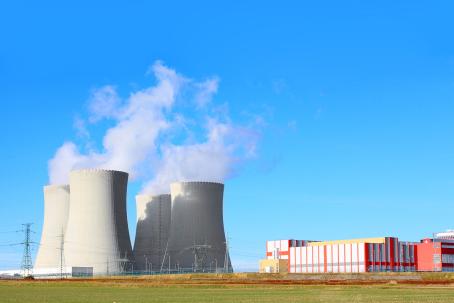
Interim storage of spent nuclear fuel at the Temelín nuclear power plant.
For the first few years after removal from a reactor, spent fuel is stored in large water pools. Fuel assemblies are transferred from the reactor to the spent fuel pool using specialised fuel-handling equipment, usually while remaining under water. The advantages of wet storage include easy visual inspection and effective cooling by circulating water, which also provides radiation shielding. The disadvantages include the need to maintain the water level, circulation, cooling and water chemistry, resulting in higher operating and maintenance requirements than for dry storage. Most spent fuel pools are located at nuclear power plant sites. However, independent centralised wet storage facilities also exist and may receive spent fuel from several reactor units or nuclear power plants.
Dry Interim Storage
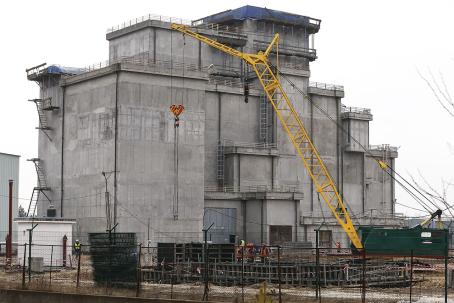
Dry interim storage generally has lower operating and maintenance requirements than wet storage. After sufficient cooling in a spent fuel pool, the fuel is transferred to sealed containers or vaults, usually filled with an inert gas such as helium. Decay heat is removed through the walls of the container and ultimately transferred to the surrounding air, typically by passive natural convection without the need for pumps or fans.
Several types of dry storage systems are used. In some designs, sealed canisters containing spent fuel are placed in concrete vaults or modules; in others, they are stored vertically or horizontally in massive concrete and steel casks. Spent fuel is also commonly stored in dual-purpose casks or canisters designed for both storage and subsequent transport. Their structure provides containment, radiation shielding and effective removal of decay heat. Dry storage systems may be located inside dedicated storage buildings, as at Ahaus in Germany and at the Dukovany and Temelín nuclear power plants in the Czech Republic, or outdoors on specially designed concrete pads, as at Surry in the USA.
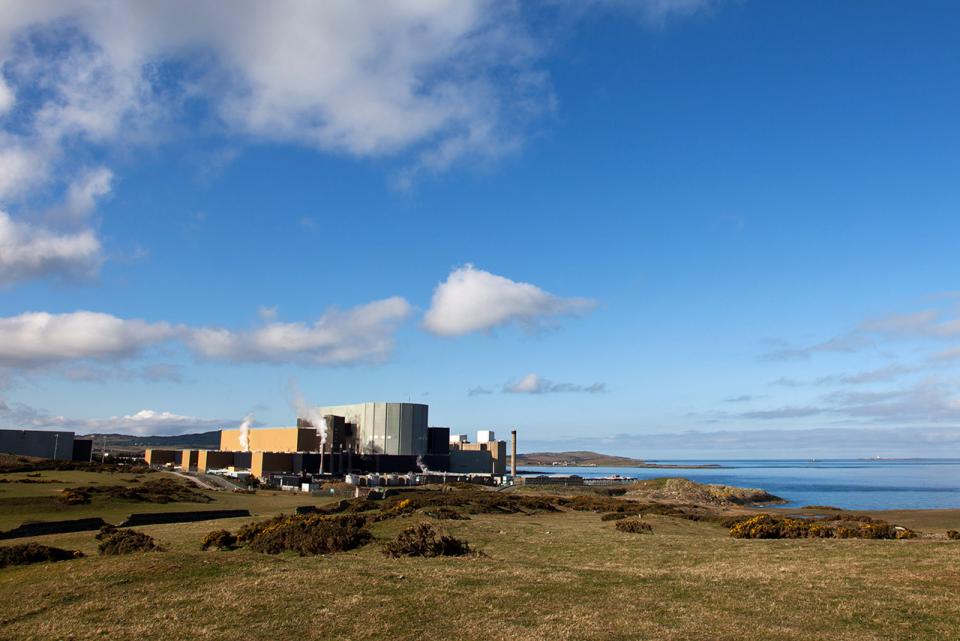
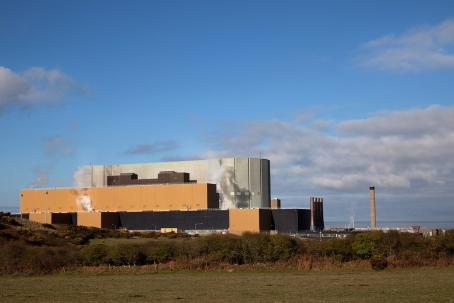
At the Wylfa nuclear power plant, two stages of dry spent fuel storage were used: initial storage cooled by CO2, followed by longer-term storage cooled by air.
Sweden operates a centralised wet interim storage facility known as Clab, where spent fuel from the country's nuclear power plants is stored in water-filled pools in underground rock caverns before final disposal.
Keep reading
Articles
Fuel Production
Uranium ore is turned into U3O8 (yellowcake) or UF6 (hex), enriched up to 3—5% of 235U, and as a UO2 compressed into pellets inserted into zircalloy tubes.
3 min read
Fuel Enrichment
Enrichment is a physical process that raises the concentration of the 235U isotope to 3—5%. Gaseous diffusion, centrifuges, or laser excitation are used.
4 min read
Fuel Assembly
There are different types of nuclear fuel. A typical fuel assembly for PWR consists of fuel rods, long cylinders of zircaloy filled with UO2 pellets.
4 min read
Fuel Cycle
In a closed fuel cycle, spent nuclear fuel (used fuel removed from a reactor) is reprocessed. In an open cycle, it is stored in interim storage.
4 min read
Transportation
Fresh fuel, yellowcake or uranium ore are transported normally, while highly radioactive materials like spent fuel are transported in special flasks.
3 min read
Reprocessing
Spent fuel can be reprocessed. Extracted uranium and plutonium can be used for MOX or uranium fuel production. The remaining waste is vitrified.
4 min read
Final Repositories
The highly radioactive vitrified waste in special leak-tight flasks will be stored for thousands of years in a deep underground final repository.
3 min read
Questions
Could we send spent nuclear fuel into space?
Orbital mechanics and rocket failure modes make space disposal a spectacularly poor waste plan.