Transportation
3 min read · Energy Atlas Editorial
Fresh fuel, yellowcake or uranium ore are transported normally, while highly radioactive materials like spent fuel are transported in special flasks.
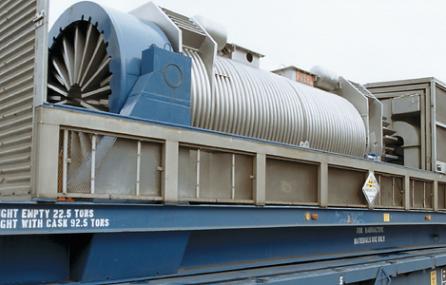
Every year, around 20 million shipments of radioactive material are transported around the world by road, rail, sea and air. The great majority are unrelated to nuclear power and involve radioactive materials used in medicine, industry, agriculture and research. Only a small proportion of radioactive material transported worldwide is associated with the nuclear fuel cycle, and shipments of highly radioactive spent nuclear fuel or high-level waste represent a particularly small fraction of the total.
Transportation — What and Where
Within the nuclear fuel cycle, spent fuel may be transported from nuclear power plants to centralised interim storage facilities, from storage facilities to reprocessing plants, or eventually to a geological repository for final disposal. Reprocessed nuclear materials and radioactive waste may also require transport between specialised fuel-cycle facilities.
Other nuclear fuel-cycle materials also require transport. Fresh nuclear fuel has a relatively low level of radioactivity and does not require the heavy shielding needed for spent fuel. Uranium concentrate (yellowcake) is commonly transported in drums, while uranium hexafluoride (UF6), used in uranium conversion and enrichment, is transported in specially designed cylinders. UF6 is only weakly radioactive but presents significant chemical hazards and must therefore be handled and transported under strict safety requirements.
Transport Casks
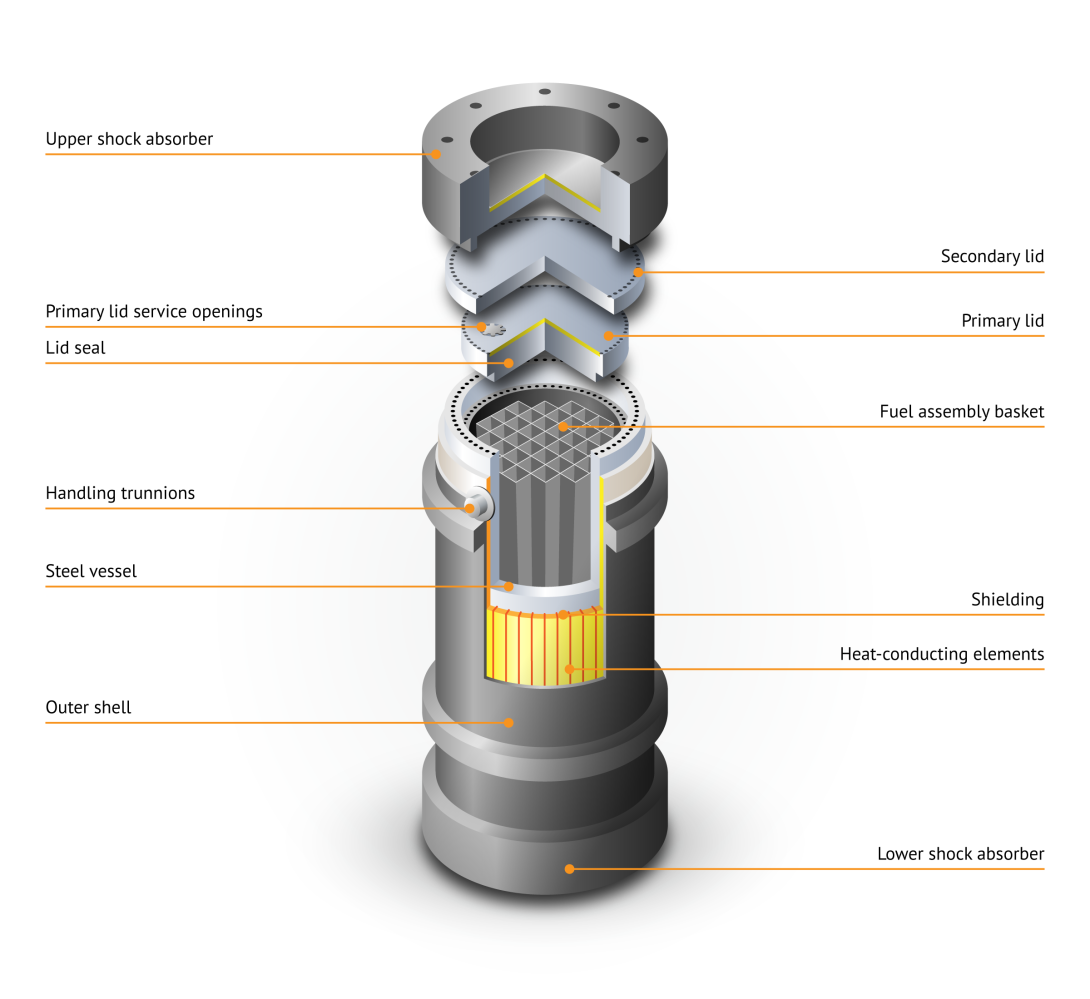
Before transport,spent nuclear fuel is loaded into a specially designed transport cask that provides containment, radiation shielding, protection against criticality and removal of decay heat. Such casks are massive structures made primarily of steel, often combined with additional shielding materials. Depending on their design and mode of transport, spent fuel casks can weigh well over 100 tonnes when loaded. Cooling fins on the outer surface of some designs facilitate the transfer of decay heat to the surrounding air. The dimensions and capacity vary considerably depending on the design. A large transport cask may weigh around 100 tonnes when empty and carry several tonnes of spent nuclear fuel; when loaded, its total mass can exceed 120 tonnes.
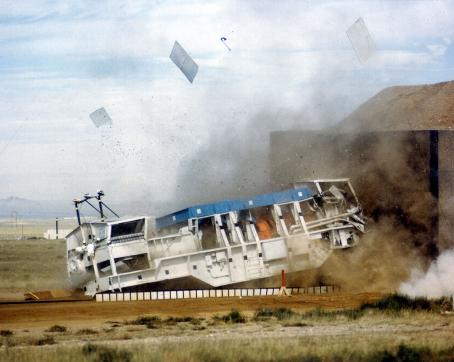
Transport casks must comply with stringent international safety requirements designed to ensure adequate containment, radiation shielding and criticality safety under both normal and hypothetical accident conditions. Type B packages used for highly radioactive materials such as spent fuel must demonstrate their ability to withstand a demanding sequence of tests, including:
1 m drop onto a steel bar. · 9 m free fall onto an unyielding surface. · Exposure to a fully engulfing fire at 800 °C for 30 minutes. · Immersion under 15 m of water for 8 hours.
In addition to regulatory tests, transport cask designs have been subjected to numerous full-scale demonstration tests involving high-speed collisions, impacts with massive barriers and severe fires. These tests have demonstrated the considerable robustness of spent fuel transport packages under extreme accident conditions.
Transport Vehicles
Casks containing spent nuclear fuel and other highly radioactive materials may be transported by road, rail or sea, depending on their size, weight and destination. Heavy road and rail shipments may require specialised vehicles and handling equipment, while maritime shipments of spent fuel are carried by specially designed ships. Radioactive materials are also routinely transported by air, particularly medical and industrial radioisotopes, but large consignments of spent nuclear fuel are normally transported by surface routes.
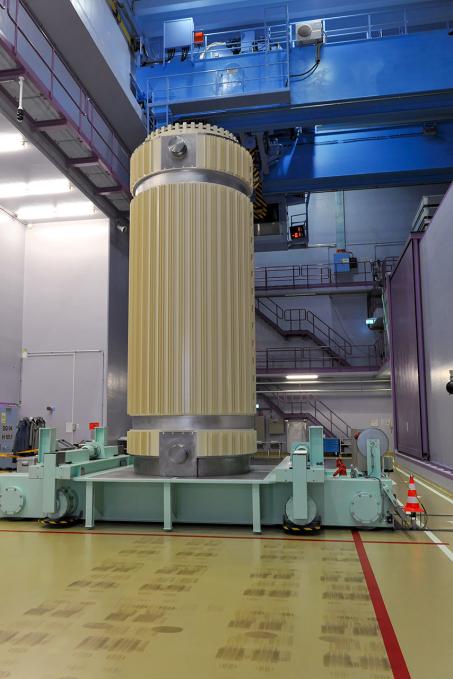
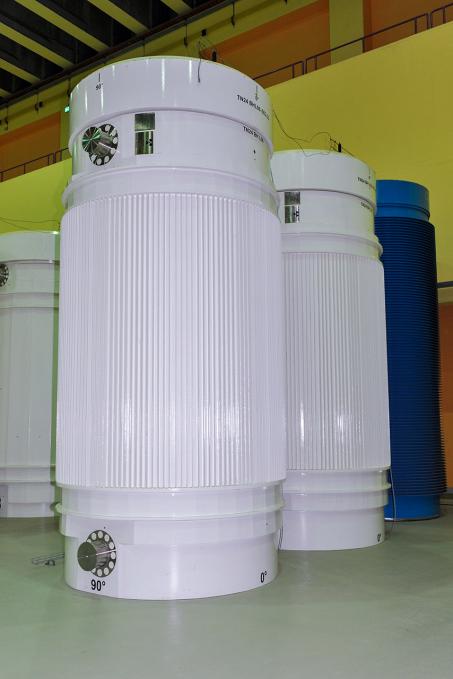
Since 1971, at least 25,000 shipments of spent nuclear fuel have been transported worldwide over many millions of kilometres by land and sea. This extensive transport experience has been achieved without radiological releases causing harm to the public.
Keep reading
Articles
Fuel Production
Uranium ore is turned into U3O8 (yellowcake) or UF6 (hex), enriched up to 3—5% of 235U, and as a UO2 compressed into pellets inserted into zircalloy tubes.
3 min read
Fuel Enrichment
Enrichment is a physical process that raises the concentration of the 235U isotope to 3—5%. Gaseous diffusion, centrifuges, or laser excitation are used.
4 min read
Fuel Assembly
There are different types of nuclear fuel. A typical fuel assembly for PWR consists of fuel rods, long cylinders of zircaloy filled with UO2 pellets.
4 min read
Fuel Cycle
In a closed fuel cycle, spent nuclear fuel (used fuel removed from a reactor) is reprocessed. In an open cycle, it is stored in interim storage.
4 min read
Interim Storage
Spent fuel is first stored in water pools near the reactor to be cooled. Then it is moved to dry interim storage, located usually on-site.
3 min read
Reprocessing
Spent fuel can be reprocessed. Extracted uranium and plutonium can be used for MOX or uranium fuel production. The remaining waste is vitrified.
4 min read
Final Repositories
The highly radioactive vitrified waste in special leak-tight flasks will be stored for thousands of years in a deep underground final repository.
3 min read