Final Repositories
3 min read · Energy Atlas Editorial
The highly radioactive vitrified waste in special leak-tight flasks will be stored for thousands of years in a deep underground final repository.
After radioactive waste has been treated and conditioned, for example by compaction, vitrification, bituminisation or cementation, it must eventually be disposed of in a suitable repository. Very low-level and low-level waste can generally be disposed of in near-surface facilities, where waste packages are placed in engineered structures and isolated from the environment by a system of barriers. Waste containing larger quantities of long-lived radionuclides requires disposal at greater depths, while high-level waste and spent nuclear fuel intended for direct disposal require deep geological repositories.
Locality Selection
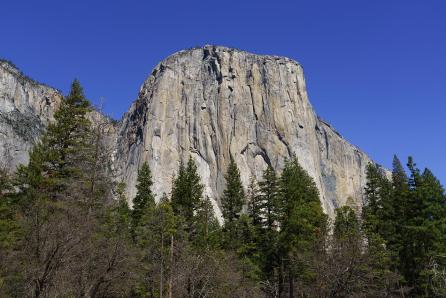
High-level radioactive waste and spent nuclear fuel intended for direct disposal contain long-lived radionuclides and must be isolated from people and the environment for very long periods. Deep geological disposal is internationally regarded as an appropriate solution. A suitable repository site must provide a stable geological environment in which natural and engineered barriers work together to limit the movement of radionuclides. Potential host rocks include crystalline rocks such as granite and gneiss, clay formations, volcanic tuff and rock salt.
Site selection takes account of geological stability, groundwater movement and chemistry, seismic activity, erosion and possible long-term changes in climate and surface conditions. The presence of groundwater does not in itself make a site unsuitable; rather, its movement and interaction with the engineered barriers and host rock must be sufficiently well understood to demonstrate long-term safety. Existing mines are generally unsuitable because excavation and previous mining activities may have disturbed the surrounding rock.
Most countries using nuclear power have not yet begun constructing deep geological repositories for spent nuclear fuel or high-level waste. International repositories shared by several countries have also been studied as a possible future option.
Barriers and Safety
Deep geological repositories rely on a system of multiple engineered and natural barriers. Their long-term safety must be demonstrated for the expected evolution of the repository as well as for a range of possible disruptive events. Depending on the repository concept, the principal barriers may include:
- Immobilisation of radionuclides in the spent fuel itself or in a durable waste matrix such as borosilicate glass;
- A corrosion-resistant waste canister or disposal container;
- A buffer and backfill material, such as bentonite clay, surrounding the canister;
- The stable host rock and surrounding geological environment.
Repository Concepts and Projects
Video: Model of the natural and engineered barriers used for the geological disposal of radioactive waste.
Finland and Sweden have developed similar disposal concepts in which spent nuclear fuel is sealed in robust copper canisters, surrounded by bentonite clay and emplaced several hundred metres deep in crystalline bedrock. Finland's ONKALO repository at Olkiluoto is the world's first industrial-scale geological disposal facility for spent nuclear fuel and is approaching operation. In Sweden, construction of the spent fuel repository at Forsmark began in 2025; the repository will be located about 500 metres below the surface.
France is developing the Cigéo geological repository for high-level and long-lived intermediate-level waste in a deep clay formation. The repository concept uses the very low permeability of the clay host rock as an important component of the long-term containment system.
In the United States, Yucca Mountain in Nevada was selected as the proposed site for a geological repository for spent nuclear fuel and high-level waste. The repository was designed for emplacement in volcanic tuff several hundred metres below the surface and above the groundwater table. A licence application was submitted in 2008, but the project was suspended and no repository has been constructed. The licensing proceeding remains incomplete.
The Waste Isolation Pilot Plant (WIPP) in New Mexico has been operating since 1999 as a geological repository for defence-generated transuranic waste. The waste is disposed of about 650 metres underground in a thick salt formation. Over time, the salt slowly deforms and closes the excavated disposal rooms, helping to isolate the waste from the environment. WIPP does not dispose of commercial spent nuclear fuel or high-level radioactive waste.
Natural Repositories
The long-term behaviour of radionuclides in geological environments can also be studied using natural analogues. One of the most remarkable examples is the natural nuclear fission phenomenon discovered at Oklo in Gabon.
About two billion years ago, natural self-sustaining nuclear fission reaction occurred in uranium deposits at Oklo in Gabon. Several reactor zones operated intermittently for hundreds of thousands of years, producing fission products and plutonium similar to some of the radionuclides found in spent nuclear fuel. Despite the absence of engineered barriers, many of these radionuclides remained remarkably close to the locations where they were produced. Oklo therefore provides a valuable natural analogue for studying the long-term migration of radioactive elements through geological formations.
Other natural analogue sites used to study the long-term behaviour of uranium and other elements include Cigar Lake in Canada and Morro do Ferro in Brazil.
7 pictures 7 pictures
Keep reading
Articles
Fuel Production
Uranium ore is turned into U3O8 (yellowcake) or UF6 (hex), enriched up to 3—5% of 235U, and as a UO2 compressed into pellets inserted into zircalloy tubes.
3 min read
Fuel Enrichment
Enrichment is a physical process that raises the concentration of the 235U isotope to 3—5%. Gaseous diffusion, centrifuges, or laser excitation are used.
4 min read
Fuel Assembly
There are different types of nuclear fuel. A typical fuel assembly for PWR consists of fuel rods, long cylinders of zircaloy filled with UO2 pellets.
4 min read
Fuel Cycle
In a closed fuel cycle, spent nuclear fuel (used fuel removed from a reactor) is reprocessed. In an open cycle, it is stored in interim storage.
4 min read
Interim Storage
Spent fuel is first stored in water pools near the reactor to be cooled. Then it is moved to dry interim storage, located usually on-site.
3 min read
Transportation
Fresh fuel, yellowcake or uranium ore are transported normally, while highly radioactive materials like spent fuel are transported in special flasks.
3 min read
Reprocessing
Spent fuel can be reprocessed. Extracted uranium and plutonium can be used for MOX or uranium fuel production. The remaining waste is vitrified.
4 min read
Questions
Could we send spent nuclear fuel into space?
Orbital mechanics and rocket failure modes make space disposal a spectacularly poor waste plan.