
Tidal Energy and Sea Wave Power
3 min read · Energy Atlas Editorial
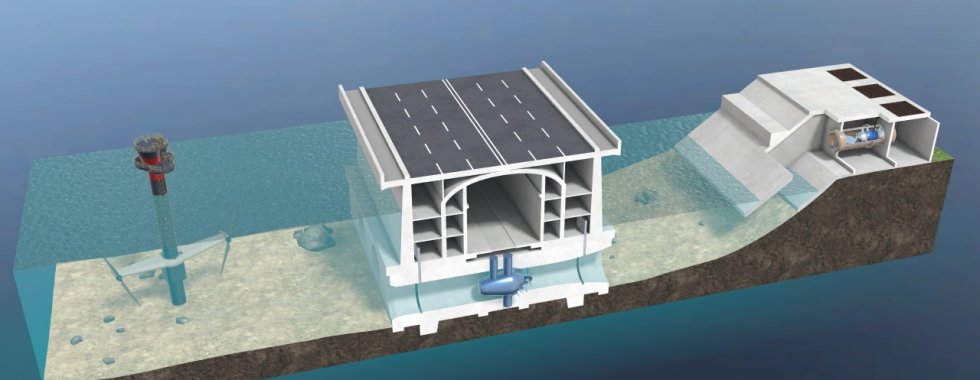
Tidal power plants use ebb-tide energy from turbines in the dam enclosing a tidal basin, while tidal stream generators are turbines anchored to the seabed.
Tidal Energy
Tidal barrage power plants exploit the difference in water level between the sea and a basin created by a barrage. Water flowing between the sea and the basin passes through turbines to generate electricity. Depending on the design, electricity can be generated during the ebb tide, the flood tide or in both directions. Examples of operating tidal barrage power plants can be found in South Korea, France, Russia and China.
Just as in the case of large dams, tidal barrages can have a significant impact on their environment. Damming an estuary or bay can affect fish migration, ship traffic and natural sediment transport.
An alternative approach is to harness tidal currents directly using tidal stream generators.
Tidal stream generators (TSG), also known as tidal energy converters (TEC), extract kinetic energy directly from tidal currents without the need for a barrage. They may be mounted on the seabed or installed on floating structures and are particularly suitable for locations with strong tidal currents, such as straits and channels.
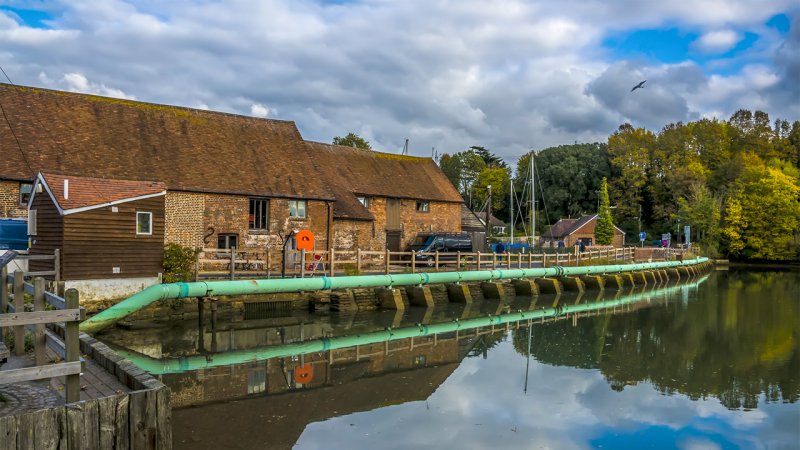
Tidal energy drove tidal mills as early as the 15th century. A tidal power project with a proposed capacity of up to 87 GW has been considered for Penzhin Bay in Russia. However, no such power plant is currently under construction. On August 4, 2011, South Korea began operating the world's largest tidal barrage power plant. The Sihwa plant has an installed capacity of 254 MW, surpassing the 240 MW La Rance tidal power plant in France, which had previously been the world's largest.
Wave Power
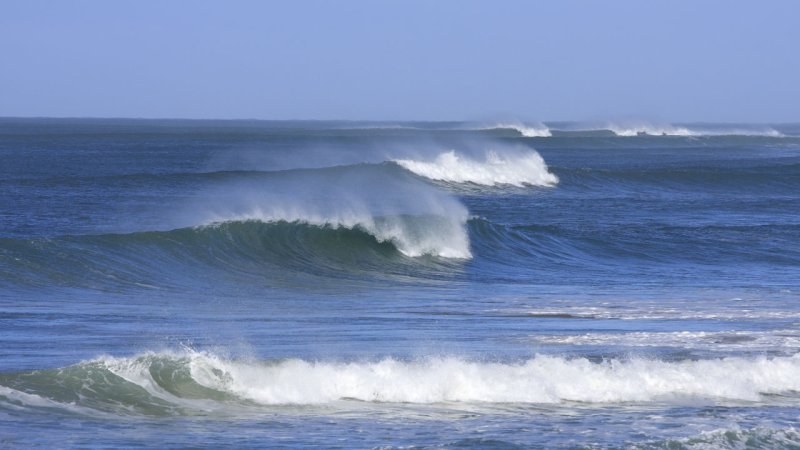
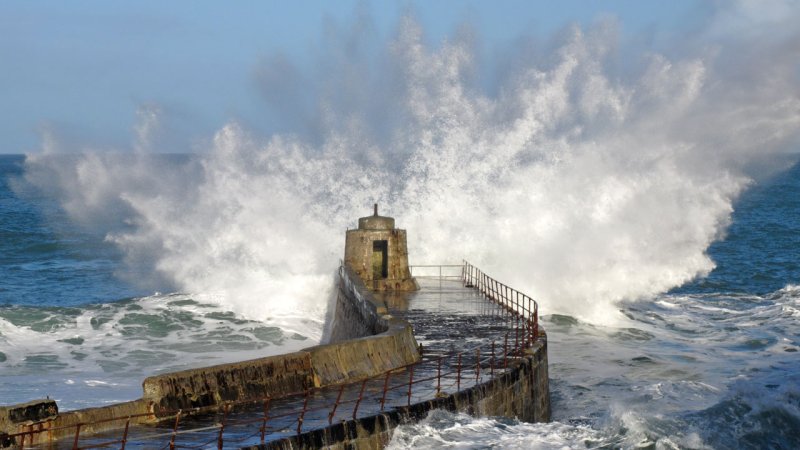
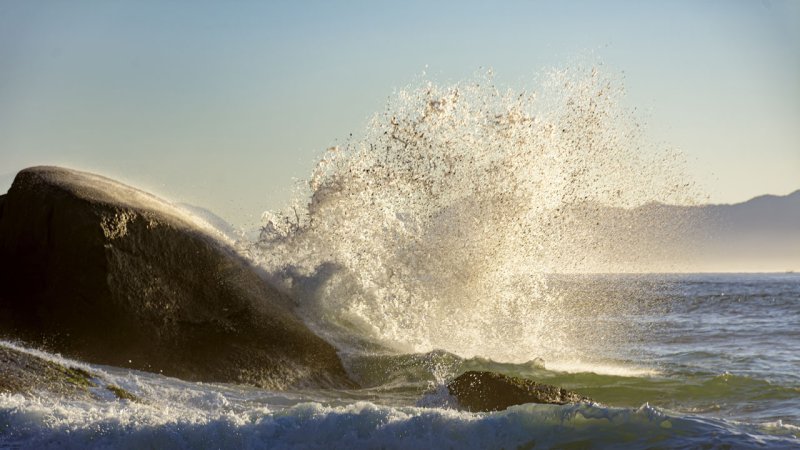
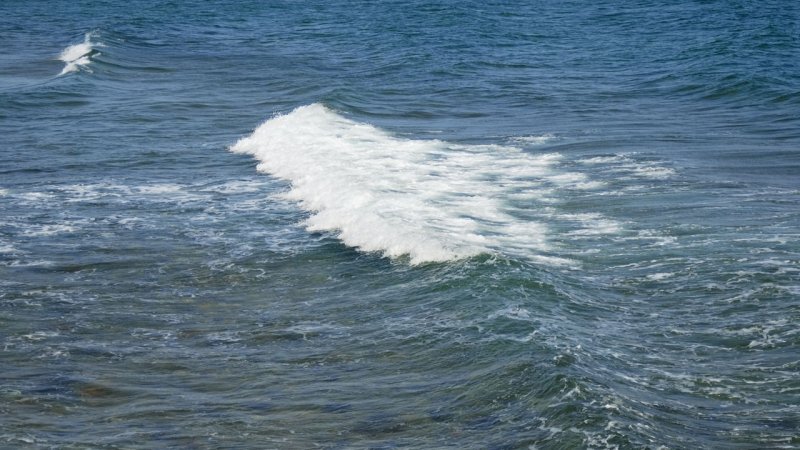
Ocean waves are generated mainly by winds blowing over the sea surface. These winds are ultimately driven by uneven solar heating of the Earth's surface and atmosphere. As the wind blows over the ocean, part of its energy is transferred to the water, creating waves. Wave energy represents a large renewable energy resource, and technologies for harnessing it have been developed and tested in several countries, including the United Kingdom, Ireland, Norway, Denmark and Japan.
Many different types of wave energy converters have been developed, including point absorbers, attenuators, oscillating water columns, oscillating wave surge converters and overtopping devices. Although numerous prototypes and demonstration projects have been tested, wave power has not yet achieved widespread commercial deployment.
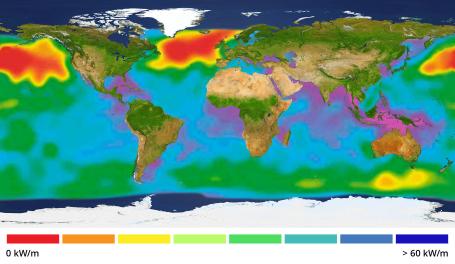
Marine Energy On-line interactive 3D model
Keep reading
Articles
The Physical Properties of Water
Water is a chemical compound made from one oxygen and two hydrogen atoms. At normal conditions, it is a colourless, clear, and odourless liquid.
3 min read
The Origin of Water Energy
The Sun warms surface water and evaporates it. After condensation, the water falls on the land with exploitable potential energy relative to ocean level.
3 min read
History of Water Energy Utilization
The energy of water was used since ancient times for grinding grain or irrigation. Later it powered mills or hammers, and finally a turbine was invented.
3 min read
Water Energy and Its Uses
The amount of available water energy, kinetic and potential, depends on hydrologic potential, mostly on hydraulic head and flow rate.
3 min read
Dams and Reservoirs
The dams create water reservoirs for hydro power plants, to prevent floods or to collect drinking water. Typical dams are gravity or concrete arch dams.
3 min read
The Highest Dams and Largest Reservoirs
The highest dam is the 305 m high, concrete arch-shaped Jinping-I dam in China. The largest reservoir is Lake Kariba in Zambezi, with a volume of 180 km3.
3 min read
The Segner Wheel
The Segner wheel was an important step on the way to modern turbines. Its principle is today used in rotating irrigation sprinkler systems.
3 min read
Francis Turbine
The Francis turbine has a radial-axial design, variable pitch guide vanes, and fixed runner blades. The largest one has a diameter of 10 m.
3 min read
Kaplan Turbine
The Kaplan reaction water turbine with adjustable blades, invented in 1918, is used in places with minimal heads and relatively high, variable flow rates.
3 min read
Pelton Turbine
The Pelton turbine is an isobaric impulse action turbine. The water jet is directed tangentially at the spoon-shaped buckets on the runner.
3 min read
Choosing a turbine (Turbine selection graph)
The turbine selection graph helps to select the best turbine type for the given hydraulic head and rate of flow.
3 min read
Hydroelectric Power Plant Operating Principles
In hydroelectric power plants, the water propels the turbine blades, and the generator transforms the energy of a rotating turbine shaft into electricity.
3 min read
Types of Hydroelectric Power Plants
The hydroelectric power plants can be divided into accumulation ones with a reservoir, run-of-the river without a dam, derivational, and pumped-storage.
3 min read
The Largest Hydroelectric Power Plants in the World
The largest hydroelectric dams in the world are the "Three Gorges Dam" in China, Itaipú Dam and Guri Dam in South America.
4 min read
Marine Current Power and Ocean Thermal Energy
Energy contained in ocean currents can be exploited by various underwater turbines or by an OTEC system that uses ocean temperature differences.
3 min read
Environmental Impact of Hydropower
The construction of a hydroelectric power plant affects a large area ecosystem and often leads to people's relocation. Then a new balance is established.
3 min read