
Francis Turbine
3 min read · Energy Atlas Editorial
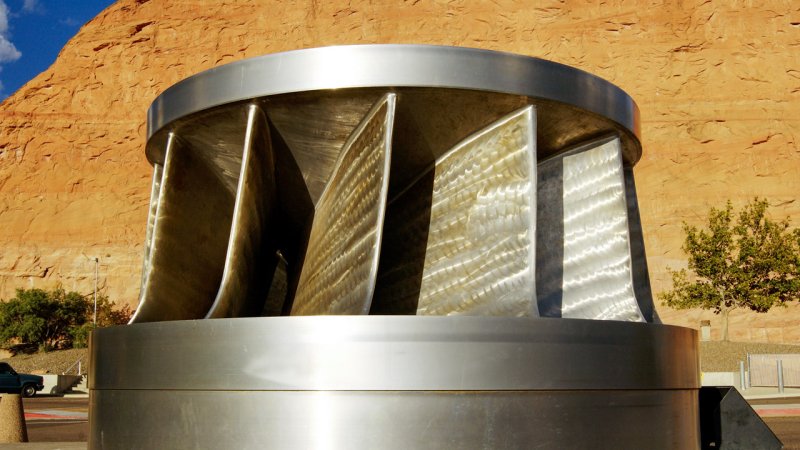
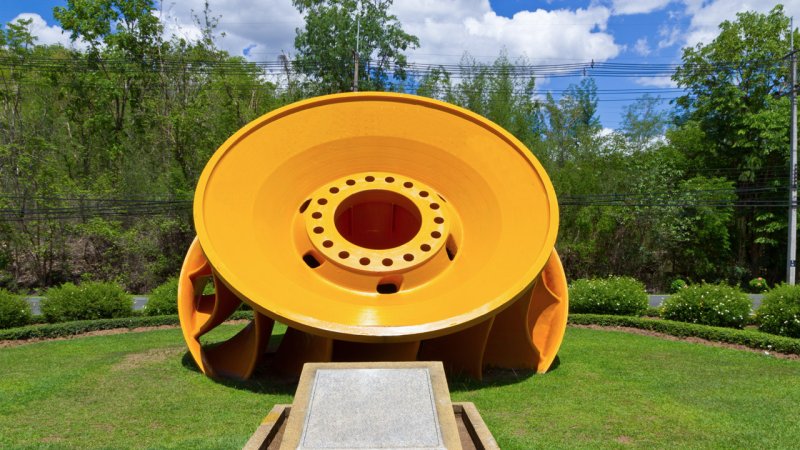
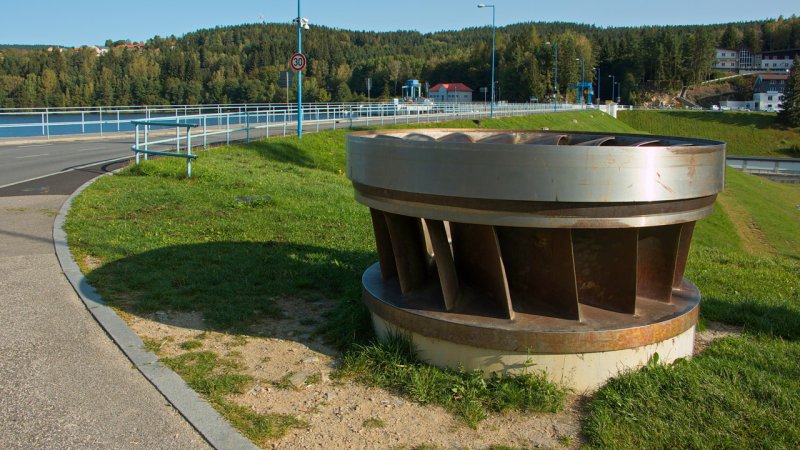
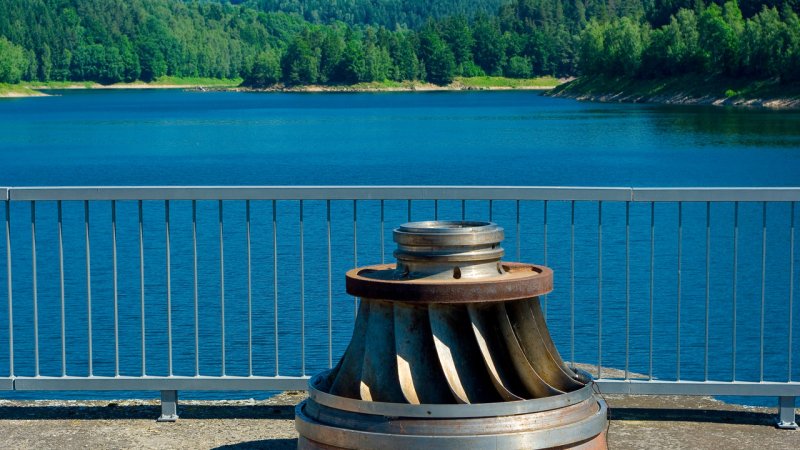
The Francis turbine has a radial-axial design, variable pitch guide vanes, and fixed runner blades. The largest one has a diameter of 10 m.
James Bicheno Francis
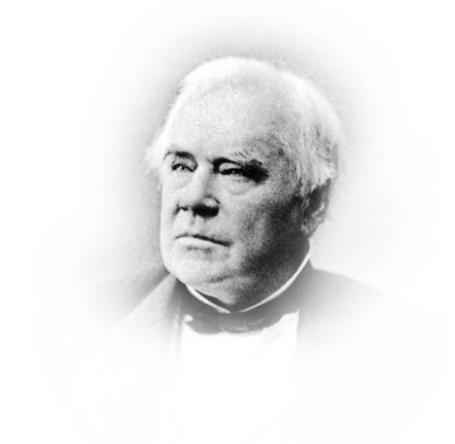
18. 5. 1815, Southleigh, Oxfordshire, England
18. 9. 1892, Lowell, Massachusetts, U.S.
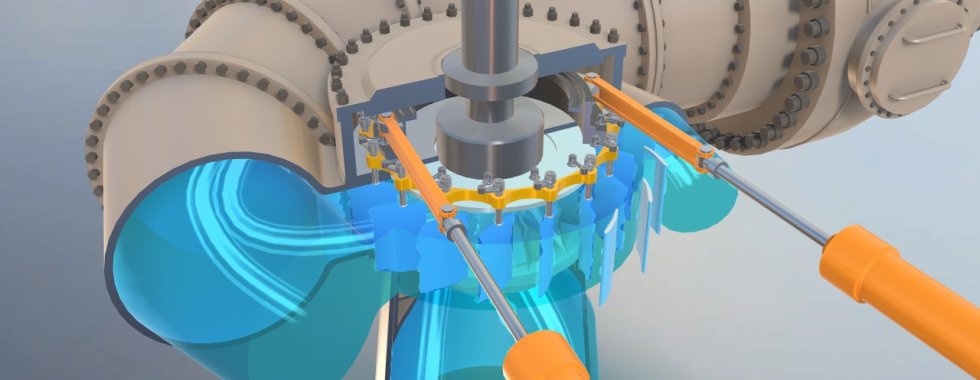
James Francis was a British-American engineer and founding member of the American Society of Civil Engineers (ASCE). His turbine was developed through systematic experiments aimed at improving earlier water turbine designs, particularly the inward-flow turbine developed by Samuel B. Howd. Adjustable guide vanes (or wicket gates) made it possible to regulate the flow through the turbine and maintain a nearly constant rotational speed as operating conditions changed. The guide vanes were controlled by a centralised mechanism that allowed all vanes to be adjusted simultaneously. Francis used systematic experiments and mathematical methods to optimise turbine design. His work established important principles that contributed to the development of modern hydraulic turbine design. After numerous improvements, the Francis turbine came into widespread use around the world.
Francis Turbine
The Francis turbine is a reaction turbine, which means that the pressure of the water decreases as it flows through the runner and transfers energy to it. It has a radial-axial flow design, with adjustable guide vanes and fixed runner blades.
The flow rate through the turbine can be controlled by adjusting the opening of the guide vanes. After passing through the guide vanes, the water is directed towards the fixed blades of the runner. Here it transfers pressure and kinetic energy to the runner and then leaves it approximately parallel to the turbine axis before flowing through the draft tube.
Francis turbines can achieve efficiencies exceeding 90% and are used over a wide range of medium to high heads, typically from several tens to several hundreds of metres. Their output ranges from a few kW to hundreds of MW. The runners of Francis turbines installed in the biggest hydroelectric power plants in the world can have a diameter of more than 10 metres. The Francis turbine is one of the most widely used types of water turbine, and reversible Francis pump-turbines are commonly used in pumped-storage power plants. Modern Francis turbines are individually optimised to suit the hydraulic conditions of each installation.
Some of the world's largest Francis turbines are installed at the Three Gorges hydroelectric power plant in China. Their runners are 10.9 m in diameter, and each generating unit has a rated capacity of 700 MW.
Francis Turbine On-line interactive 3D model
Keep reading
Articles
The Physical Properties of Water
Water is a chemical compound made from one oxygen and two hydrogen atoms. At normal conditions, it is a colourless, clear, and odourless liquid.
3 min read
The Origin of Water Energy
The Sun warms surface water and evaporates it. After condensation, the water falls on the land with exploitable potential energy relative to ocean level.
3 min read
History of Water Energy Utilization
The energy of water was used since ancient times for grinding grain or irrigation. Later it powered mills or hammers, and finally a turbine was invented.
3 min read
Water Energy and Its Uses
The amount of available water energy, kinetic and potential, depends on hydrologic potential, mostly on hydraulic head and flow rate.
3 min read
Dams and Reservoirs
The dams create water reservoirs for hydro power plants, to prevent floods or to collect drinking water. Typical dams are gravity or concrete arch dams.
3 min read
The Highest Dams and Largest Reservoirs
The highest dam is the 305 m high, concrete arch-shaped Jinping-I dam in China. The largest reservoir is Lake Kariba in Zambezi, with a volume of 180 km3.
3 min read
The Segner Wheel
The Segner wheel was an important step on the way to modern turbines. Its principle is today used in rotating irrigation sprinkler systems.
3 min read
Kaplan Turbine
The Kaplan reaction water turbine with adjustable blades, invented in 1918, is used in places with minimal heads and relatively high, variable flow rates.
3 min read
Pelton Turbine
The Pelton turbine is an isobaric impulse action turbine. The water jet is directed tangentially at the spoon-shaped buckets on the runner.
3 min read
Choosing a turbine (Turbine selection graph)
The turbine selection graph helps to select the best turbine type for the given hydraulic head and rate of flow.
3 min read
Hydroelectric Power Plant Operating Principles
In hydroelectric power plants, the water propels the turbine blades, and the generator transforms the energy of a rotating turbine shaft into electricity.
3 min read
Types of Hydroelectric Power Plants
The hydroelectric power plants can be divided into accumulation ones with a reservoir, run-of-the river without a dam, derivational, and pumped-storage.
3 min read
The Largest Hydroelectric Power Plants in the World
The largest hydroelectric dams in the world are the "Three Gorges Dam" in China, Itaipú Dam and Guri Dam in South America.
4 min read
Tidal Energy and Sea Wave Power
Tidal power plants use ebb-tide energy from turbines in the dam enclosing a tidal basin, while tidal stream generators are turbines anchored to the seabed.
3 min read
Marine Current Power and Ocean Thermal Energy
Energy contained in ocean currents can be exploited by various underwater turbines or by an OTEC system that uses ocean temperature differences.
3 min read
Environmental Impact of Hydropower
The construction of a hydroelectric power plant affects a large area ecosystem and often leads to people's relocation. Then a new balance is established.
3 min read