Plasma
5 min read · Energy Atlas Editorial
To enable thermonuclear fusion, the matter has to be heated to several million kelvin. But what will happen to such incredibly hot substances?
To enable thermonuclear fusion, the matter has to be heated to several million kelvin. But what will happen to such incredibly hot substances? When the solid matter is heated, molecules in its crystal lattice start to vibrate. Suddenly they possess so much thermal energy that their molecular bonds can't hold them anymore and molecules leave the crystal lattice. Matter becomes fluid. Molecules can move freely, but they are still held together by intermolecular forces (like a hydrogen bond, ionic bond, Van der Waals force, etc.). When heating continues, molecules become independent from each other and fill all available space as a gas. The gaseous state of matter is not a finite one — when you provide them with enough thermal energy, first atoms in molecules can't hold together and finally even electrons are not able to stay on their orbitals. The matter becomes ionized gas, or plasma. Plasma consists of electrons, ions (nuclei without electrons or with a lower number of electrons that is their atomic number) and a few neutral particles.
Discovery
Plasma was first identified in 1879 by William Crookes who called it "radiant matter". The name "plasma", coming from ancient Greek (meaning "mould" or "something that could be formed"), was used by Irving Langmuir in 1928. The movement of ions and electrons reminded him of movement of bodily fluid also called plasma.
Properties
Because plasma is composed of charged particles, it has peculiar properties. It is quasineutral and exhibits collective behaviour. The term "quasineutrality" means that there is roughly the same number of positive and negative charges so when observed from a distance, it seems like the plasma is electrically neutral, but it is not. "Collective behaviour" arises from the presence of charged particles. Charged particles obey electromagnetic fields in such a way that they follow magnetic field lines doing small spirals around it with a radius called a Larmor radius which depends on the size of the particle trapped by the magnetic field — ions are bigger so they do bigger circles than electrons. Moving charged particles produce their own electromagnetic field. With a lot of charged particles in one place it means that one moving particle is reacting to the magnetic field created by other particles and creates its own magnetic field that affects the movement of other particles. Due to the collective behaviour, the plasma movement sometimes resembles fluid and there are a lot of ways how to describe plasma movement and behaviour.
Formation
Besides heating, there are a lot of ways how the plasma could be created. Ionization by cosmic rays (the impact of high energy particles or electromagnetic radiation), by photons (by photons with energy higher than the ionization energy of atom, also called photoionization), collisional ionization in electric field (electrons are accelerated by an electric field and gain enough energy to ionize other atoms when they hit them), pressure ionization (e.g. in the core of burn-out star, where matter is compressed so much that the electrons are set free and create degenerate electron gas).
Types of Plasma
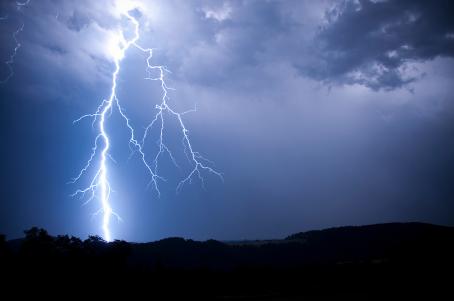
Plasma is characterized by its temperature, density, and ratio of ions, electrons and neutral particles. It is very abundant in outer space but very rare on Earth. Typical naturally occurring plasma on Earth are lightning channels (its density and temperature vary wildly depending on what lightning channel it is. For example, streamer properties at atmospheric pressure are an electron temperature of 23,000 kelvin and an electron density of 1018 − 1020 m−3), fire (only some types of flames, depending on the material burning and the temperature, can be classified as plasma, even partially ionized), ionosphere (the outer layer of the atmosphere from a height of about 45 km up to about 500 km, where the air is ionized by the impacts of cosmic rays. Maximum electron density 106 cm−3 at the height of about 200 km, electron temperature about 1,500 kelvin), aurora (glow caused by the collisions of atoms in the atmosphere with charged particles of solar wind lead by the magnetosphere towards the magnetic pole).
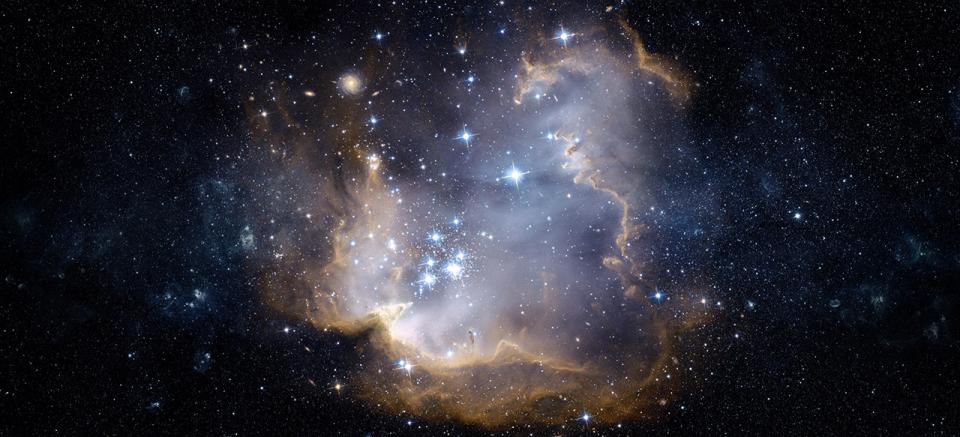
In space, almost everything is made from plasma — stars, nebulae, cosmic wind, and interplanetary, interstellar and intergalactic medium. 99.9999 percent of the Universe is made from plasma with rare exceptions like the Earth, where plasma is nearly non-existent.
Keep reading
Articles
Why it Works?
In small atoms, from hydrogen to sodium, the binding energy per nucleon increases with an increasing atomic number. This is because each additional nucleon is attracted by other nearby nucleons, and thus more tightly bound to the whole.
5 min read
How it Works?
In normal conditions, atom nuclei don't fuse spontaneously. The nucleus is positively charged and electrostatic forces will repel each other long before they come so close that strong nuclear forces can start to act and bind nuclei together.
5 min read
Fusion Fuel
All light elements and their isotopes could be used as a fusion fuel, but when talking about the use of nuclear fusion as source of energy and electricity, some types of fuel are more suitable than others.
5 min read
Fusion in Stars
The only functioning fusion reactor in our solar system is the Sun. Our central star, weighting 1,9 × 10´30 kg (more than 330,000 Earth masses) burns 500 million metric tons of hydrogen in its core every second at temperatures of about 15,7 million kelvin.
5 min read
Lawson Criterion
John D. Lawson wondered what conditions need to be fulfilled in order to get enough energy from a fusion reaction to use it in a power plant.
5 min read
How to Measure the Temperature in the Core of the Sun? or Diagnostics
Measuring the properties of something with extremely high temperatures like fusion plasma is difficult because every type of measuring device inserted into such a hostile environment will be instantly turned into plasma.
5 min read
Artificial Fusion Principles
The Lawson criterion gives essentially two ways how to harness an effective fusion reaction.
5 min read
Questions
What is plasma?
Ionized gas: free charges that feel magnetic fields. Fusion research lives in this state of matter.