Heat from the Earth's Core
3 min read · Energy Atlas Editorial
Earth is composed of a crust, mantle, and core that is about 5000 °C hot. The edges of lithospheric plates are suitable for geothermal power plants.
Structure of the Earth
The inner composition of the Earth reflects its long formation process. There are several distinct layers which differ in chemical composition, pressure, temperature and state. These so-called geospheres are the crust, the mantle and the core.
The Earth's Crust
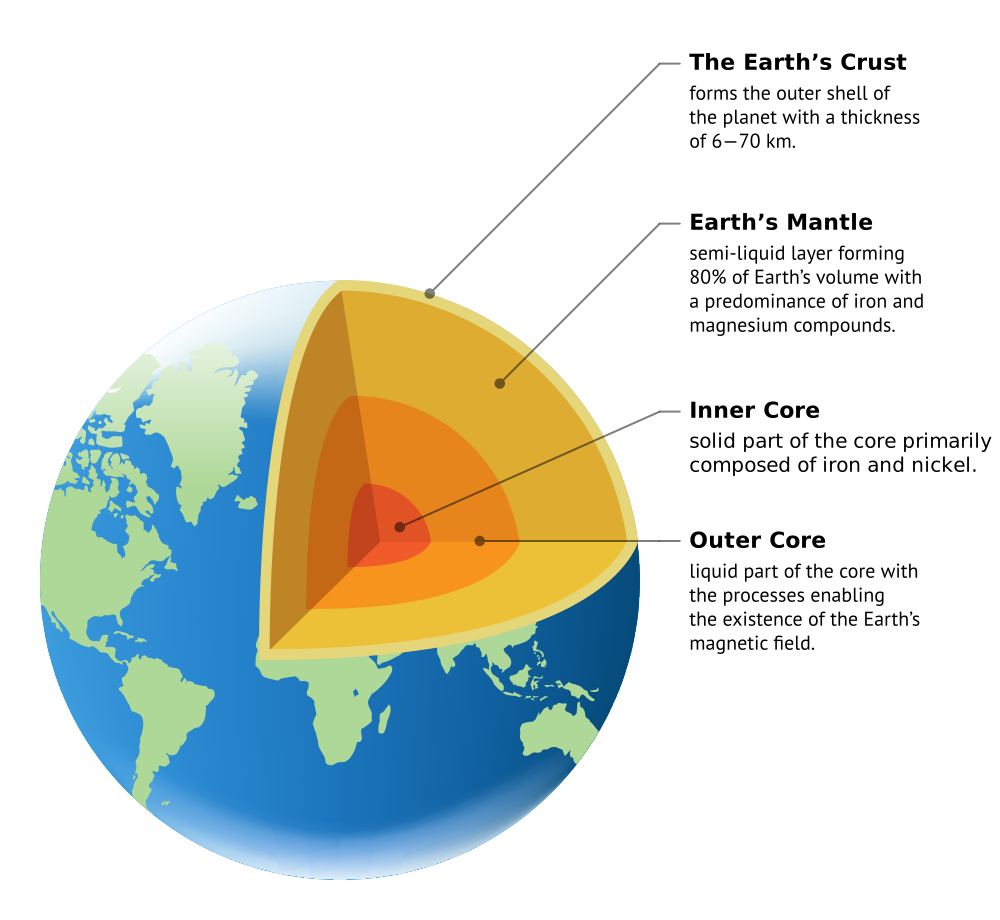
The outer crust is a hard shell the thickness which varies between 6 and 70 kilometers. It is not monolithic, but composed of gigantic lithospheric plates. The crust is the thinnest under the oceans and the thickest under continental mountain ranges. The crust of the Earth contains practically all the chemical elements.
Earth's Mantle
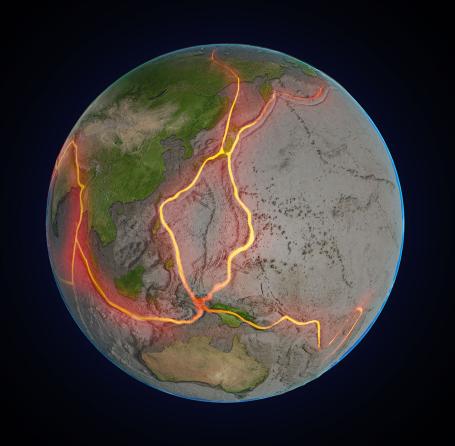
The second layer of the Earth is the mantle. It accounts for two thirds of the Earth's mass and four fifths of its volume. It consists mainly of compounds of iron, magnesium and other metals. The decay of radioactive substances, such as potassium, generates heat that is slowly transported by the moving mass of the mantle. The semi-plastic mass of the Earth's mantle supports the weight of the lithospheric plates floating on top of it. In places where the plates are in contact with one another, mountain ridges are formed, oceanic trenches open and frequent seismic activity can be expected.
The Earth's Core
The Earth's core consists mainly of iron and nickel. The outer core is liquid and the inner core is solid. About one third of the Earth's mass is concentrated here and processes in the core are responsible for the creation of the geomagnetic field.
The average density of the Earth is 5,515 kg/m3, about five times the density of water. The Earth's temperature is falling so slowly that in the past 3 billion years, the surface temperature has dropped by a mere 350 °C.
The Source of Geothermal Energy
Geothermal energy is the accumulated energy of the Earth's heat and the heat generated by the decay of radioactive elements. The temperature at the centre of the Earth is estimated at 5,000 °C, while the average temperature on the surface is only about 15 °C. The temperature increases with depth. In most regions, the temperature gradient is 25 to 30 °C per 1 km of depth. At a depth of 3 km the temperature may be 100 °C. At 10 km it can be well over 300 °C.
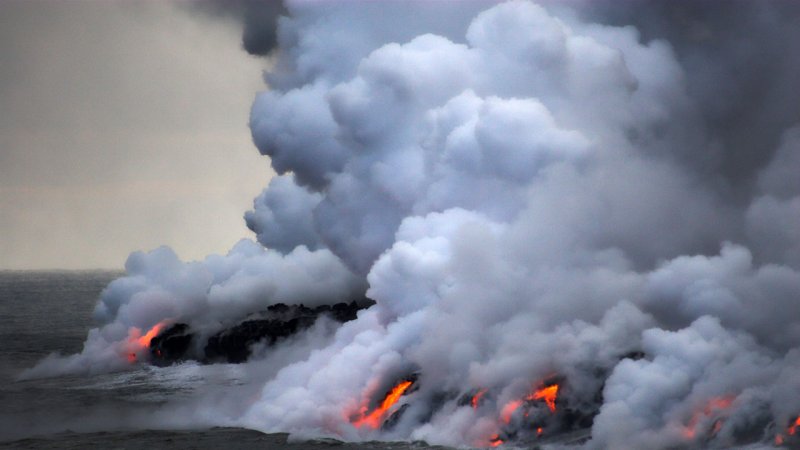
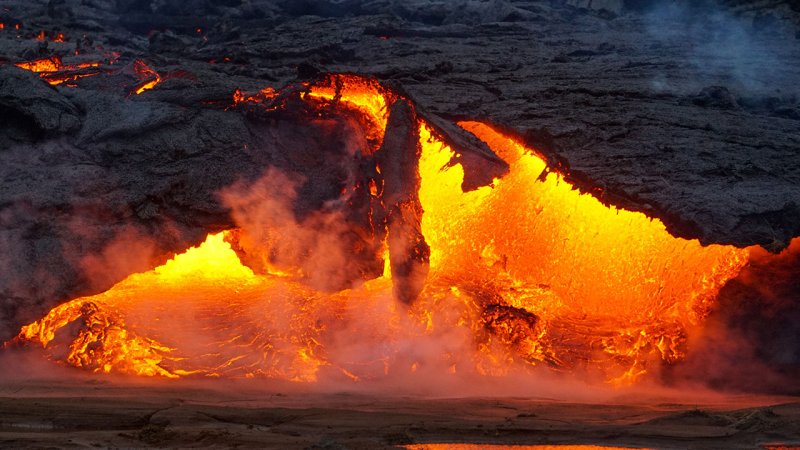
A higher temperature gradient can be expected in regions of contact between lithospheric plates where the crust is thinner, or where tectonics causes the molten rock from the Earth's mantle, called magma, to ascend closer to the surface. Also, hotspots exist in which hot magma from deep within the mantle rises towards the crust in a hypothetical phenomenon called mantle plumes. Examples of such hotspots can be found in Yellowstone National Park (map) or in Hawaii (map).
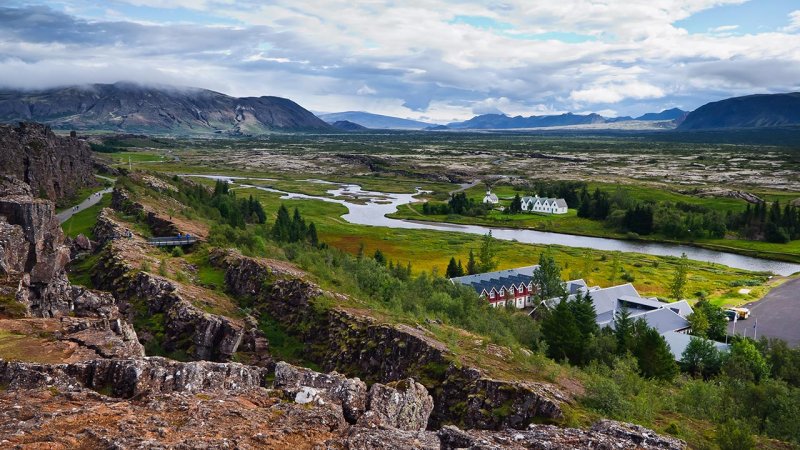
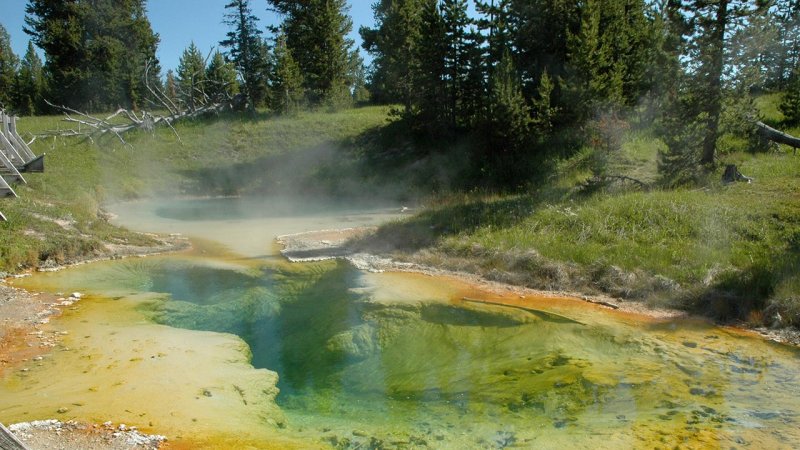
These regions are highly suitable for building geothermal power plants. Usually, it is suffice to drill just a few hundred meters into the ground to reach hot areas. A good indication of geothermal activity can be a hot spring or remarkable steam or water geysers since water is a good thermal conductor. Hot rock can be found in many places, but difficult geological conditions and technological limitations usually make it impossible to harness the energy. Reaching these hot areas is very demanding in terms of drilling technology. But what seems as a very remote possibility today may very well become economically feasible tomorrow, as technological
The Earth emits as much heat as would be produced by burning 30 billion tonnes of coal. If all of the energy needs of humanity would be covered solely by energy from geothermal sources, it would result in the Earth being cooled by 1 °C every 40 million years.
Keep reading
Articles
Geothermal Phenomena
In places with high geothermal energy levels, geysers (springs that burst out water and steam), hot springs, fumaroles, and mud pots can be observed.
3 min read
Mankind and the Energy from the Earth
Early geothermal energy utilization was in spas. The first electricity-producing geothermal power plant was built in Larderello, Italy, in 1911.
3 min read
Geothermal Systems
To exploit various geological conditions, these geothermal systems can be used: Hot water, Water and steam, Hot dry rock, Pressurized liquid or Magma.
4 min read
Geothermal Power Plant
Three types of geothermal power plants are Dry steam, Flash steam, and Binary cycle. The world's largest geothermal power plant is Cerro Prieto, Mexico.
5 min read
Environmental Impact
Water and vapour released from geothermal power plant can contain impurities (e.g. carbon dioxide, ammonia, or mercury) that can pollute the environment.
3 min read