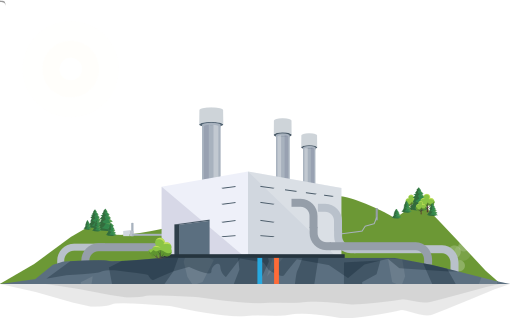
Environmental Impact
3 min read · Energy Atlas Editorial
Water and vapour released from geothermal power plant can contain impurities (e.g. carbon dioxide, ammonia, or mercury) that can pollute the environment.
The Impact of Geothermal Power Plants on the Environment
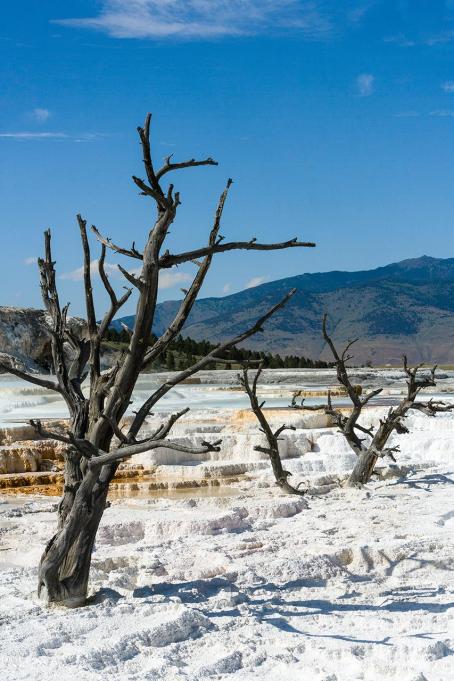
Water or vapour coming from geothermal power plant bores usually carries a certain amount of impurities which have a negative impact on the environment.
These can be gaseous; especially carbon dioxide (CO2), methane (CH4), hydrogen sulphide (H2S) and ammonia (NH3). Or they can be liquid or solid such as salts of certain toxic elements like mercury (Hg), arsenic (As) or antimony (Sb). If released into the environment, these substances can cause acid rains or contribute to global warming. Geothermal fields with higher concentrations of these substances are constantly monitored.
Most geothermal power plants use a closed cycle where the used water is injected back into the geothermal reservoirs using injection bores. In modern power plants, gaseous emissions are also reduced.
The operation of geothermal power plants can also have a negative impact on the stability of the rock from under which they draw water. There are known cases from Germany and New Zealand where the ground has subsided. In 2006, a geothermal power plant in Basel, Switzerland had to be temporarily shut down shortly after its commissioning because water injection caused several thousand tremors of up to 3.4 degrees on the Richter scale. In 2009, this power plant was decommissioned for good.
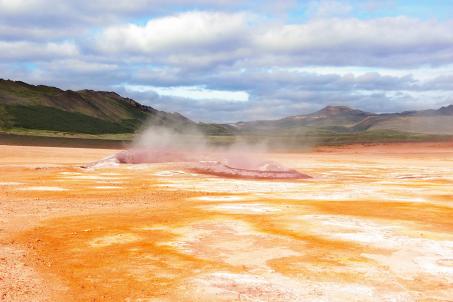
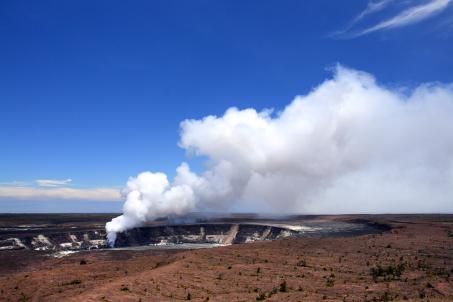
A geothermal power plant with an open cycle releases approximately 100 g of CO2 for every 1 kWh of electricity which is about a tenth of the amount of CO2 released during the production of 1 kWh of electricity from coal.
Keep reading
Articles
Heat from the Earth's Core
Earth is composed of a crust, mantle, and core that is about 5000 °C hot. The edges of lithospheric plates are suitable for geothermal power plants.
3 min read
Geothermal Phenomena
In places with high geothermal energy levels, geysers (springs that burst out water and steam), hot springs, fumaroles, and mud pots can be observed.
3 min read
Mankind and the Energy from the Earth
Early geothermal energy utilization was in spas. The first electricity-producing geothermal power plant was built in Larderello, Italy, in 1911.
3 min read
Geothermal Systems
To exploit various geological conditions, these geothermal systems can be used: Hot water, Water and steam, Hot dry rock, Pressurized liquid or Magma.
4 min read
Geothermal Power Plant
Three types of geothermal power plants are Dry steam, Flash steam, and Binary cycle. The world's largest geothermal power plant is Cerro Prieto, Mexico.
5 min read