Geothermal Systems
4 min read · Energy Atlas Editorial
To exploit various geological conditions, these geothermal systems can be used: Hot water, Water and steam, Hot dry rock, Pressurized liquid or Magma.
Varying geological conditions and properties in different locations require different approaches to geothermal systems but there are three prerequisites that must always be met. The first is to have a rich enough heat source at a depth that can be reached economically. The second is to have a natural heat accumulator i.e. the right kind of rock. The third is the availability of a liquid that can be used to transfer the accumulated heat to the surface.
There are five types of geothermal systems:
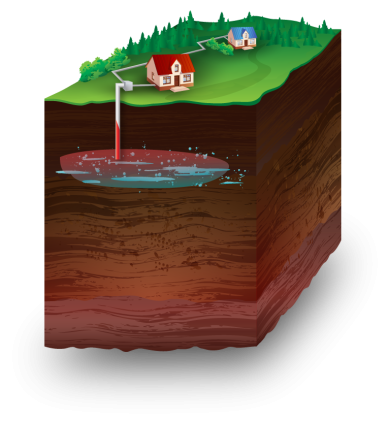
Hot Water (Binary Cycle)
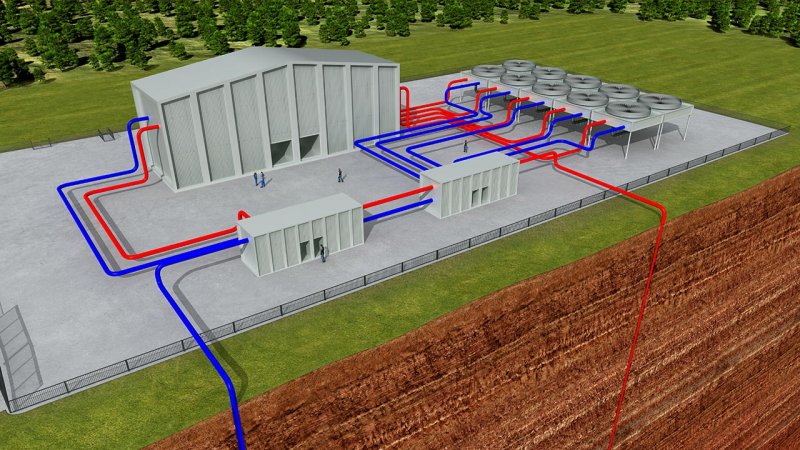
Hot water geothermal systems comprise of natural underground water reservoirs that are heated by hot rock. The water from the reservoir spontaneously circulates and mixes with the cold water coming from above so its temperature does not exceed 100 °C and the water stays liquid at all times. Hot water reservoirs can usually be found at depths of 1,500 to 3,000 meters. Most plants that utilize this system are used for heating only. There are some, however, that produce electricity. These are called binary cycle geothermal power plants.
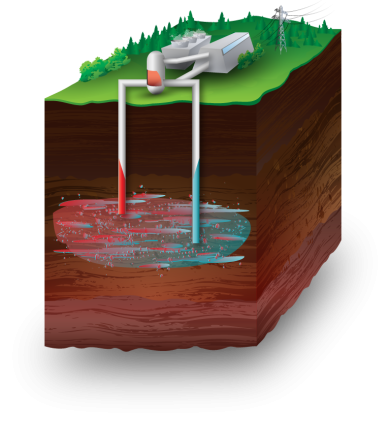
Water and Steam (Dry steam and Flash Steam)
Geothermal fields of this type use highly pressurized water as a working medium. Since the temperature of the water exceeds 100 °C, the pressure drops during the ascent and a portion of the water changes into steam. The water to steam ratio is different in each location. This kind of wet steam geothermal system is the most common nowadays.
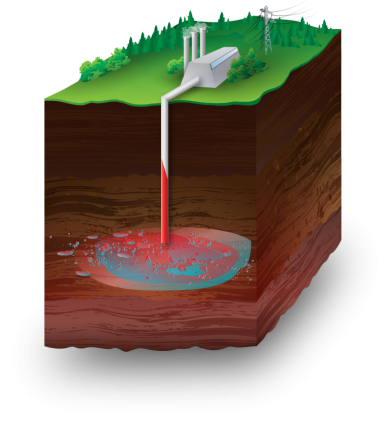
Pressurized Liquid
Under some very specific geological conditions where water is trapped in rock, we can find geothermal zones with relatively hot and extremely pressurized liquids. The liquid, which is usually saline water with dissolved methane, can be hotter than 150 °C and it can be found at depths between 3 and 5 kilometers. These geothermal fields raised some interest in the seventies but their energetic utilization was deemed uneconomical, for now. In the future, however, not only the thermal potential of these fields but also the methane contained in the liquid could be utilized. Since the methane deposits are finite and can be depleted, it cannot be regarded as a renewable energy source.
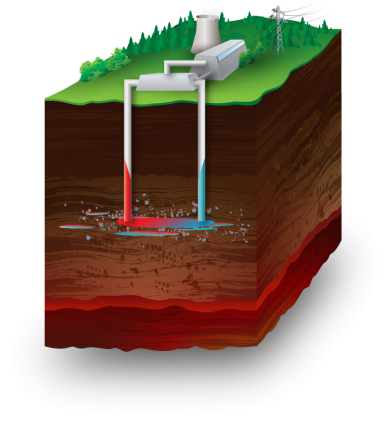
Hot Dry Rock (HDR)
Not too deep in the Earth's crust, especially in areas of geological faults, geothermal areas can be found with porous rock, sufficiently high temperatures but with no heat-conductive liquid. The higher temperature can be due to local magmatic activity, due to a higher concentration of decaying radioactive elements in the rock, or due to convective ascent of heat from the upper layers of the Earth's mantle. Such geothermal areas are called Hot Dry Rock. In order to extract the heat, some heat-conductive liquid has to be injected. In most cases, water would be used. If the rock is not permeable enough, its permeability can be artificially increased by controlled underground explosions.
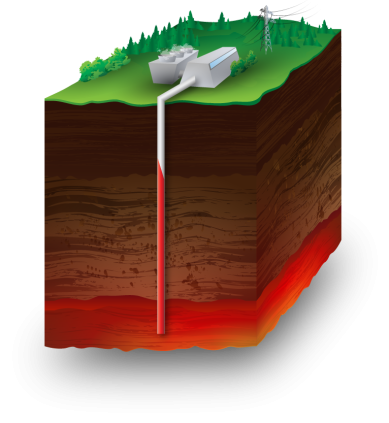
Magma
Magma is a mixture of molten rock, gases and solid fragments. It naturally occurs in volcanic regions where it can spill on the surface or form large lava lakes in potentially reachable depths. Extracting energy from Magma is hindered by technical difficulties due to the great drill depths and the aggressive environment of molten lava. If this high-temperature geothermal source can be successfully utilized, its possibilities of use could be very broad.
A 100 MW geothermal power plant working with natural steam consumes more than 1,000 tonnes of water every hour.
Usage in the World
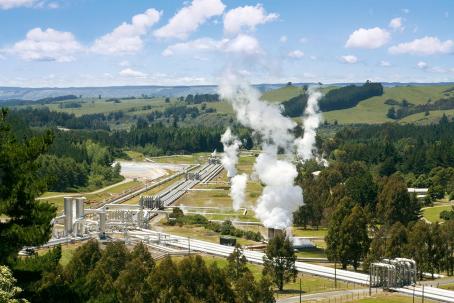
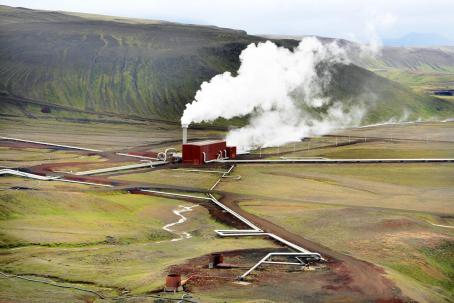
Harnessing geothermal energy becomes increasingly more popular in the world. A geothermal power plant, in principle, works the same as other types of power plants with the difference being that instead of burning fuel, it uses renewable hot water and steam from inside the Earth. There are several significant areas in the world where the conditions for harnessing this energy are very favourable. Above all, it is practically all of Iceland where there are more than 7,000 thermal springs. Other such regions can be found in the USA, Mexico, Italy, the Philippines, Indonesia and New Zealand.
The overall installed capacity of all geothermal power plants in 24 countries was approximately 10,715 MW in 2010. Almost one third (more than 3,000 MW) can be accounted to the 77 geothermal power plants in the USA. The largest cluster of geothermal power plants can be found at The Geysers geothermal field in California (map) where the heat is drawn from a gigantic magma deposit that is 7 km under the surface. Hot water and steam stream from 350 bores into 22 geothermal power plants. Another important geothermal field can be found in the vicinity of the Salton Sea on the San Andreas Fault (map), counting 15 geothermal power plants.
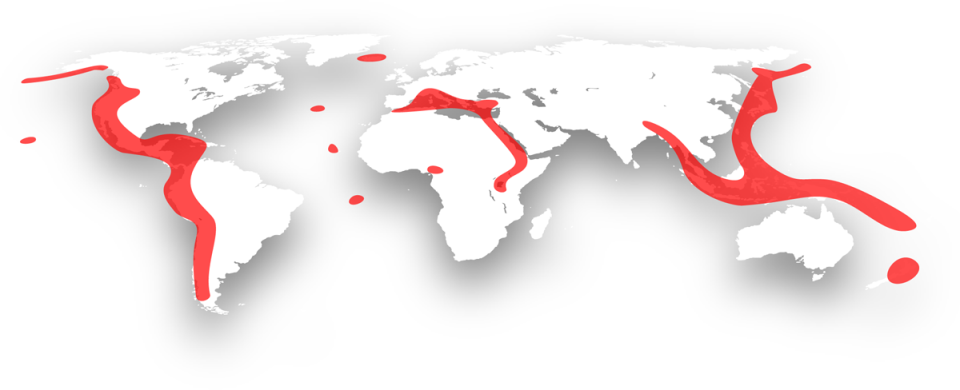
The second largest geothermal energy producer is the Philippines with an installed capacity of 1,900 MW. These volcanic islands allow to economically produce enough electricity to meet one fifth of the Philippines's needs. Geothermal sources can be found mainly on the islands of Luzon (map) and Leyte (map).
Ranking third in the usage of geothermal energy is Indonesia. An estimated 40% of the world's potential geothermal sources are found in Indonesia, thanks to the volcanic activity there. The six geothermal fields on the islands of Java, Sumatra and Sulawesi now yield 1,200 MW and construction of further plants is planned.
Cooling 1 km3 of hot rock by 100 °C will supply enough energy to power a 30 MW plant for 30 years.
Keep reading
Articles
Heat from the Earth's Core
Earth is composed of a crust, mantle, and core that is about 5000 °C hot. The edges of lithospheric plates are suitable for geothermal power plants.
3 min read
Geothermal Phenomena
In places with high geothermal energy levels, geysers (springs that burst out water and steam), hot springs, fumaroles, and mud pots can be observed.
3 min read
Mankind and the Energy from the Earth
Early geothermal energy utilization was in spas. The first electricity-producing geothermal power plant was built in Larderello, Italy, in 1911.
3 min read
Geothermal Power Plant
Three types of geothermal power plants are Dry steam, Flash steam, and Binary cycle. The world's largest geothermal power plant is Cerro Prieto, Mexico.
5 min read
Environmental Impact
Water and vapour released from geothermal power plant can contain impurities (e.g. carbon dioxide, ammonia, or mercury) that can pollute the environment.
3 min read