Geothermal Phenomena
3 min read · Energy Atlas Editorial
In places with high geothermal energy levels, geysers (springs that burst out water and steam), hot springs, fumaroles, and mud pots can be observed.
In places with high geothermal energy levels, the following phenomena can be observed:
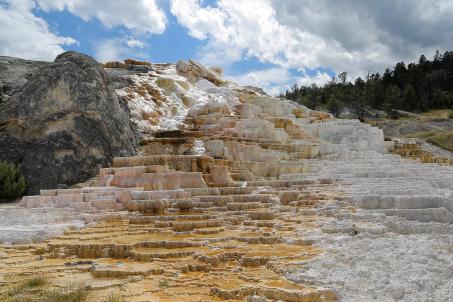
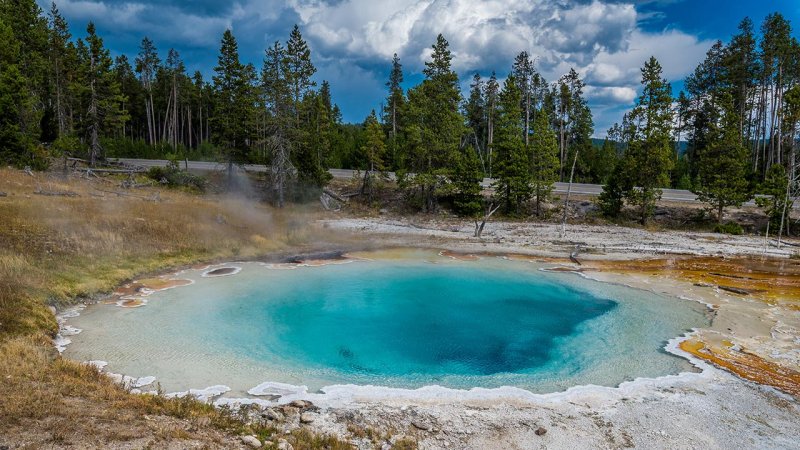
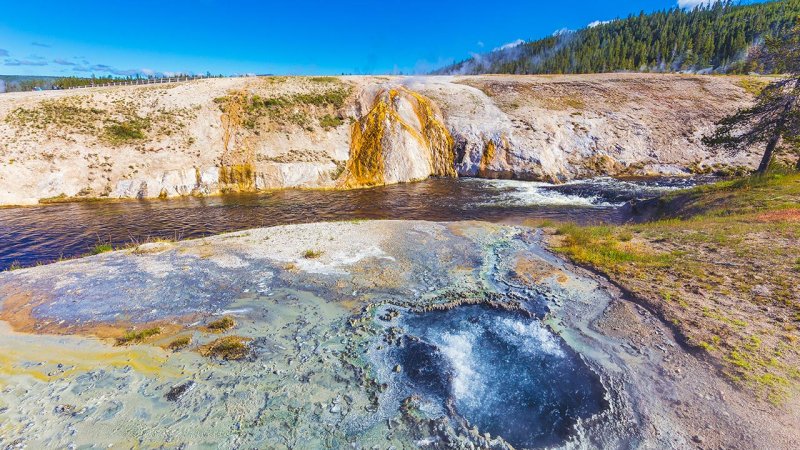
Hot springs
with temperature often close to 100 °C. The hot water ascends from depths along fault lines.
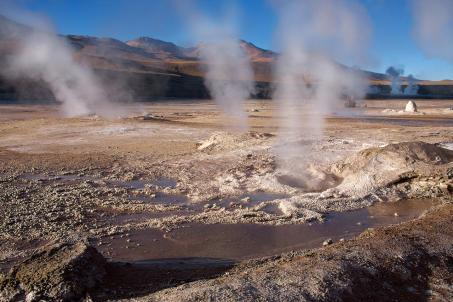
Fumaroles
openings in the crust forcing out superheated steam and gases at temperatures between 200 and 800 °C. They are usually created by gases separated from hot magma.
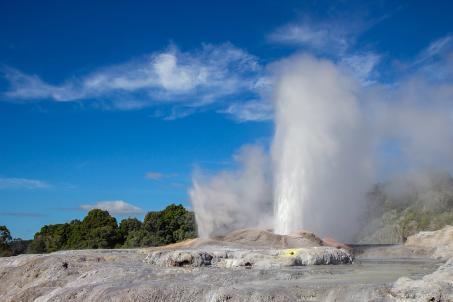
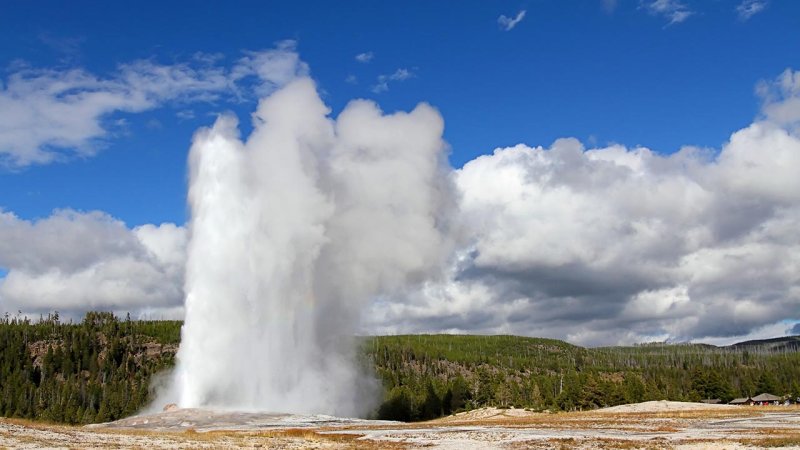
Geysers
hot water with steam that is heated by magma in the deep and then erupts in sudden bursts to the surface.
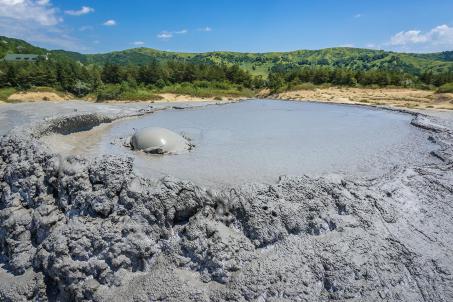
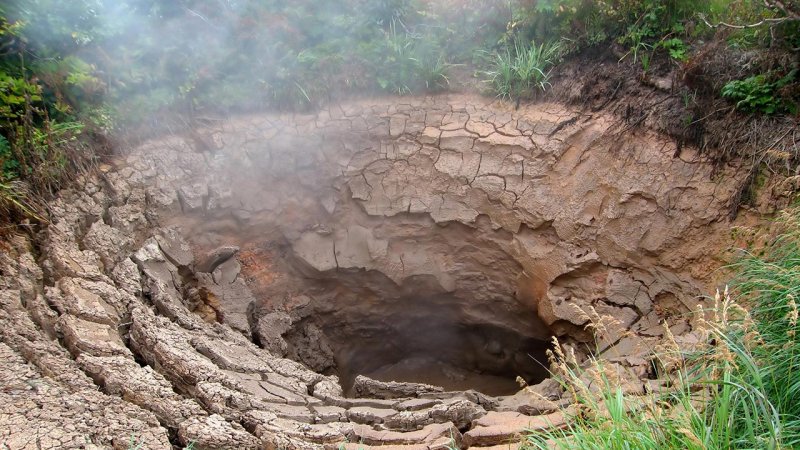
Mud pots
hot springs with a high clay content.
Probably the most famous geyser in the world is Old Faithful in Yellowstone National Park in the USA. The oldest still active geyser is the Castle in Yellowstone National Park. Judging by the geyserite sinter deposits, it may be well over 5,000 years old.
Mysterious Bursting Spring
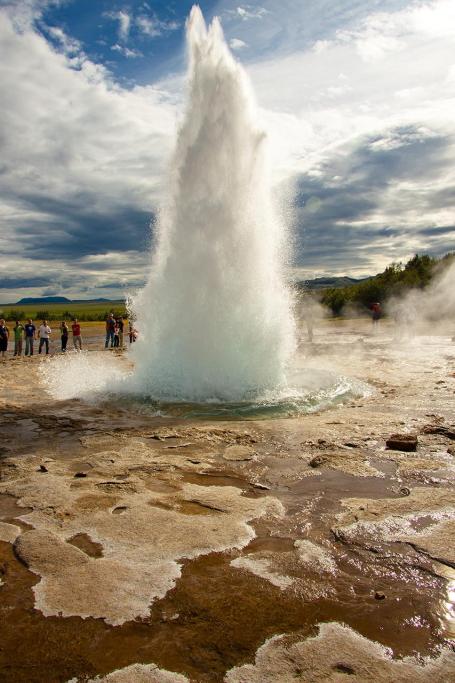
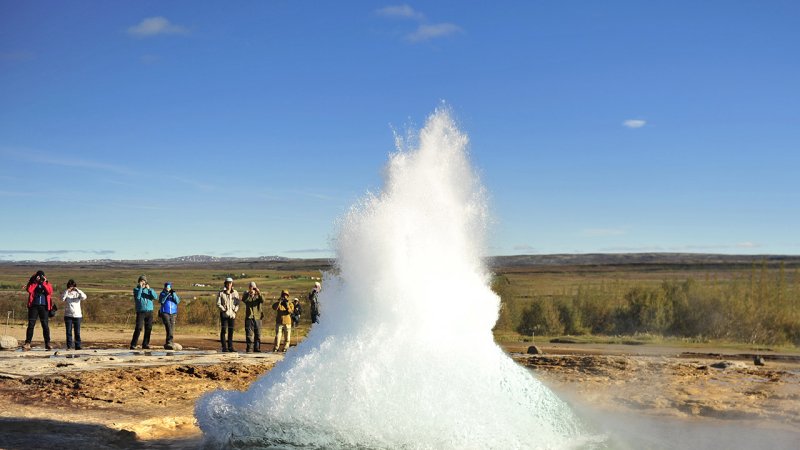
A geyser is a specific kind of spring that bursts out a mixture of water and steam in regular or irregular intervals, often as high as a few dozen meters. The term is derived from the Icelandic geyser named Geysir (geysa means to flow) and used to describe any similar formation. Several hundred geysers are known, mostly concentrated in five regions. The heat driving these geysers is magmatic.
A Geyser is basically a temporary geological formation that can form in a place where there is sufficiently porous bedrock, a rich source of water, a source of heat (e.g. magmatic) and a sufficiently watertight reservoir for the water to accumulate and heat up. Water enters the system through cracks in the Earth's crust and it accumulates in the underground reservoir. The lower part of the reservoir is heated by hot rock or by magma to temperatures over the boiling point. Since the water is under great pressure from the surrounding rock and the hydraulic head over the reservoir, the water does not start to boil and remains liquid. Once the hot water ascends closer to the surface, where the pressure is not as high, or when the temperature simply reaches a critical limit, the superheated water violently changes into steam, which then occupies a volume 1,600 times larger than the volume of the water. The expanding steam then forces out the reservoir water above it to the surface. After that, the reservoir starts filling with colder water again preparing itself for the next eruption.
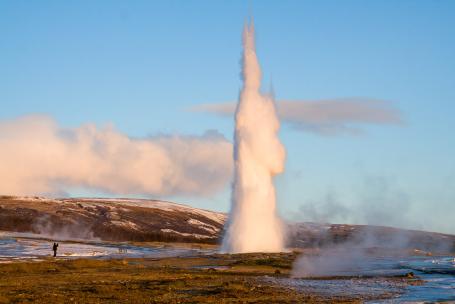
Several hundred active geysers are known. Most of them are concentrated in five regions. About half of them can be found in Yellowstone National Park (map) in the USA. The second largest geyser field is in the Geyser Valley in Russia on the Kamchatka peninsula (map). The remaining three important sites with high geyser concentrations are El Tatio in Chile (map), the Taupo Volcanic zone in New Zealand (map) and practically the whole island of Iceland (map).
The highest geyser in the world is the Steamboat in the USA. It can throw water over 90 meters high. Until 1904 the highest geyser was the Waimangu, which had some eruptions higher then 460 meters.
Keep reading
Articles
Heat from the Earth's Core
Earth is composed of a crust, mantle, and core that is about 5000 °C hot. The edges of lithospheric plates are suitable for geothermal power plants.
3 min read
Mankind and the Energy from the Earth
Early geothermal energy utilization was in spas. The first electricity-producing geothermal power plant was built in Larderello, Italy, in 1911.
3 min read
Geothermal Systems
To exploit various geological conditions, these geothermal systems can be used: Hot water, Water and steam, Hot dry rock, Pressurized liquid or Magma.
4 min read
Geothermal Power Plant
Three types of geothermal power plants are Dry steam, Flash steam, and Binary cycle. The world's largest geothermal power plant is Cerro Prieto, Mexico.
5 min read
Environmental Impact
Water and vapour released from geothermal power plant can contain impurities (e.g. carbon dioxide, ammonia, or mercury) that can pollute the environment.
3 min read