Central Tower Solar Power Plants
3 min read · Energy Atlas Editorial
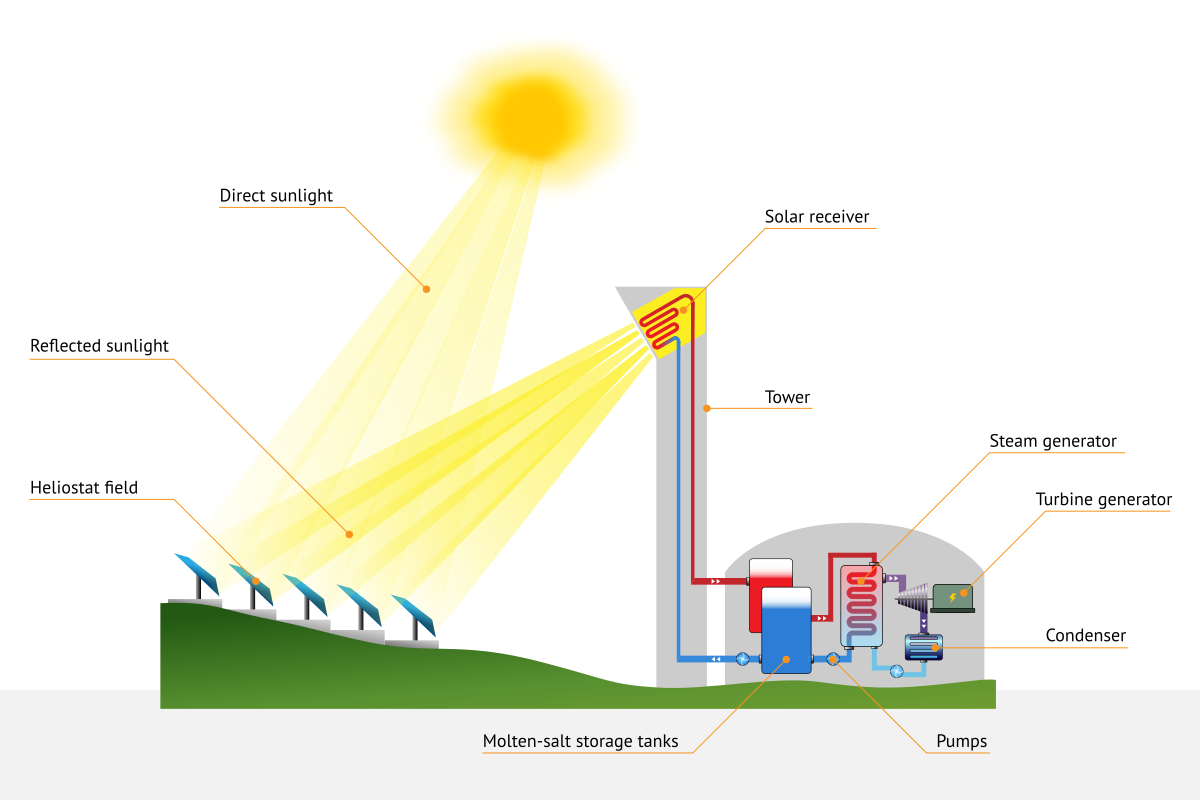
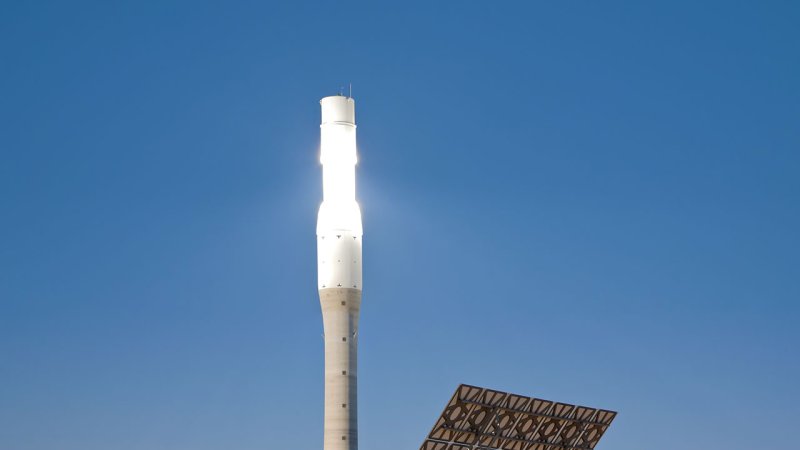
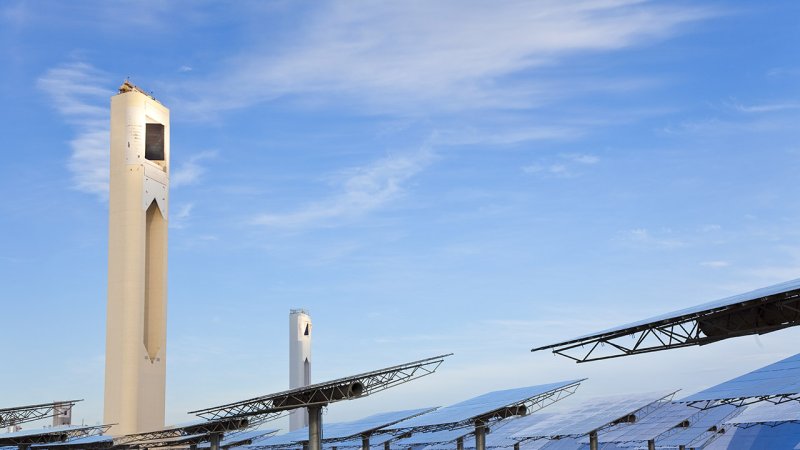
In the central tower solar power plant, flat mirrors, heliostats, concentrate sun rays on the top of the tower where heat-transfer medium is heated.
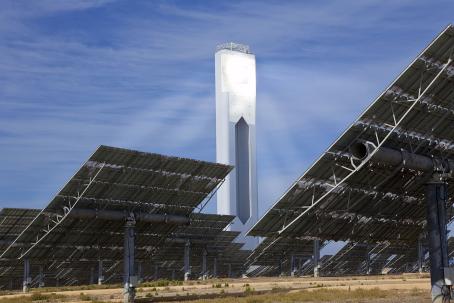
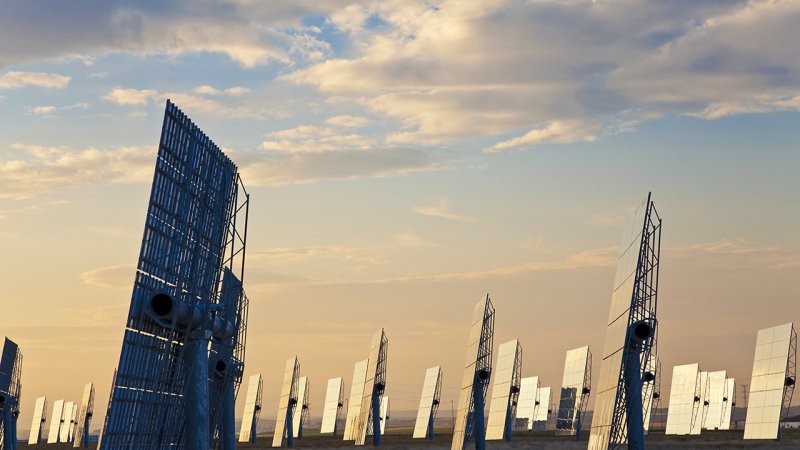
Central tower solar power plants belong to the category of concentrating solar power (CSP) systems. They concentrate direct solar radiation collected over a large area onto a receiver at the top of a tower. To achieve this, they use sun-tracking mirrors called heliostats, which are distributed around the tower. A computer continually calculates the Sun's position in the sky and adjusts the heliostats to ensure that the reflected sunlight remains aimed at the receiver at the top of the tower.
In the receiver, a heat-transfer medium is heated and, in some systems, part of the thermal energy is stored in molten-salt storage tanks for later use.
The solar receiver is located at the top of the central tower, while the power-generation equipment is generally located at ground level. Due to the high concentration of solar energy, temperatures in the receiver can exceed 500 °C. These high temperatures improve the efficiency of converting thermal energy into electricity.
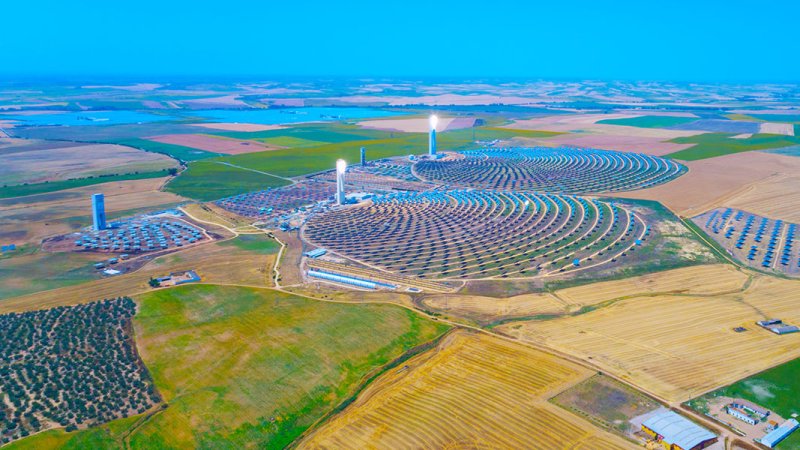
The first central tower solar power plants were built in the 1980s. One of the most important early projects was the 10 MW Solar One pilot plant in California's Mojave Desert (map). It used water/steam as the heat-transfer medium and an oil-and-rock thermal energy storage system. In the mid-1990s, Solar One was converted into Solar Two to demonstrate molten-salt heat transfer and thermal energy storage. A later Spanish project originally known as Solar Tres was developed into the Gemasolar power tower plant (map), which entered operation in 2011 with an electrical capacity of about 20 MW and molten-salt thermal energy storage. Other important Spanish power tower plants include PS10 (map) and PS20 (map), with installed capacities of 11 MW and 20 MW respectively.
Keep reading
Articles
Solar Rays Energy
Solar energy comes from the Sun, where fusion reactions take place. Solar radiation falls on Earth. Part is reflected into space, the rest is absorbed.
5 min read
Ways to Use Solar Heat
Solar rays can heat greenhouses or water in thermal collectors. The energy from the parabolic trough collector can drive machinery or produce electricity.
8 min read
Solar Collectors
Solar thermal collectors can use air or water (flat-plate collectors) as a heat transfer medium. Vacuum insulation is used in evacuated tube collectors.
5 min read
Solar Concentrators
A parabolic dish collector concentrates sun rays into one focal point. A temperature of up to 700°C could be reached and used by the Stirling engine.
3 min read
Solar Farms
A parabolic trough collector is a parabolic mirror concentrating sun rays onto a tube with heat-transfer medium. Collectors are connected to large farms.
3 min read
The Largest Solar Power Plants
The largest thermal solar power plant is the parabolic trough collector type farm SEGS in the Mohave Desert, USA, with 354 MW of installed capacity.
3 min read
The Energy Use of the Photovoltaic Effect
When a photon with an energy of up to 1.12 eV hits a semiconductor, an electron is released. This photovoltaic effect is used in solar panels.
5 min read
Photovoltaic Farms
Photovoltaic farms produce electricity from sunlight in many solar panels. The largest photovoltaic farm is Montalto di Castro, Italy (84.2 MW output).
3 min read
Solar Energy and the Environment
The solar farm produces electricity without noise or pollutants. The negative impact is the high energetic and financial costs of solar cell production.
3 min read
Solar Energy and Solar Power Systems Summary
The energy coming from the Sun is vital for life on Earth and can be used in various ways for electricity and heat production.
20 min read