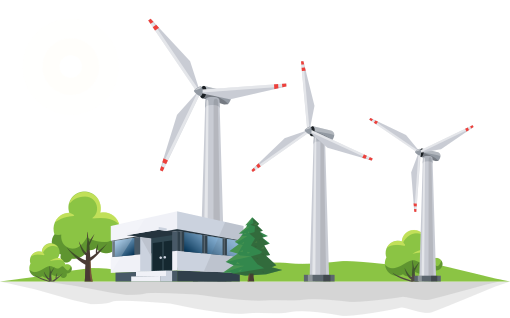
Wind Turbine and its Working Principle
3 min read · Energy Atlas Editorial
The wind turbine transforms the kinetic energy of the flowing air into rotational movements of the rotor blades, which turns the generator.
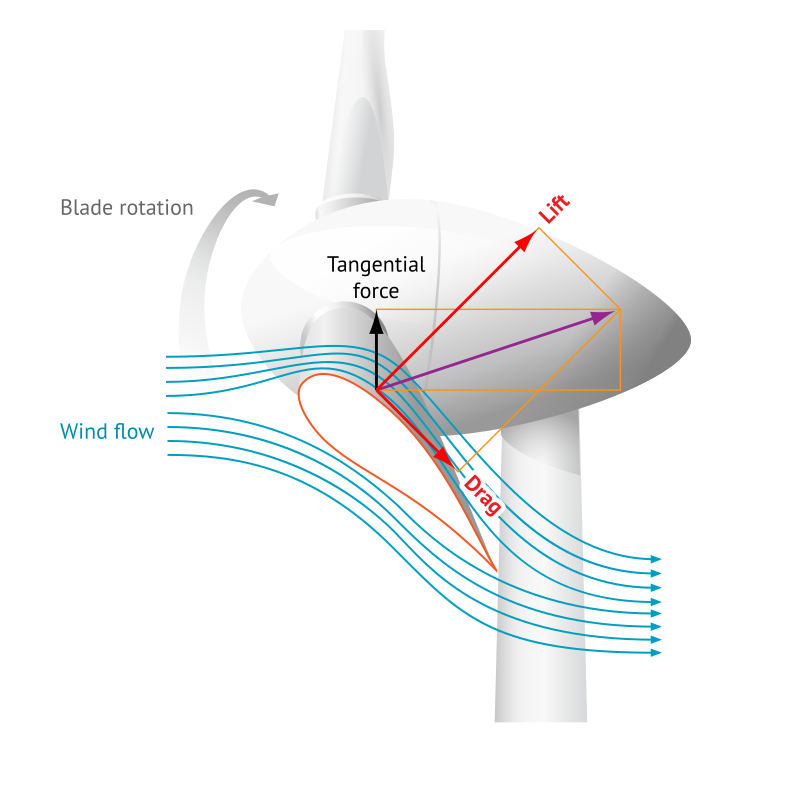
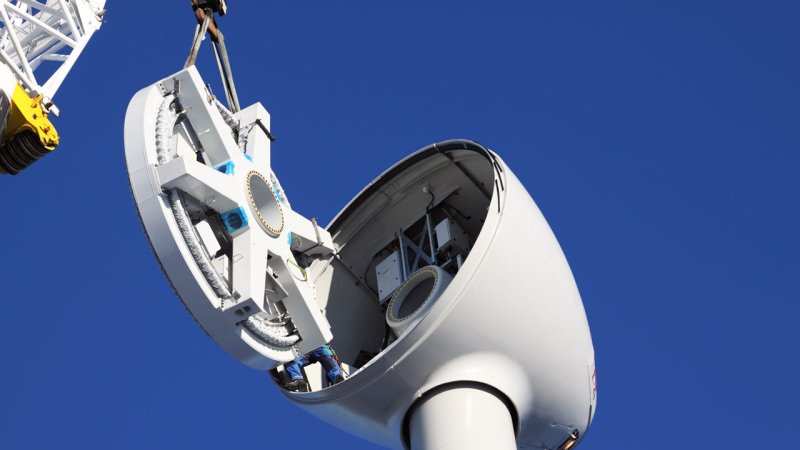
In a wind turbine, the kinetic energy of the flowing air is converted into mechanical rotational energy of the rotor. In geared turbines, a gearbox increases the low rotational speed of the rotor to drive the generator, which converts mechanical energy into electrical energy. Some horizontal-axis turbines use a multipole generator connected directly to the rotor, eliminating the need for a gearbox.
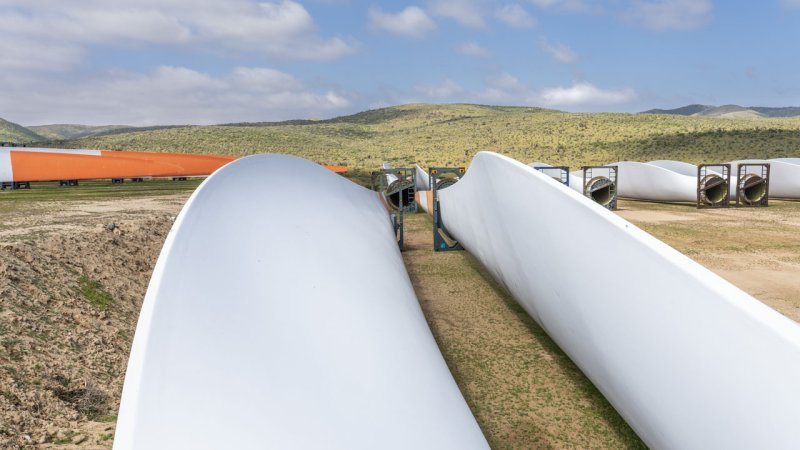
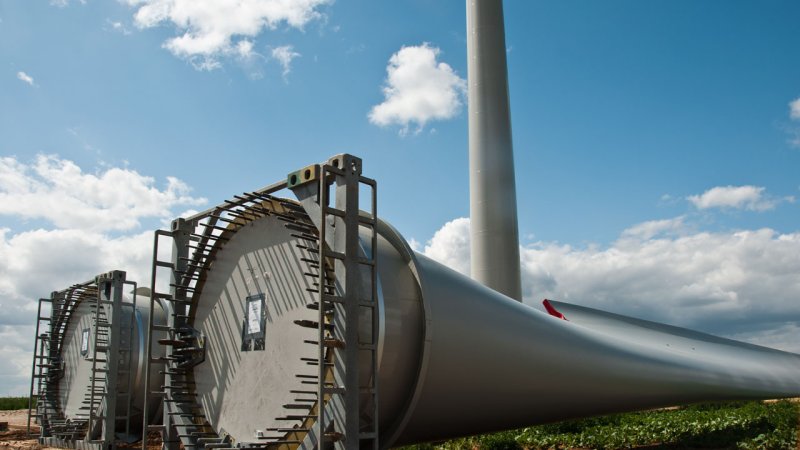
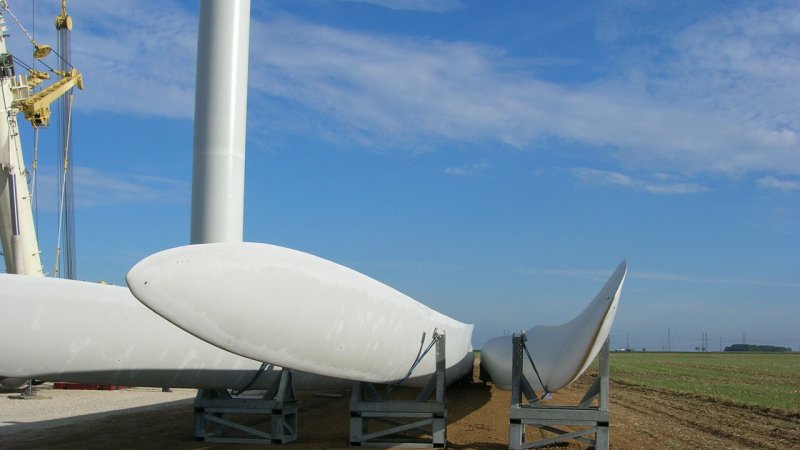
Rotor blades are among the most important components of a wind turbine. They must withstand considerable aerodynamic and mechanical loads during operation. Their aerodynamic profile and angle of attack are crucial for efficient energy extraction. Wind turbines typically start generating electricity at wind speeds of around 3—4 m/s (6—8 knots). Wind turbines typically reach their rated power at wind speeds of around 12—15 m/s (23—29 knots). At very high wind speeds, typically around 25 m/s (49 knots) or more, turbines are shut down to prevent damage.
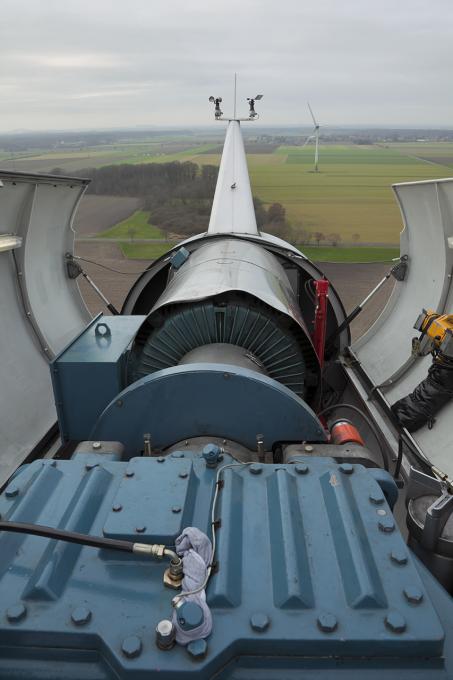
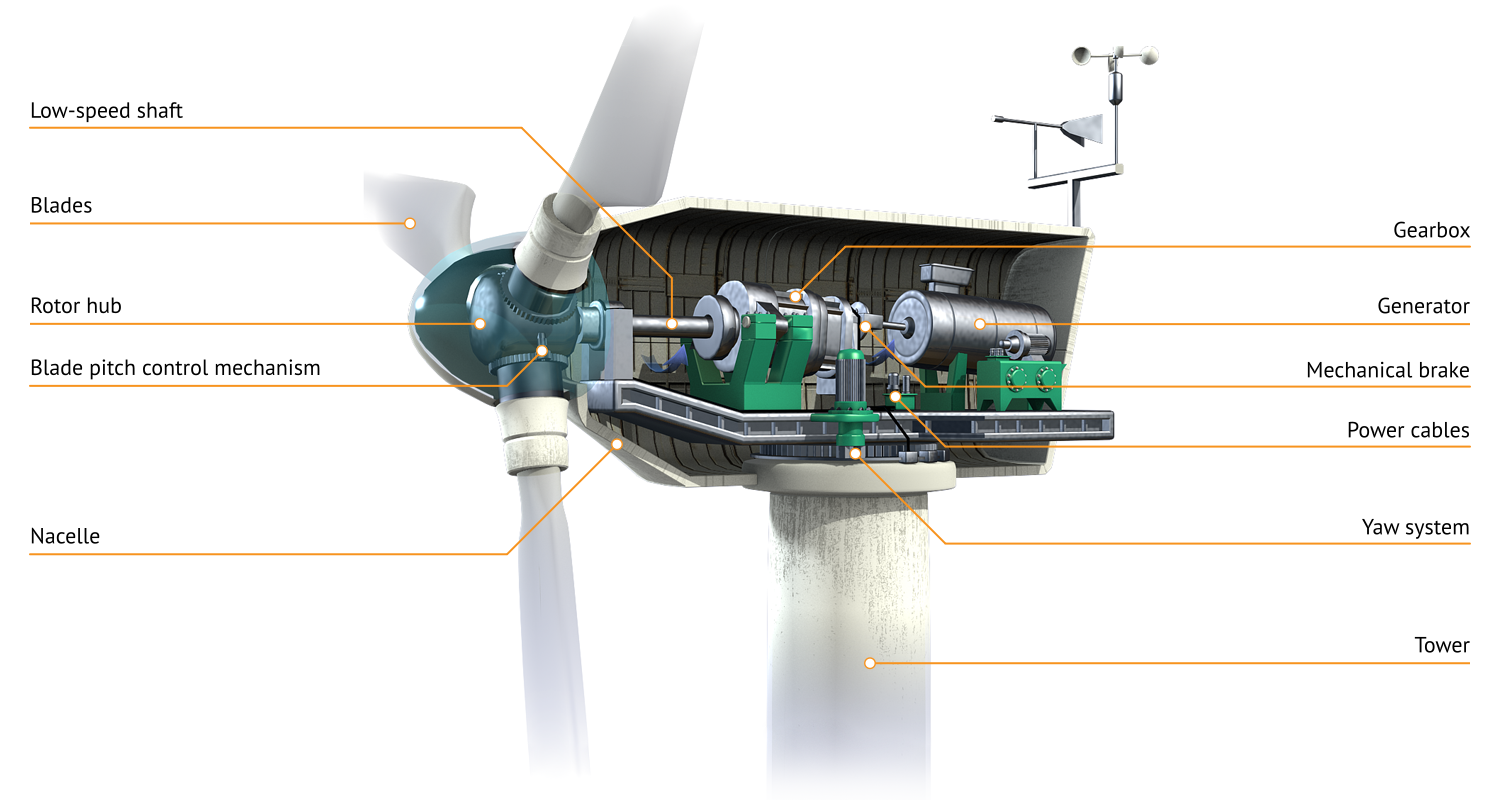
The gearbox of a 2 MW wind turbine can weigh around 15 tonnes. The rotor blades of large wind turbines are made of fibre-reinforced composite materials.
Keep reading
Articles
The Energy of Flowing Air
The movement of air masses between two differently warm places is called a wind. Most wind turbines reach their maximum output at a wind speed of 15 m/s.
3 min read
The Beaufort Wind Force Scale
The Beaufort Wind Force Scale, originally from 0 to 12, helps to estimate the force of the wind by observation of its effects.
3 min read
The History of Wind Power Utilization
The ancient wind mills powered irrigation pumps or ground grain. Since 1887, wind power has been used for electricity production in wind turbines.
3 min read
Wind Power Plants
The wind power plants are on the drag principle (historic windmills) or the lift principle (modern turbines). A horizontal or vertical axis is used.
3 min read
The Largest Wind Farms
The largest onshore wind farm is Roscoe, Texas, USA, with 627 turbines, while the largest offshore wind farm is Thanet, UK, with 100 turbines.
3 min read
Types of Wind Turbines
The wind turbines can have a vertical axis, which is the majority of installations, or a horizontal axis like the Darrieus or Savonius turbines.
5 min read
Wind Turbines and the Environment
A wind power plants produce no emissions or waste, could be a source of noise or strobe effect, are a distinctive landmark, and require large areas.
3 min read