Nuclear Energy
Chicago Pile-1
The first human-made reactor to achieve a self-sustaining chain reaction, built under the University of Chicago's Stagg Field in 1942.
Related source: Nuclear fission · Compare sources
Labelled system
Explore in 3D
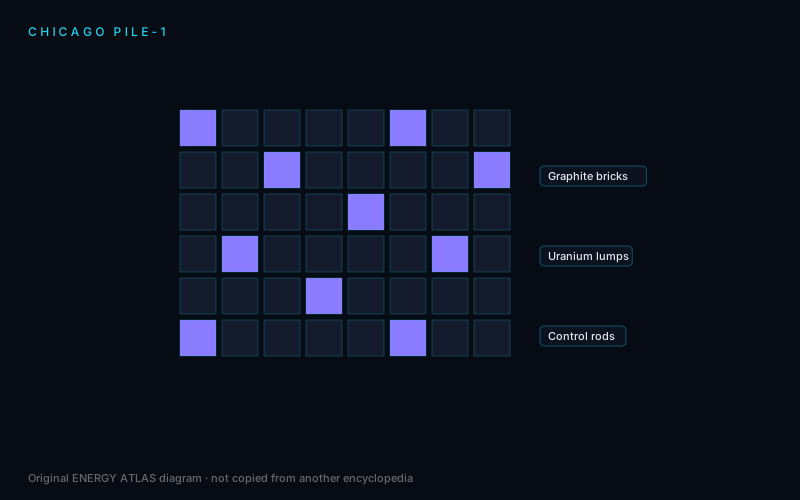
Original ENERGY ATLAS schematic. Interactive 3D is opt-in on this page.
Bricks stacked into a pile.
Overview
CP-1 was a pile of graphite blocks and uranium. Cadmium control rods provided shutdown. It produced negligible power by today's standards but proved the chain reaction could be controlled.
How it works
Graphite slowed neutrons. Uranium provided fissile and fertile nuclei. Operators withdrew rods until neutron population rose exponentially, then levelled it with absorbers.
Components
Graphite moderator
Bricks stacked into a pile.
Uranium metal and oxide
Fuel lumps in a lattice.
Control rods
Cadmium strips for shutdown.