Tokamaks
16 min read · Energy Atlas Editorial
The word "tokamak" is of Russian origin and means "toroidal chamber and magnetic coils." This magnetic confinement system holds plasma in magnetic fields of toroidal shape. The first tokamak, the T-1, started operation in 1958 in Russia, and since then the greatest advances in th
The word "tokamak" is of Russian origin and means "toroidal chamber and magnetic coils." This magnetic confinement system holds plasma in magnetic fields of toroidal shape. The first tokamak, the T-1, started operation in 1958 in Russia, and since then the greatest advances in thermonuclear fusion research have been achieved with tokamaks. The largest tokamak of its time, JET, with a plasma volume of 80 m3, came closest to the scientific breakeven point in 1997, when it achieved Q = 0.67. There are over fifty tokamaks around the world, to name the most important ones: JET, JT-60SA, EAST, WEST, or TFTR. The biggest tokamak in the world, ITER, is now being built in Cadarache, France.
Main Principles
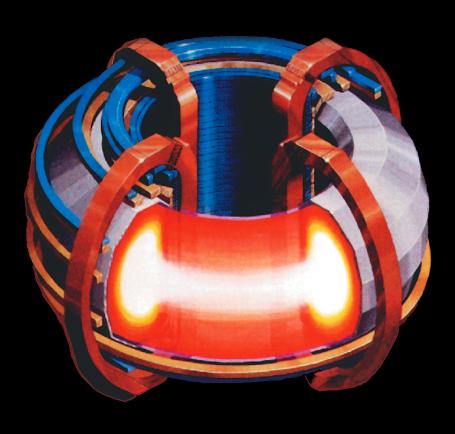
The word "tokamak" is of Russian origin and is an acronym for "TOroidalnaja KAmera i MAgnitnyje Katushki" — toroidal chamber and magnetic coils. It uses a magnetic cage in the shape of a torus (very much the same as the shape of a donut) created by magnetic coils. In this cage, it is possible to isolate hot plasma from the vessel wall, heat it to fusion temperatures up to 150 million kelvin, and ideally ignite thermonuclear fusion.
Toroidal Magnetic Cage
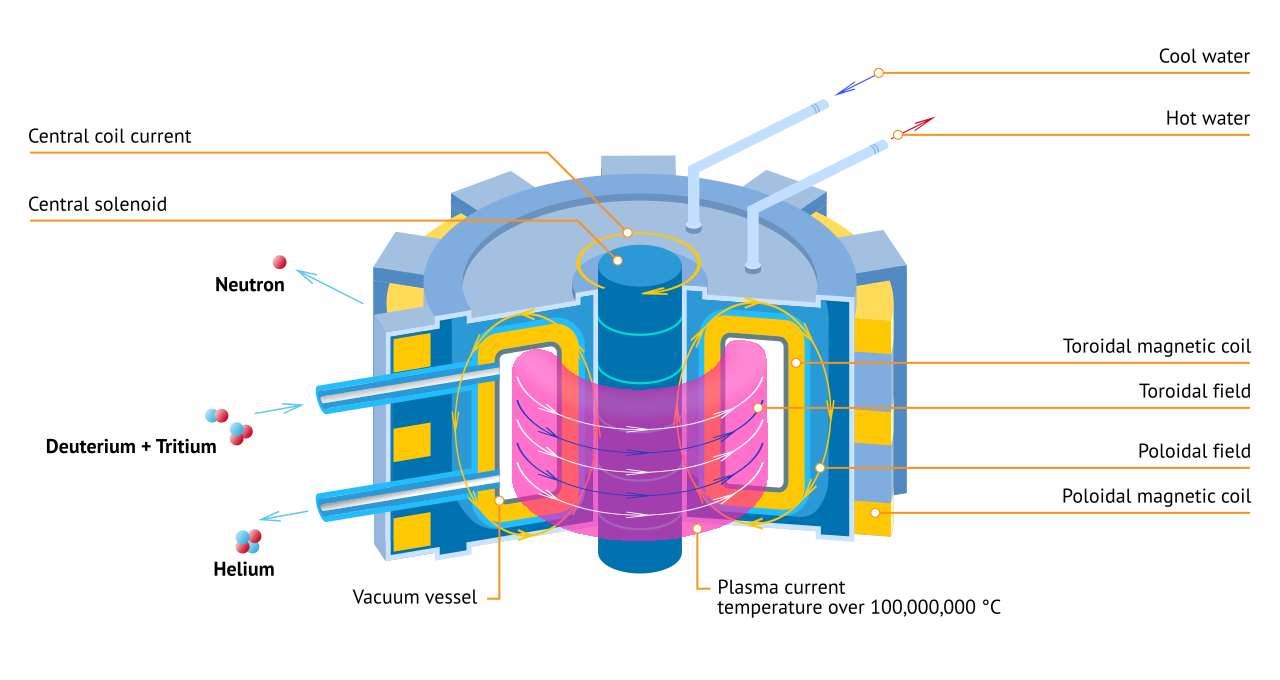
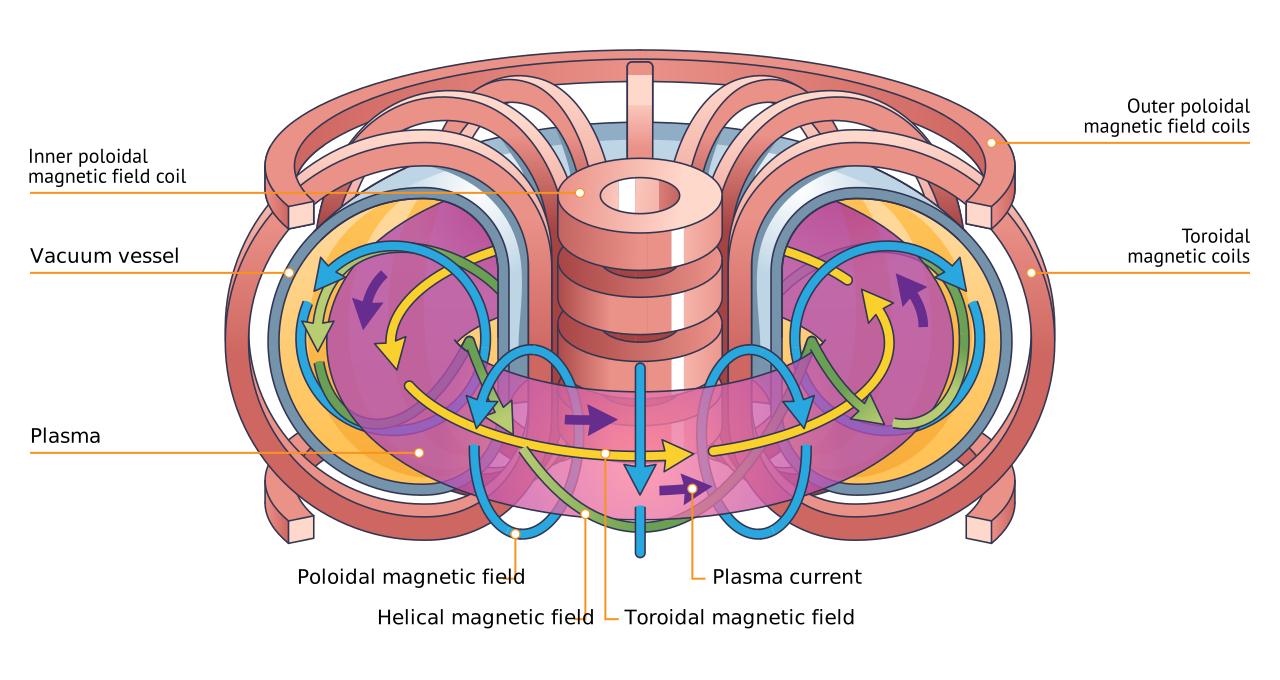
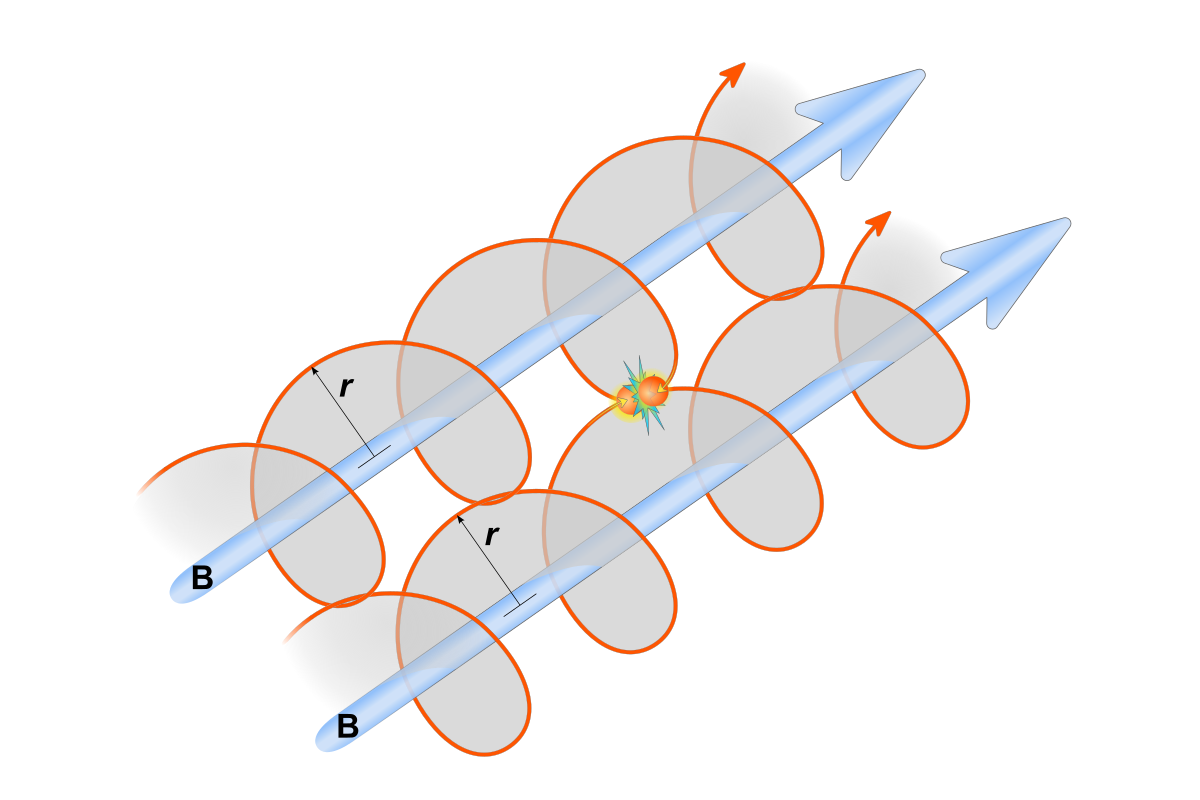
The magnetic cage can be used because hot matter (i.e., heated to a few million kelvin) is composed of charged particles, negatively charged electrons and positively charged ions, that obey magnetic fields. Charged particles in a magnetic field spiral along magnetic field lines. Ions spiral in slightly larger circles (known as the Larmor radius) and in the opposite direction to electrons. In parallel magnetic field lines, created by, for example, in the core of a solenoid, particles travel in one dimension only, creating a column of hot plasma isolated from the walls of the device. As an infinite long solenoid is impractical, the idea is to bend the solenoid into a torus. The donut-shaped chamber encircled by toroidal coils is the basic design of a tokamak. For pure geometrical reasons, the coils on the inner side of the torus (in the donut hole) are closer to each other, so the magnetic field is stronger there than at the outer edge of the torus. Particles in a gradient magnetic field start to move across the field lines. Electrons drift down and ions up, so gradually the charges separate and the resulting electric field overcomes the magnetic one and pushes the plasma out of the torus. To overcome this, particles must be forced to spiral around the torus. In a tokamak, this is done by electric current flowing through plasma. The current generates a magnetic field which combines with the toroidal magnetic field and the resulting field is desirably helically twisted. Each particle is then trapped on a closed magnetic surface in the shape of a donut, running once on the inner side of the torus and once on the outer side of the torus, so unwanted drift is cancelled out and particles stay on their magnetic surfaces and inside the vacuum vessel.
Plasma Current
The plasma current is induced in the same way as current is induced on the secondary winding of a transformer. In the tokamak, the secondary winding is the plasma itself. Since the transformer is a pulse device, the tokamak does not operate continuously but in pulse mode like the transformer. Various means are explored to enable the tokamak to operate in steady-state instead of pulse mode because the power plant has to operate in continuous mode. To properly place and position the plasma, the third type of coil is needed — poloidal coils — that create a vertical magnetic field that slightly pushes plasma toward the tokamak centre.
Plasma Formation in Tokamak
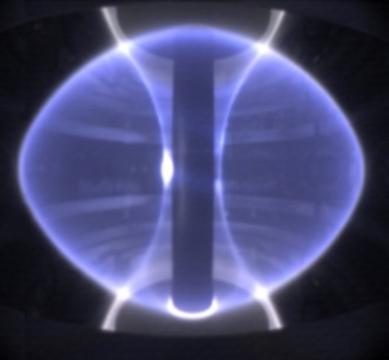
When creating plasma in a tokamak, first the toroidal and poloidal magnetic fields are switched on. Then the gas, mainly hydrogen, is puffed in. The gas is mostly neutral, so few ions are added for a good start. The plasma pulse begins with the start of the transformer pulse. Electric current is generated in gas and electrons (and ions) start to move around the torus. Charged particles are colliding with neutral ones, ionizing them. When ionized, those particles move along the magnetic lines, accelerating and colliding with even more particles.
Heating
In the first phase, the non-ionized gas has high resistivity to induced current and the plasma heats rapidly. This is called Joule (ohmic) heating and serves as primary heating in the early stages of plasma creation. When heated up to about ten million kelvin, most of the gas is ionized. Plasma resistivity decreases. This is the time for other types of heating. NBI (Neutral Beam Injection) uses a particle accelerator to generate neutral particles that are fired into plasma to pass their energy to plasma particles. Microwaves with frequencies easily absorbed by electrons or ions are also used (electron cyclotron resonance heating and ion cyclotron resonance heating). With those heating efforts combined, temperatures of up to 100 million kelvin can be reached inside the tokamak.
Pulse Regime
However, the pulse is only as long as the pulse in the transformer (in order to induce current in the secondary winding of the transformer, which is plasma in this case, you must change current in the primary winding, which cannot be increased indefinitely). Another way of maintaining current in plasma should be started at this moment to be able to operate the tokamak in stable mode. One possibility is current drive, when the electric current is forced by radio waves of a special frequency. Another one is bootstrap current, a self-generated and self-sustained current that is created in plasma after certain conditions are induced.
2 pictures 2 pictures
Vacuum Chamber
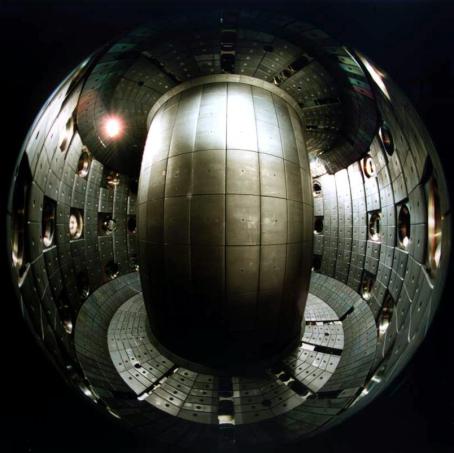
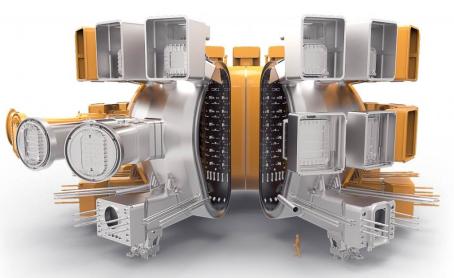
If you want to create hydrogen plasma, you need some kind of bottle where only a precise amount of hydrogen is present at the beginning. This provides a vacuum vessel, a hollow steel donut inside which the plasma is created and isolated from its walls by a magnetic field. The walls of the vessel are not able to withstand temperatures of 100 million kelvin or more (no material is), but the magnetic field is holding the hot plasma back enough so that the vessel walls have to cope with "only" several hundred kelvin.
Material
The vessel is typically made of stainless steel, with water cooling pipes incorporated into the walls of larger tokamaks. Eddy currents resulting in the metal material of the vessel help to stabilize plasma and reduce turbulence.
First Wall
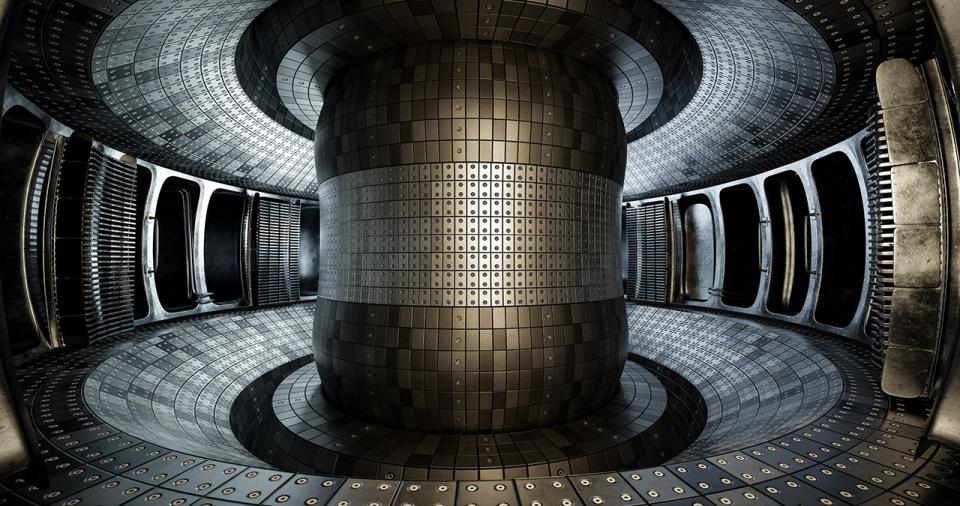
On the inner side of the vacuum vessel, the so-called first wall panels are mounted. These are directly facing plasma, so they have to withstand the highest thermal load. Not only during normal operation but mainly during "off-normal" conditions when magnetic confinement goes wrong and lots of energetic particles are bombarding the vessel wall (e.g. in ELMs or disruption events). The thermal load in such situations can be compared to the heat load experienced by spacecraft re-entering the Earth's atmosphere. The first wall is composed of replaceable tiles made of carbon, tungsten, or beryllium, and these tiles could be infused with water cooling pipes. The material from which they are made has to meet several conditions. First is the high melting point, so they will stay solid and unchanged. Second is their cohesion — the low potential of releasing their atoms into plasma — as atoms with a high atomic number could cause several heat losses due to radiation. Last but not least, is their potential for absorbing other atoms. Material with a porous structure could absorb particles from the atmosphere (carbon, nitrogen, oxygen) and release them into plasma when heated. These impurities could cool the plasma. The release of trapped atoms could be prevented by baking, when the chamber is heated before discharge and released gases are evacuated by vacuum pumps.
Tritium Retention
The ability of trapping particles could cause serious problems in power plant, where rare tritium will be used as fuel. The porous material of the first wall could trap tritium that will be missing in the reaction. It is very important to construct the first wall tiles from materials that do not absorb tritium, so the device will have low tritium retention.
Neutron Flux
In a power plant, a vacuum vessel will have to cope with high neutron flux as neutrons originate from deuterium-tritium reaction and are not confined by magnetic field because they have no charge. Neutron impacts on the vessel wall will activate it and could cause radiation embrittlement, so the vessel wall material has to be made from nuclear-grade stainless steel that will sustain neutron loads many times higher than fission reactors have to. The activated chamber will be inaccessible to humans, and the tokamak will have to be equipped with remote maintenance devices that will do all the necessary work inside the vessel.
Shielding
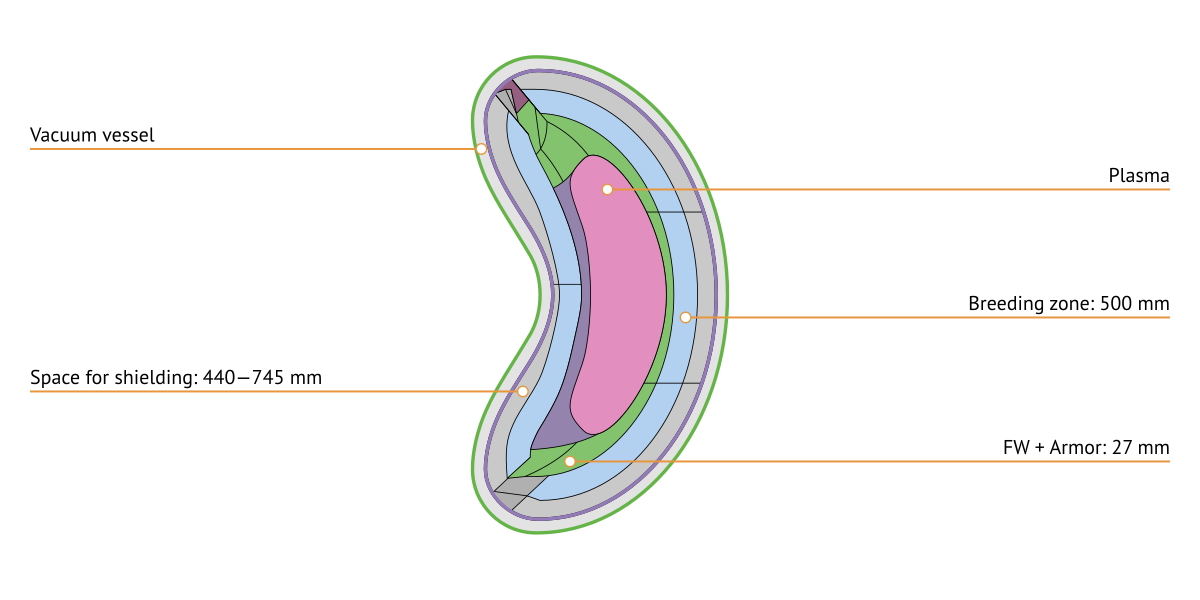
The vessel and the coils behind it will have to be protected by shielding. The neutrons will pass their energy to shielding material, and the produced heat will be removed by cooling and used for electricity generation in a steam turbine. Captured neutrons could also be used for tritium production. This element, rare on Earth, could be created by neutron capture in lithium, so the first wall panels will be equipped with some kind of tritium breeder. The best construction of breeders will be tested on the ITER tokamak. The combined protective first wall panels, tritium breeder and neutron shielding will be about 1—1.5 meters thick, so a big machine with strong magnetic coils will be necessary.
Vacuum
A high vacuum is maintained by vacuum pumps. Usually by a combination of mechanical pumps and powerful cryopumps capable of creating a low density of about one million times lower than the density of air. The cryopumps are based on cryopanels, cooled with supercritical helium and coated with activated charcoal as a sorbent material that could trap helium or tritium atoms.
Geometry
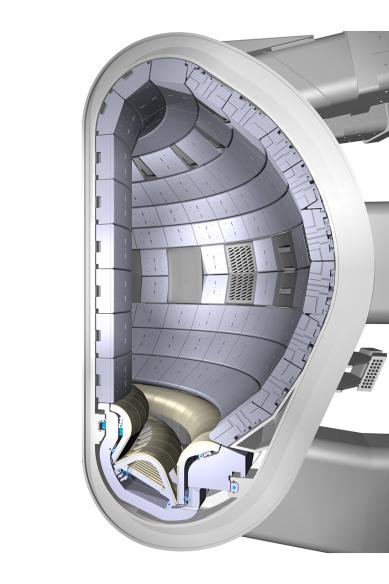
The geometry of a vacuum vessel is usually depicted as an aspect ratio, which is a ratio between major radius and minor radius. If you imagine a donut filled with cream, then the distance from the centre of the donut hole to the cream is a major radius and the distance from the cream to the surface of the donut is a minor radius. If the aspect ratio is small, then the tokamak has the shape of a thick donut with nearly no donut hole. The bigger aspect ratio means that the tokamak resembles a thin donut with a large donut hole. Tokamaks with a small aspect ratio are usually called compact or spherical tokamaks.
4 pictures 4 pictures
Fuel
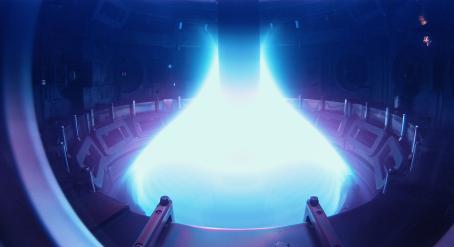
Most tokamaks are not attempting to ignite fusion. They are creating plasma from hydrogen, deuterium or helium and exploring its properties, but for most experimental devices, fusion is not a goal. This is because fusion uses radioactive tritium and produces neutrons that pose a threat to human operators and could activate material of the experimental machine. Radioactive vessel could not be maintained by people anymore and remote handling needed to be installed. Also, construction has to include more radiation shielding and protective layers, which would increase costs.
Without fusion, gaining fuel for tokamaks is easy — plasma could be created from hydrogen, deuterium, or helium.
Hydrogen
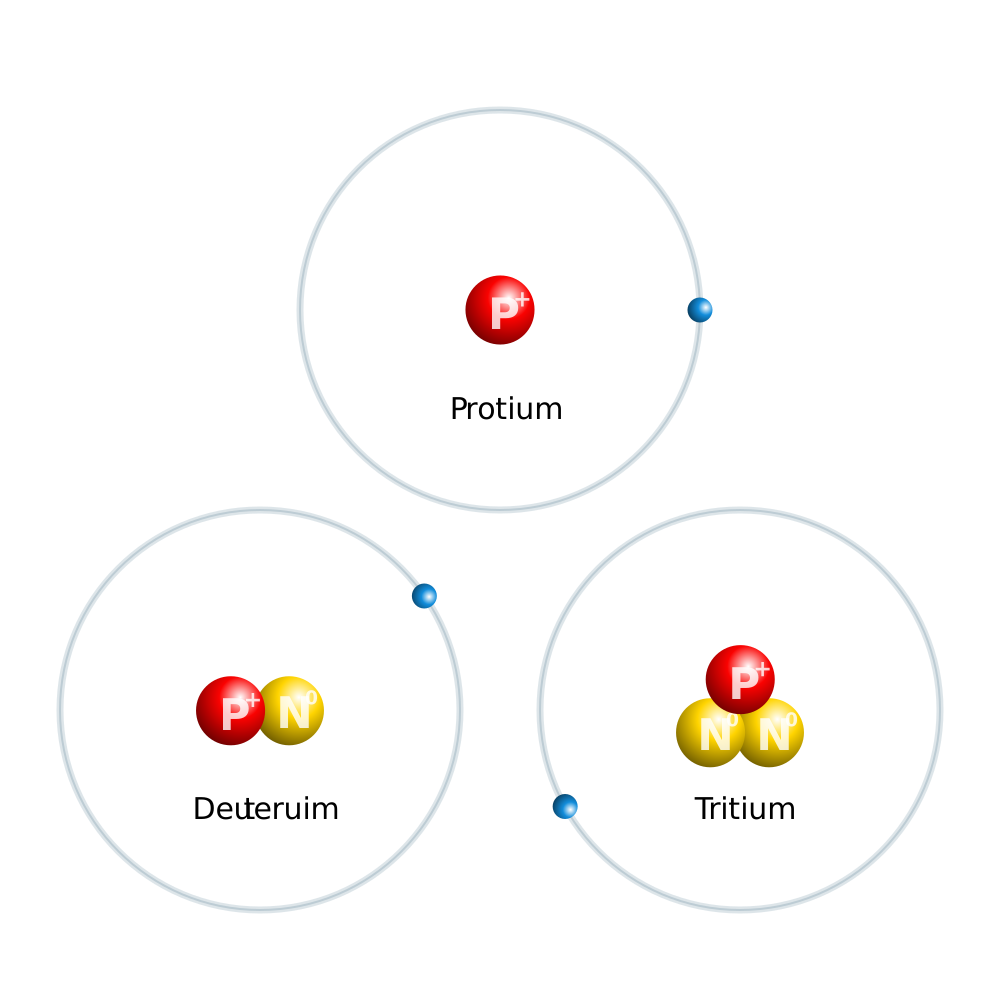
Hydrogen is an abundant element easily obtained by electrolysis from water. This water also contains a heavy isotope of hydrogen called deuterium. Its atom nucleus consists of one proton and one neutron. About one atom out of every 6,000 hydrogen atoms is deuterium.
Helium
Helium is also normally produced in sufficient amounts. Moreover, fuel consumption is very low in tokamaks — even in the biggest machines, there is less than one gram of fuel in a single discharge.
Deuterium and Tritium
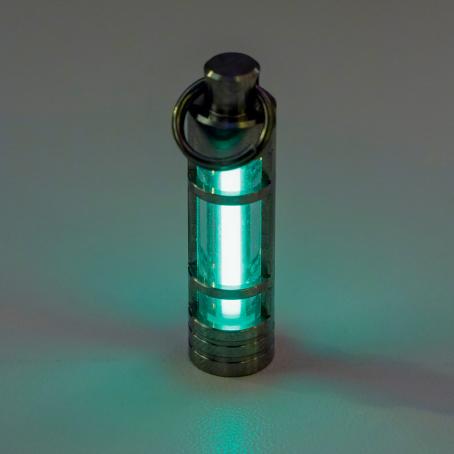
For the fusion, a mixture of deuterium and tritium is needed. From these two compounds, tritium is really hard to obtain. The whole global production of it is only a few kilograms per year. Tritium is an unstable radioactive isotope of hydrogen with two neutrons and one proton in its nucleus and a half-life of 12,3 years. It is extremely rare on Earth, and because of its short half-life, it cannot be stored for an extended period of time. Global resources of tritium would not be able to supply thermonuclear power plants with the required amounts of fuel, so the tritium has to be produced by other means, specifically by tritium breeding. During the fusion reaction between deuterium and tritium, a neutron is produced, and when it hits a lithium atom, it could produce tritium. The process is even more effective when the neutrons are multiplied by passing through, for example, lead. Tritium will then be bred in the walls of a thermonuclear reactor before being extracted and used as fuel. The design of such a breeding device is now the subject of research and development.
Fuelling
The fuel is usually injected into a vacuum vessel in the form of gas. The chamber is evacuated before fuelling to make sure that there are almost no impurities inside. After fuelling, gas is heated by flowing current and external heating systems to become hot plasma. During the experiment, the fuel could be added if necessary, but this could not be done in the form of slowly puffed neutral gas. Atoms of the inserted fuel will be quickly ionized after contact with the hot edge of the plasma, and the magnetic field won't let charged particles deeper into the core where the fuel is needed. Therefore, the fuel is inserted in the form of rapidly fired frozen pellets or small amounts of gas puffed with high velocity. The inertia of such particles will allow them to reach the centre of the plasma before being ionized.
Deuterium-Tritium Fusion
Of all the experimental tokamaks, only two have since today undergone a deuterium-tritium campaign: JET from the United Kingdom and TFTR from the United States. Their results give important information about, for example, alpha particles' behaviour in plasma, heating plasma from energy of fusion products, or about resulting neutrons and the chamber material activation caused by them. ITER, the biggest experimental tokamak in the world now under construction, will also explore the deuterium-tritium reaction. It is expected that it will collect a sufficient amount of information about fusion plasma so the construction of the first thermonuclear fusion power plant can begin successfully.
Problems
Although tokamaks appear to be a very promising principle to reach energetically usable thermonuclear fusion, they have to overcome many problems during their development and a lot of difficulties are waiting to be solved. The results of the first tokamaks, namely the Russian T-3 that reached 10 million kelvin of hot plasma in 1968, were stunning. Scientists believe that after solving some minor technical problems, power plant construction could begin.
Plasma Purity
Radiation losses due to impurities were easy to figure out by choosing the right material for the tokamak chamber, improving vacuum pumps and starting to bake the vacuum vessel before discharge to release impurities from the walls.
Turbulence
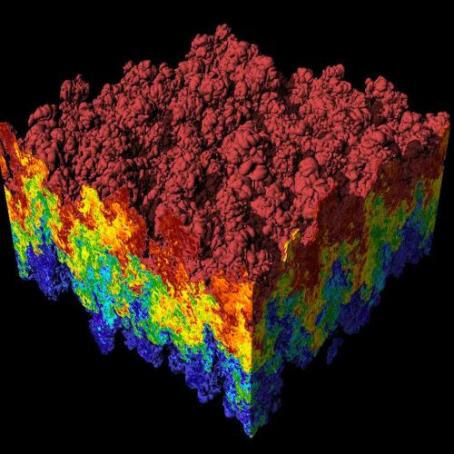
The researchers were able to heat plasma, but then the real trouble started. Experiments on PLT (Princeton Large Torus) clearly show that the hotter the plasma, the poorer the confinement time. As the plasma is very hot and dense in its core, a steep gradient in temperature and density arises on the edge. Turbulence is formed in the outer plasma layers, convectively mixing and cooling them. It turned out that plasma has a whole repertoire of turbulence and instabilities that could cool it or, in the worst cases, terminate the discharge prematurely. This sudden ending is called "disruption" and could be very dangerous for tokamak vessel. Particles are rapidly released from magnetic confinement and hurled against the vessel wall with all of their energy. To make things worse, some electrons in this situation start to be accelerated by the magnetic field to speeds nearly equal to the speed of light and become "runaway electrons". After smashing into the tokamak wall, they can damage it. On the TFT tokamak in 1975, such an event burned holes through the vacuum vessel. However dangerous it could be for the vessel, it poses no threat to human operators as the amount of plasma in the tokamak is very small.
Edge Localised Modes
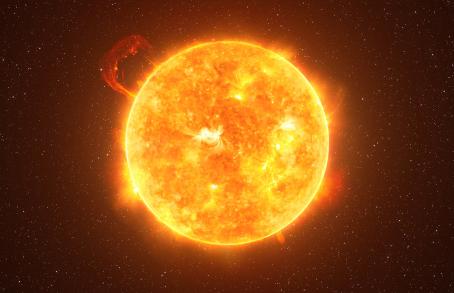
In 1982, a hope to fight turbulence appeared. The ASDEX tokamak manages to produce plasma with significantly better confinement than before. Such a regime gets the name high-confinement mode (H-mode), and the previous plasma regimes were named low-confinement mode (L-mode). In H-mode, a very sharp boundary of density and temperature, called the transport barrier, is created on the plasma edge. Turbulence is reduced and confinement time is 2 or even 3 times enhanced. With the good news unfortunately came a bad one-the ELMs. Edge Localised Modes are repetitive events that appear during H-mode. Plasma edge periodically swells and shrinks expelling jets of hot plasma onto the walls. This is somehow similar to solar flares, and a sufficiently big ELM could harm the vessel wall. Although the mode without ELMs was also obtained (it is called the Quiescent H-mode), the one with ELMs is preferred. It shows that ELMs help to lead out impurities from plasma that would otherwise cumulate in its core and cool it. The preferred regime is with small ELMs occurring at a high frequency, so one single ELM poses little threat to the vessel wall. Methods like resonant magnetic perturbation are tried to mitigate ELMs.
Plasma Volume
Research shows that better confinement times, higher temperatures, and densities are easily achieved and maintained in larger volumes of plasma. It was also obvious that there had to be at least one meter of space between the plasma edge and the magnetic coils in the fusion power plant to accommodate vessel wall, neutron shielding, active cooling, and tritium breeders.
Magnetic Field
Bigger machines mean not only major technical challenges but also require stronger magnetic fields. Copper magnets were no longer sufficient because of overheating and large energy consumption, so superconducting magnets started to be used. First niobium-titanium, but where a really strong magnetic field was supposed, niobium-tin, which is extremely brittle, started to be used. Those types of superconductors need to be cooled to 4 kelvin, so experiments with high-temperature-superconductors, like ReBCO, have already started.
Pulse Regime
A continuous regime is necessary for power plant, but tokamak is essentially a pulse device. It was attempted to find ways to extend the plasma pulse and make it independent of induced current. Current drive, where electrons are dragged by radio waves like a surfer is riding on an ocean wave, seems very promising. Under certain conditions, the self-sustaining and self-generating current known as bootstrap current was induced.
Despite all effort and progress, the longest pulse with H-mode did not exceed few minutes. Also, no tokamak ever reach scientific breakeven where energy produced by fusion reaction would balance energy supplied by external heating. Research of fusion in tokamaks still continues. Scientists have many models how the plasma will behave in large volume inside new experimental ITER tokamak, but maybe, as many times before, the plasma will surprise them and brand-new modes and plasma behaviour will emerge.
Keep reading
Articles
Material for Magnetic Coils
The word "tokamak" is of Russian origin and means "toroidal chamber and magnetic coils." This magnetic confinement system holds plasma in magnetic fields of toroidal shape. The first tokamak, the T-1, started operation in 1958 in Russia, and since then the greatest advances in th
5 min read
Divertor
The word "tokamak" is of Russian origin and means "toroidal chamber and magnetic coils." This magnetic confinement system holds plasma in magnetic fields of toroidal shape. The first tokamak, the T-1, started operation in 1958 in Russia, and since then the greatest advances in th
5 min read
External Heating
The word "tokamak" is of Russian origin and means "toroidal chamber and magnetic coils." This magnetic confinement system holds plasma in magnetic fields of toroidal shape. The first tokamak, the T-1, started operation in 1958 in Russia, and since then the greatest advances in th
5 min read
Most Important Tokamaks in the World
The word "tokamak" is of Russian origin and means "toroidal chamber and magnetic coils." This magnetic confinement system holds plasma in magnetic fields of toroidal shape. The first tokamak, the T-1, started operation in 1958 in Russia, and since then the greatest advances in th
12 min read
Questions
Tokamak or stellarator — what is the difference?
Both confine plasma in a torus. Tokamaks use plasma current; stellarators use twisted coils.