Edita Bromova
What lives in the area of a nuclear power plant?

The site of a nuclear power plant usually occupies an area of approximately three square kilometres and includes, from the animal's point of view, a number of attractive biotopes. There are grassy areas for insects and small animals, bushes, roofs, ledges and pipes providing safe shelters and nesting opportunities or open pools under cooling towers for aquatic creatures. Since smaller animals often crawl through apertures where larger predators cannot follow them, the fenced area of the nuclear power plant is also a safe place for them to live. It is therefore not surprising that they use it a lot. Since a nuclear power plant occupies only a small area and is away from human settlement, various nature reserves can flourish in its immediate vicinity and many endangered animal species can thrive there.
In the areas of nuclear facilities, animals are commonly found. We can note rodents, hares, birds and bats. It is not an isolated case that a protected animal settles in a power plant area. In the USA, for example, peregrine falcons nest in Three Mile Island or Yankee Vermont PP. Sometimes you even manage to discover a rarity, such as a pair of eels in the cooling tank of the Czech nuclear power plant Dukovany. Since there are screens at the entrance of the cooling water through which the eel could not have passed, they had to enter the area as eggs or freshly hatched fry, which then fed on snails grazing on green algae in the cooling pool. Sometimes the animals in the power plant do so well that their numbers have to be limited. Overpopulated hares can be caught and released into the wild, but the invasive zebra mussel, for example, which likes to clog cooling pipes, can be a serious problem.
As for the "two-headedness" of animals inhabiting the premises of the nuclear power plant, it does not occur any more often with them than anywhere else in nature. In a well-run nuclear power plant, all sources of radioactivity are strictly controlled and guarded, so they cannot endanger anyone. Animals like that will not shine on the road at night. Purely theoretically, a spider that decided to spin its web directly on a container with spent nuclear fuel could receive larger doses of radiation. The level of radiation here is slightly higher than the natural background. For now, however, there is no known study that would monitor insects in the nuclear fuel interim storage and neither the occurrence of giant mutated spiders nor superpowers in employees who came into contact with the power plant spiders has been detected.
More mysteries
Keep exploring questions other readers asked.
Edita Bromova
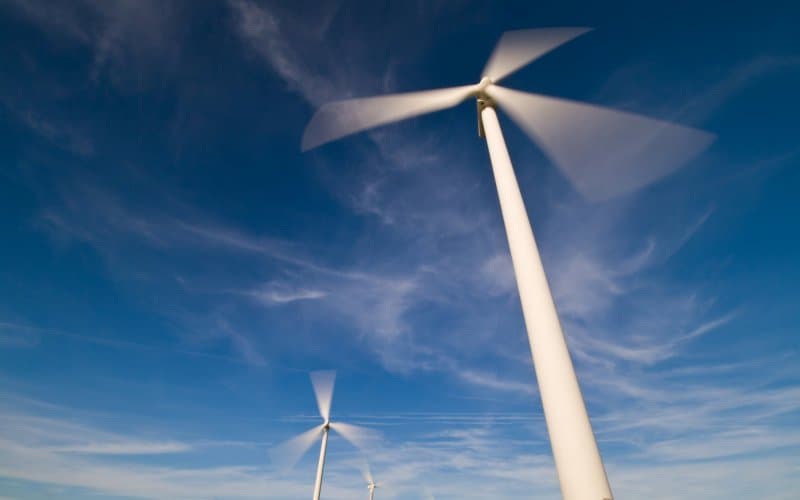
Can wind turbine rotor tips spin at supersonic speed?
Small wind turbines can reach 30 to 60 revolutions per minute, but larger ones spin more slowly at a rate of perhaps only ten revolutions per minute. What may look like slow motion from a distance is actually quite fast…
Read the answer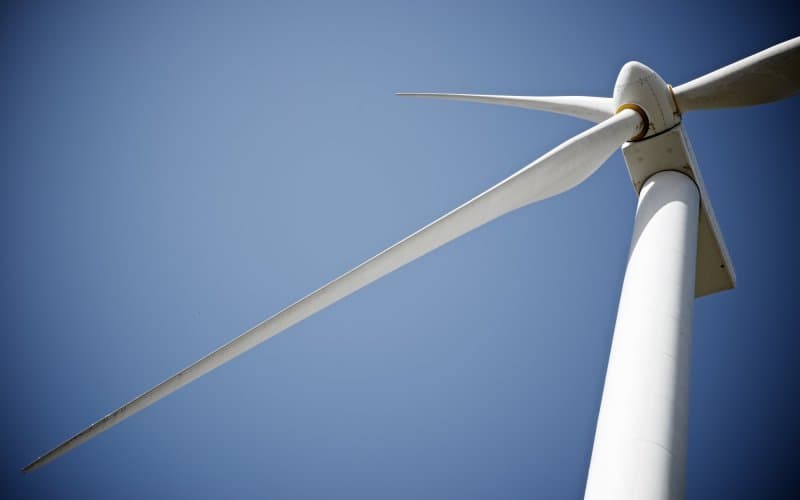
Edita Bromova
How long can a wind turbine propeller be so that it would not break?
The length of the wind turbine's propeller blades has already exceeded one hundred metres. In 2022, the record was held by a 123 metre long blade from the Chinese firm Lianyungang Zhongfu Lianzhong Composites Group Co.,…
Read the answer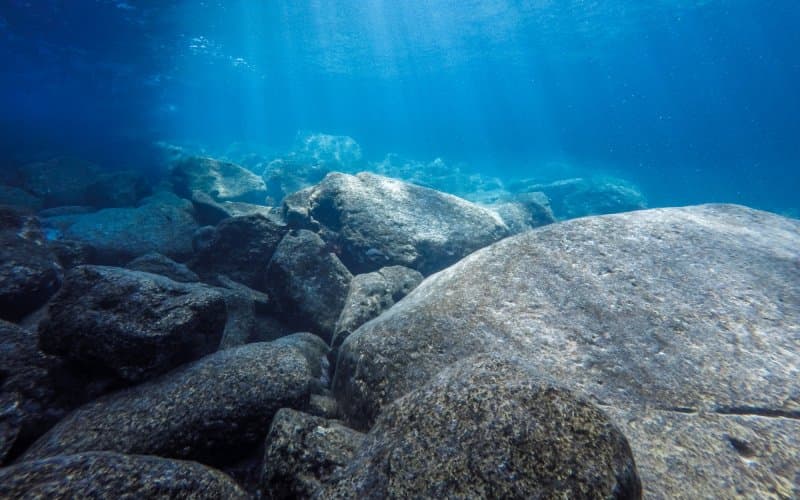
Jaroslav Kores, Ph.D.
Does the force required to lift a stone in water vary with depth? E.g. Can I lift 100 kg at a depth of 1 m, 200 kg at a depth of 10 m?
Gravitational force acts on every body. If we want to lift a body, we must exert a greater force in the opposite direction. Buoyant force helps us in water — it has an upward direction and therefore if we want to lift a…
Read the answerWant to ask something?
Send us an e-mail with the subject "Physics mysteries" to the address below, or use the contact form.
We can't wait to tackle your interesting questions!