Jaroslav Kores, Ph.D.
Does the force required to lift a stone in water vary with depth? E.g. Can I lift 100 kg at a depth of 1 m, 200 kg at a depth of 10 m?
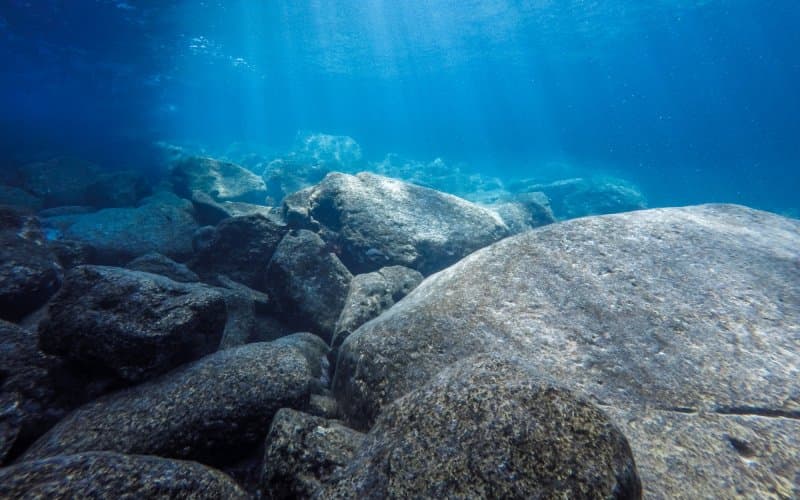
Gravitational force acts on every body. If we want to lift a body, we must exert a greater force in the opposite direction. Buoyant force helps us in water — it has an upward direction and therefore if we want to lift a body in water, the sum of our buoyant force and our force must be greater than the force of gravity.
The question is what the size of the buoyancy force depends on — if it depends on the depth, then it could really be the case that the deeper the body is, the greater the buoyancy force will be and therefore we will be able to exert a smaller force. But it's not like that — the buoyant force depends on the volume of the submerged part of the body and the density of the fluid in which the body is. If the body is completely submerged, it doesn't matter at what depth it is, the buoyant force acting on it will still be the same.
If we were to go to the conclusion, we will eventually come to the fact that the density of the liquid is not always the same — even if we take water as incompressible, its density at the bottom is (very slightly) greater than at the surface. So, in the end, considering a real liquid, at greater depth, less force will be required (by very little) to pick up the rock. I would guess that this difference will be quite immeasurable — at a depth of 2 km, the water density and therefore the buoyancy force would increase by about 1%.
In conclusion, I would just add that we would measure a more significant difference in the air for the above reason — at an altitude of 5 km, its density is half. Unfortunately, the buoyant force in air is 1,000x less than in water (because air is 1,000x less dense than water).
More mysteries
Keep exploring questions other readers asked.

Jaroslav Kores, Ph.D.
Why can engine performance be determined by “horsepower”? Is it some kind of conversion to real horses? What kind?
Horse power was introduced by James Watt to be able to approximate the power of the steam engine. Simply put, by determining the horsepower of a horse and comparing it to a steam engine, he could say: "My steam engine wi…
Read the answer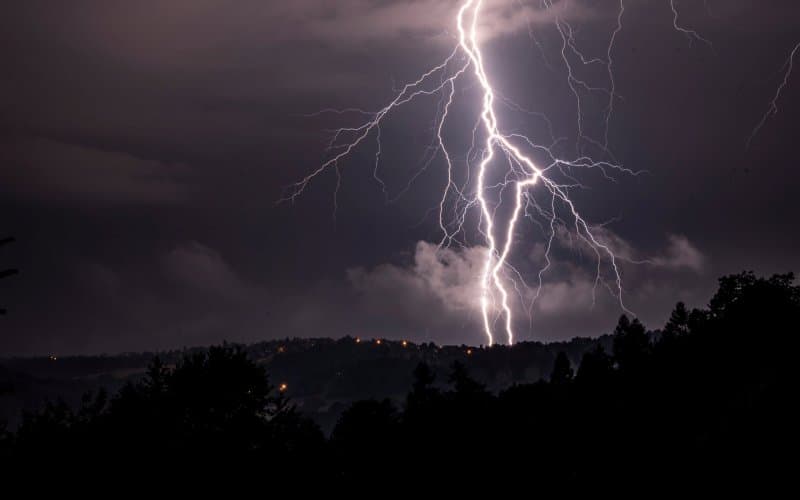
Jaroslav Kores, Ph.D.
What happens to lightning (energy) when it goes down a lightning rod to the ground?
In general, energy that we can't use turns into heat and that's what happens with lightning energy. It is necessary to realize that lightning is actually a slightly stronger example of an electric current (we call it an…
Read the answer
Jaroslav Kores, Ph.D.
What food is the most radioactive?
I believe that the content of radioactive substances in food depends mainly on where we get the food from. Radioactive materials enter food from its surroundings. Plants and mushrooms get radioactivity from the soil they…
Read the answerWant to ask something?
Send us an e-mail with the subject "Physics mysteries" to the address below, or use the contact form.
We can't wait to tackle your interesting questions!