Edita Bromova
How long can a wind turbine propeller be so that it would not break?
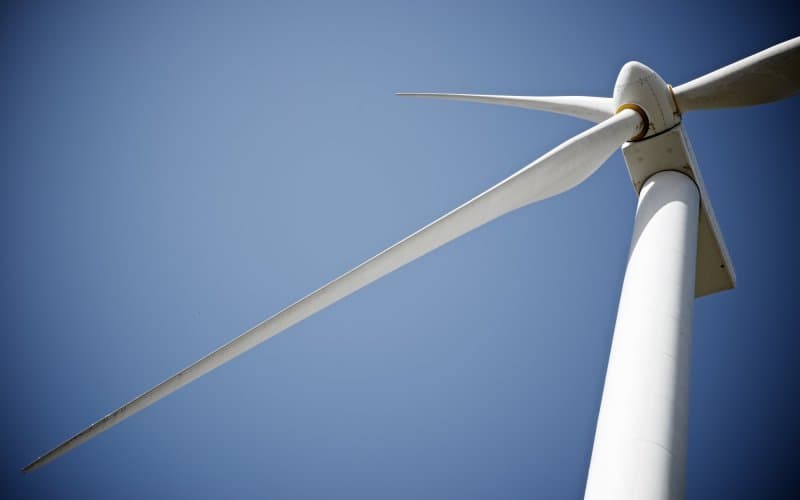
The length of the wind turbine's propeller blades has already exceeded one hundred metres. In 2022, the record was held by a 123 metre long blade from the Chinese firm Lianyungang Zhongfu Lianzhong Composites Group Co., Ltd. (LZ Blades). Even longer rotors can be expected to follow. Larger rotors capture more wind, which blows faster at altitude, so larger wind turbines produce more electricity. But a number of obstacles will stand in the way of the unlimited growth of wind farms. The risk of breaking the propeller is just one of many. Currently, blades are made of glass or carbon fiber. Carbon ones are lighter but also more expensive, so the effort is to find the optimal mix and reinforce it with, for example, carbon nanotubes. With better material, the strength of the blade increases and thus its potential length.
No matter how strong it is, a longer blade will deform to some extent, making it difficult to maintain proper aerodynamic shape and also to ensure that a gust of wind does not bend it enough to collide with the support pillar. Another seemingly banal but increasingly burning problem is transporting the increasing length of the blade. The longer the blade, the greater the demands it has on the quality of the road it must travel on, the height of bridges it must fit under, or the radius of turns in cities where it can still turn without demolishing the houses standing around the road. Some companies are trying to solve this with a two-part blade, by producing components on site or directly by 3D printing them. A long blade also requires a long crane to lift it to a height of almost two hundred metres during installation.
The length of the blade is also limited by erosion, which is caused by raindrops or sea spray when they collide with a rotating blade. Ideally, the rotor tips should not spin faster than 90 metres per second. So the longer the propeller blade, the slower it has to spin. But in order for a slow propeller to produce enough electricity, the wind has to rely on it more intensively, which places increasing demands on the weight and strength of the supporting structure. At a certain point, the increasing length of blades will cease to mean increasing yields and larger wind farms will no longer be built.
More mysteries
Keep exploring questions other readers asked.
Jaroslav Kores, Ph.D.
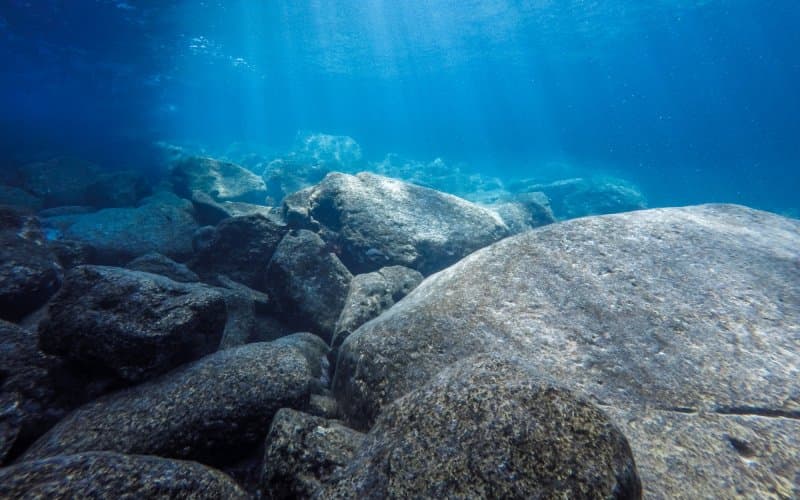
Does the force required to lift a stone in water vary with depth? E.g. Can I lift 100 kg at a depth of 1 m, 200 kg at a depth of 10 m?
Gravitational force acts on every body. If we want to lift a body, we must exert a greater force in the opposite direction. Buoyant force helps us in water — it has an upward direction and therefore if we want to lift a…
Read the answer
Jaroslav Kores, Ph.D.
Why can engine performance be determined by “horsepower”? Is it some kind of conversion to real horses? What kind?
Horse power was introduced by James Watt to be able to approximate the power of the steam engine. Simply put, by determining the horsepower of a horse and comparing it to a steam engine, he could say: "My steam engine wi…
Read the answer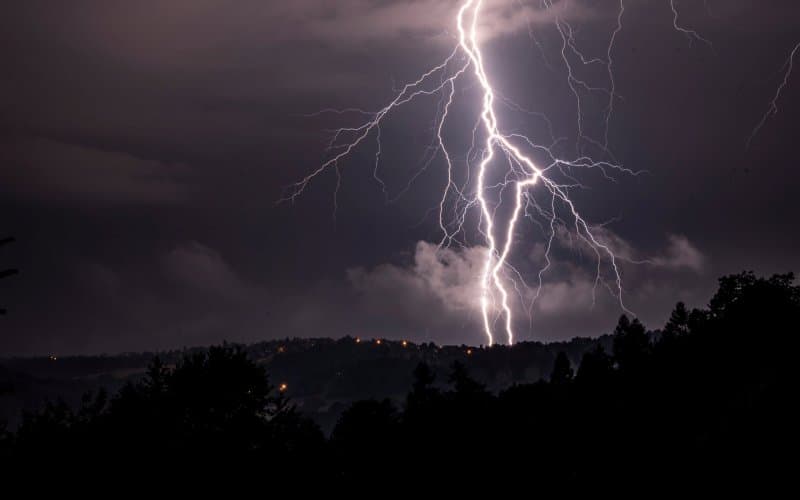
Jaroslav Kores, Ph.D.
What happens to lightning (energy) when it goes down a lightning rod to the ground?
In general, energy that we can't use turns into heat and that's what happens with lightning energy. It is necessary to realize that lightning is actually a slightly stronger example of an electric current (we call it an…
Read the answerWant to ask something?
Send us an e-mail with the subject "Physics mysteries" to the address below, or use the contact form.
We can't wait to tackle your interesting questions!