Jaroslav Kores, Ph.D.
Creation of vacuum by explosion
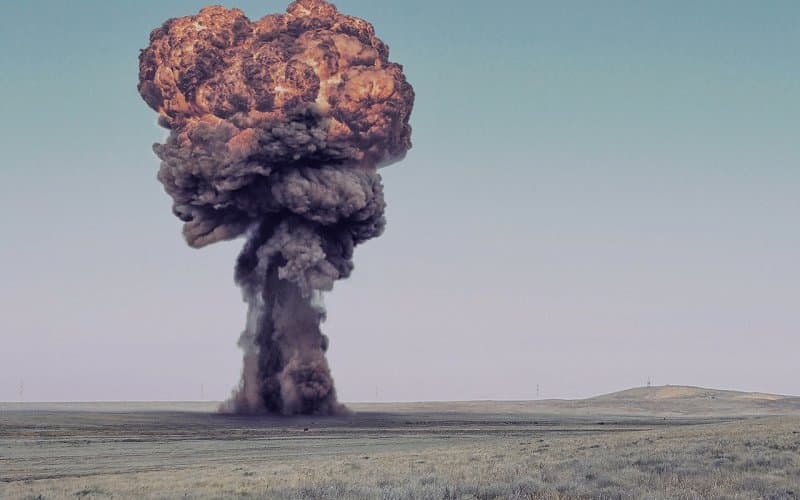
Yes, that's right. A pressure wave is typically created by an explosion (it doesn't matter what the source is) compressing the surrounding air. Because air is a flexible environment, this compression will spread further. You can try something similar yourself — just push water in a pool (or in a bath or pond) with your palm. We will see that this compression begins to spread further through the water. Unlike our hand, the energy of an explosion is much higher and therefore occurs with stronger air compression. This compression spreads further and the energy that has been put into it can have destructive effects. At this point, we should point out that nothing like this would happen in a vacuum (e.g. in space) — the energy of the explosion would still spread so explosions in sci-fi movies are not always realistic.
In the example shown, if we push the palm forward in a pool, we will see the surrounding water flowing behind the palm. It will be the same during an explosion — the explosion pushes the surrounding air and therefore there is a vacuum at the place of the explosion. The air will return to this place due to atmospheric pressure so that the pressure is the same everywhere. So the air first opens and then contracts again. During this compression, the pressure may increase (air flows sharply back) and condensation may occur (fog). These pressure changes at the site of the explosion will be repeated several times before reaching an equilibrium state where the pressure is the same as before the explosion. It's the same as in a pool — it will take a while for the surface to calm down. And these pressure changes spread to us like sound — that's what makes the sound of an explosion.
More mysteries
Keep exploring questions other readers asked.
Jaroslav Kores, Ph.D.
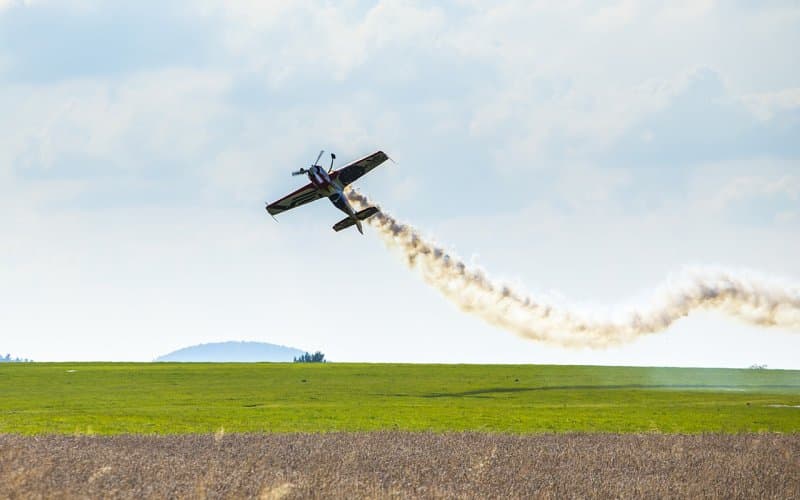
Lift forces on an aerobatic aircraft
It is true that the plane takes off due to the geometry of the wings. The upper part is more bulging than the lower part and therefore the air flows at a higher speed around the upper part of the wing than the lower part…
Read the answer
Jaroslav Kores, Ph.D.
Hypothetical rescue in a falling elevator
I hope that no one will have to experience this situation because it will not be possible to jump in a falling elevator — I will explain the situation where we do not take into account the air resistance. If an elevator…
Read the answer
Jaroslav Kores, Ph.D.
How much will I save if I heat to 21 °C instead of 24 °C?
In my search for an answer to this question, I came across the 6% rule. This is a fairly simple rule that empirically (i.e., from experience) determines that every 1 °C decrease in temperature leads to a 6% reduction in…
Read the answerWant to ask something?
Send us an e-mail with the subject "Physics mysteries" to the address below, or use the contact form.
We can't wait to tackle your interesting questions!