Jaroslav Kores, Ph.D.
Lift forces on an aerobatic aircraft

It is true that the plane takes off due to the geometry of the wings. The upper part is more bulging than the lower part and therefore the air flows at a higher speed around the upper part of the wing than the lower part. And it follows from Bernoulli's equation that the higher the velocity of the fluid, the lower the pressure at a given location. However, if that were the case, the plane could only climb. We regulate the flow speed by controlling the propeller — the faster the plane flies, the faster the flow. So it would be possible to regulate the height of the aircraft by regulating its speed. But it's not perfect. Therefore, aircrafts have rudders (at the rear of the aircraft). Turning the elevator changes the direction of the aircraft relative to the surroundings. You can try something similar when you put your hand out of a moving car — if you have your palm horizontal with the road, you won't feel anything interesting but when you turn it, your hand will either drop or rise — depending on whether the palm is down or up. The same works for the aircraft — by turning the elevator, the air on the rear of the aircraft will either turn upwards or downwards. So this is the second force acting on the aircraft after lift. We have omitted the most basic force — the force that the propeller pushes the plane forward.
By combining these 3 forces, it is possible to control the aircraft in standard flight as well as in flight upwards — only transport aircraft are not designed for this, in contrast to aerobatic aircraft.
More mysteries
Keep exploring questions other readers asked.

Jaroslav Kores, Ph.D.
Hypothetical rescue in a falling elevator
I hope that no one will have to experience this situation because it will not be possible to jump in a falling elevator — I will explain the situation where we do not take into account the air resistance. If an elevator…
Read the answer
Jaroslav Kores, Ph.D.
How much will I save if I heat to 21 °C instead of 24 °C?
In my search for an answer to this question, I came across the 6% rule. This is a fairly simple rule that empirically (i.e., from experience) determines that every 1 °C decrease in temperature leads to a 6% reduction in…
Read the answer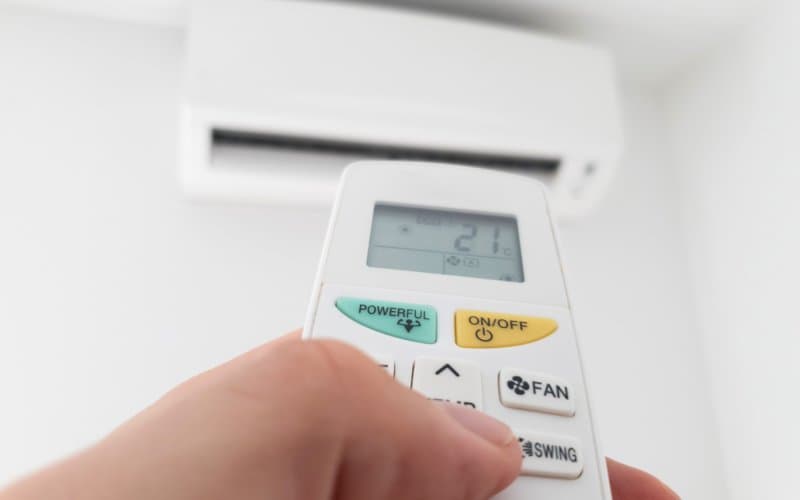
Jaroslav Kores, Ph.D.
What consumes the most energy in a household?
The highest energy consumption in a household comes from appliances that produce heat and/or cooling. So it typically involves heating, air conditioning, stoves, cookers, microwaves, or kettles. Based on how much the dev…
Read the answerWant to ask something?
Send us an e-mail with the subject "Physics mysteries" to the address below, or use the contact form.
We can't wait to tackle your interesting questions!