Edita Bromova
Could nuclear fuel be made from coal or seawater?
Uranium is a heavy element that was created by sequential neutron captures in the cores of massive stars, which then ended their lives as a supernova and scattered most of the elements from their core into the wide space environment, including uranium. Planets eventually formed from this interstellar dust. Some of the uranium was concentrated in uranium ore deposits, but it is not surprising that it is also found elsewhere. An estimated 4 billion tons of uranium are dissolved in all the world's oceans. However, its concentration is such that there are approximately three uranium atoms per billion water molecules.
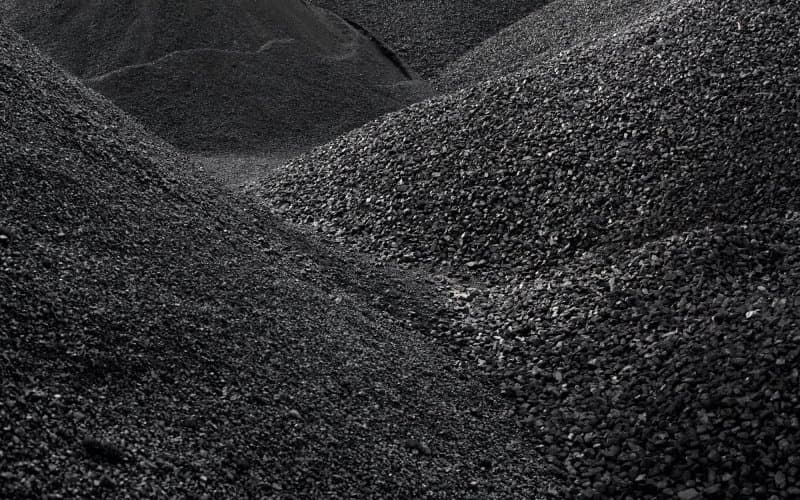
In the case of coal, the situation is already more promising. One hundred tons of coal contains about one kilogram of uranium. In this case, mining is facilitated by the processing of coal itself — after it is burned in a power plant, the contained uranium and other elements, e.g. thorium, are concentrated in the ash. In order to extract a kilogram of uranium, it is then necessary to process "only" several tons of ash.
Currently, there is not a strong demand for uranium mining from coal or the sea for economic reasons. Light water nuclear reactors require relatively small volumes of fuel and, moreover, in open cycle use only part of the uranium contained in the fuel. If the price of uranium rises, projects of reprocessing, thorium cycle or fast breeder reactors will become economically interesting. Only then the extraction of uranium from seawater or coal ash could become economically attractive. However, this does not mean that such mining technologies are no longer being worked on.
Polyethylene adsorbent coated with amidoximes appears to be the most advantageous for obtaining uranium from seawater. The water is forced through filters or cavities with this material. The larger the surface area of the adsorbent material and the more water, the greater the yield. However, it is assumed that in order for mining to really pay off, around 1,000 km2 of adsorbent material would need to be used.
The situation is better with the ash from coal-fired power plants, which lies in heaps. Uranium can be extracted from here by acid leaching, a process very similar to how uranium is extracted from uranium ore. This is followed by the usual and proven uranium processing procedure. Some ash contains such a concentration of uranium as medium-grade ore, which means that mining is seriously being considered. Uranium from coal ash, used as fuel in a nuclear power plant, releases more energy than burning coal in a coal-fired power plant.
More mysteries
Keep exploring questions other readers asked.

Edita Bromova
What lives in the area of a nuclear power plant?
The site of a nuclear power plant usually occupies an area of approximately three square kilometres and includes, from the animal's point of view, a number of attractive biotopes. There are grassy areas for insects and s…
Read the answer
Edita Bromova
Can wind turbine rotor tips spin at supersonic speed?
Small wind turbines can reach 30 to 60 revolutions per minute, but larger ones spin more slowly at a rate of perhaps only ten revolutions per minute. What may look like slow motion from a distance is actually quite fast…
Read the answer
Edita Bromova
How long can a wind turbine propeller be so that it would not break?
The length of the wind turbine's propeller blades has already exceeded one hundred metres. In 2022, the record was held by a 123 metre long blade from the Chinese firm Lianyungang Zhongfu Lianzhong Composites Group Co.,…
Read the answerWant to ask something?
Send us an e-mail with the subject "Physics mysteries" to the address below, or use the contact form.
We can't wait to tackle your interesting questions!