Jaroslav Kores, Ph.D.
Can someone break a glass or any object with their voice (sound made)?
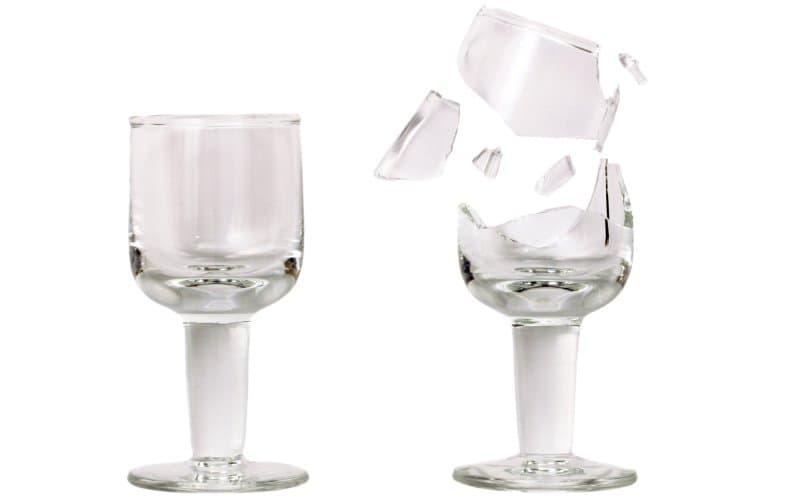
When we tap the glass, we can hear a sound. The pitch (frequency) of this sound depends on the material and shape of the glass. By tapping, we make the glass vibrate, this vibration is transferred due to impacts of the glass to air molecules and spreads through the air to our ear. There, the ear drum vibrates and through other parts of the ear this impulse spreads to our brain and we evaluate this impulse as sound. If we tap the glass a lot, it will break. Couldn't the above procedure (vibration of the glass -> vibration of air molecules -> sound) be done in reverse? That is, make the air molecules vibrate with some sound and this vibration will spread through the air to the glass and shake it? It would definitely work. So if we have a very intense sound (the air molecules will vibrate a lot, we can tell by the sound being very loud), then we should break the glass using the sound. But it won't be that easy — any sound is enough to make the glass vibrate but to break it, we'll need a sound that vibrates the glass as much as possible. It's the same as on a swing — the swing will always swing somehow but if we want it to swing as much as possible, we have to move with a certain frequency. So, just like with a swing, we have to find a sound frequency that makes the glass vibrate as much as possible. We call this frequency the resonant frequency (because both the required vibration of the glass and the swing with the largest deflection are examples of resonance). How to find this frequency? Either experimentally (which is quite impractical) or we will simply find out the frequency at which the glass vibrates after we tap it and we will produce the same frequency with our own vocal cords. And that's where it can be tricky for people like me — we have to hit the glass's frequency exactly (if we make the sound even a little bit higher/lower, it won't resonate and break the glass). That's why people with a good musical ear have a better chance — they just have to listen to the tone the glass makes and then produce the same tone with their own vocal cords. You can get around it by tapping the glass, recording the resulting sound and then playing it in a loop. So people like me have a chance too.
It is good to realize that whether we break a glass does not depend at all on the intensity (volume) of the sound but only on whether we hit the resonant frequency of the glass exactly.
Finally, I will add a minor interesting fact — the microwave oven also works on the same principle (i.e. resonance).
More mysteries
Keep exploring questions other readers asked.
Jaroslav Kores, Ph.D.
Why doesn’t the Moon fall to the Earth?
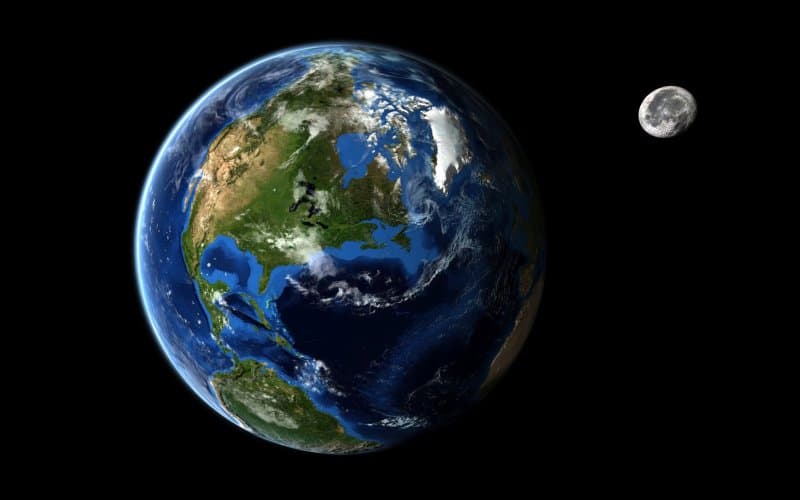
The fact that the Moon orbits the Earth, does not fall on it and does not fly away, and in fact, the fact that it has become our companion, is due to a suitable combination of the speed of the Moon and its distance. Acco…
Read the answer
Jaroslav Kores, Ph.D.
Can anything be faster than light?
It can but it won't do us any good. I will not deal with hypothetical particles (tachyons), which in my opinion are more of a mathematical game resulting from the Theory of Relativity. It follows from the Theory of Relat…
Read the answer
Jaroslav Kores, Ph.D.
How is gravity produced on a spaceship?
Gravity is a property of all material bodies and cannot be directly "produced". Since the magnitude of the gravitational force depends on the mass and distance of the bodies acting on each other, we can make a smaller mo…
Read the answerWant to ask something?
Send us an e-mail with the subject "Physics mysteries" to the address below, or use the contact form.
We can't wait to tackle your interesting questions!