Edita Bromova
Can a photovoltaic panel produce electricity at night?
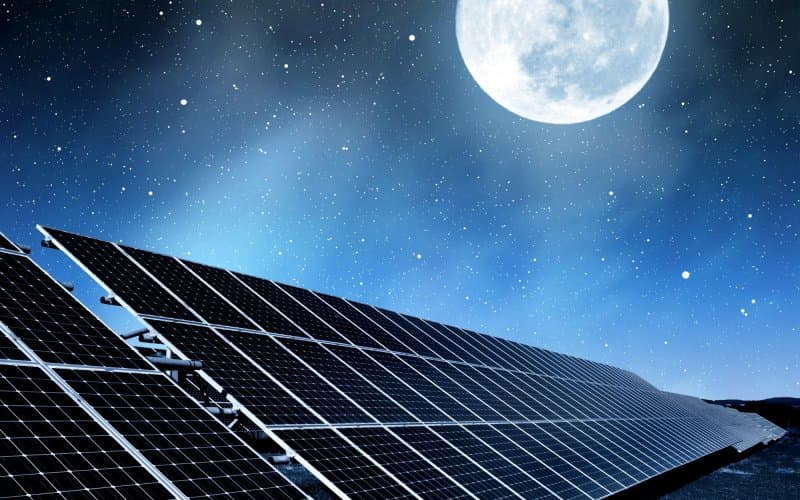
A photovoltaic cell produces electricity after the impact of any photon with a suitable wavelength and does not care if it came directly from the sun, bounced off a wall or the moon or flew out of a light bulb. In all cases, the photon induces a photoelectric effect, which leads to a voltage at the output from the photovoltaic cell. The more photons that fall on the cell at once, the more electricity it produces, so it is advantageous for the cell to be illuminated as much as possible. Ideally by direct sunlight. On the other hand, it is also possible to use other light as well. Lighting with light bulbs should be rejected outright. A light bulb needs electricity and only a part of it turns into light, the rest is uselessly lost as heat. So because of this, a panel lit by a light bulb will produce less electricity than the light bulb used. Lighting by reflected sunlight is already used by bifacial photovoltaic panels. While classic panels have an impermeable layer on the back, double-sided panels are glazed on both sides, so light can fall on them from above and below. However, how much energy the shaded part produces depends on many circumstances. If we fasten such a panel close to a roof, it will be almost dark under it and, moreover, basically nothing will be produced. But if it is placed at a suitable height above a white surface, the back side of the panel can produce up to 30 percent of the power of the illuminated part. Such a panel can also be placed vertically with an east-west orientation. It will have two peaks of electricity production, one in the morning and one in the evening, which is even more in line with the usual pattern of energy consumption in households. As for the light of the stars and the moon, two ways of using it are being considered. The first involves focusing diffused and weak light using lenses onto a small solar cell. The concentration photovoltaic panels already exists, but they are used in direct sunlight. Some types of photovoltaic cells convert light into electricity with higher efficiency when the incidental light is sufficiently intense. In the case of low light at night, there is no doubt that the resulting panel would have to be very large to produce a reasonable amount of power. As a second method, work is being done on the use of infrared radiation, which the panel heated during the day emits into the cold night. Even in this case, it is a source with low energy density. But it could, for example, power something small, like a lamp above a pedestrian crossing.
More mysteries
Keep exploring questions other readers asked.
Edita Bromova
Could nuclear fuel be made from coal or seawater?
Uranium is a heavy element that was created by sequential neutron captures in the cores of massive stars, which then ended their lives as a supernova and scattered most of the elements from their core into the wide space…
Read the answer
Edita Bromova
What lives in the area of a nuclear power plant?
The site of a nuclear power plant usually occupies an area of approximately three square kilometres and includes, from the animal's point of view, a number of attractive biotopes. There are grassy areas for insects and s…
Read the answer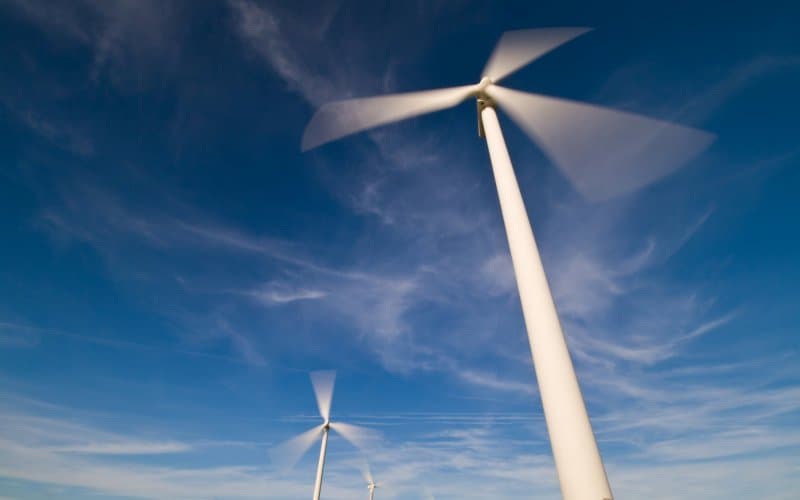
Edita Bromova
Can wind turbine rotor tips spin at supersonic speed?
Small wind turbines can reach 30 to 60 revolutions per minute, but larger ones spin more slowly at a rate of perhaps only ten revolutions per minute. What may look like slow motion from a distance is actually quite fast…
Read the answerWant to ask something?
Send us an e-mail with the subject "Physics mysteries" to the address below, or use the contact form.
We can't wait to tackle your interesting questions!