The Processing of Radioactive Waste
5 min read · Energy Atlas Editorial
Liquid radioactive waste can be evaporated, filtered, biocleaned or flocculated. Solid waste can be pressed, incinerated, vitrified or fixed in synrock.
Radioactive waste must be safely managed for as long as it may present a hazard to people and the environment. Before storage or disposal, waste is therefore treated and conditioned as necessary to make its handling safer, reduce its volume, separate or concentrate radionuclides, and convert it into a stable form. Volume reduction is particularly important for low-level waste, which is often generated in relatively large quantities but contains only limited amounts of radioactive material. Reducing the volume requiring storage or disposal also helps to reduce the associated costs.
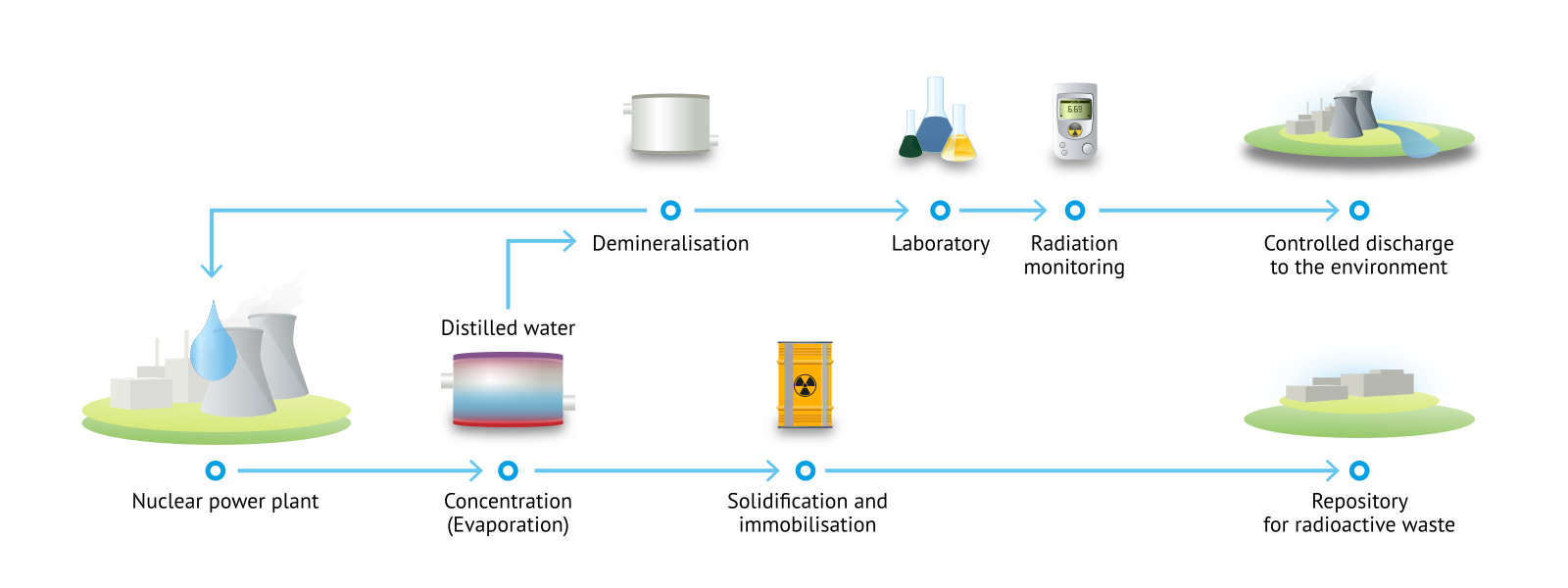
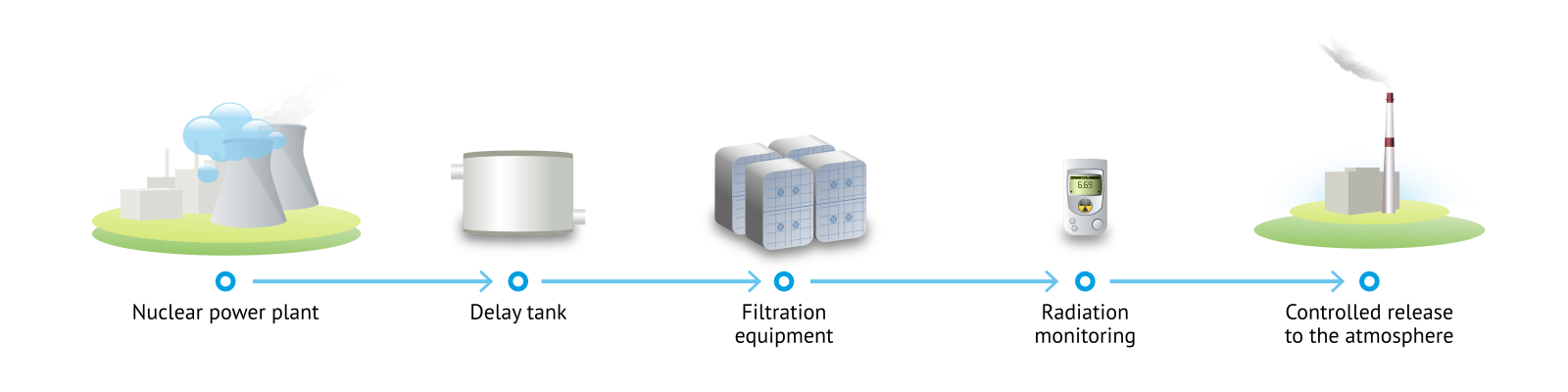
Some low-activity liquid or gaseous effluents cannot reasonably be concentrated and retained indefinitely. After appropriate treatment and monitoring, controlled quantities of radionuclides such as tritium or carbon-14 may therefore be discharged into the environment. Such releases are strictly regulated and must comply with authorised limits established to protect people and the environment.
Waste treatment reduces its volume or separates radionuclides, while conditioning immobilises the remaining radioactive material in a stable form and packaging provides a suitable container for handling, transport, storage and disposal.
The radioactivity and heat output of spent nuclear fuel decrease rapidly after its removal from the reactor, although long-lived radionuclides remain radioactive for thousands of years.
The Processing of Liquid Waste
Video: Schematic diagram of radioactive waste processing.
Evaporation
Evaporation is an effective method for reducing the volume of liquid radioactive waste. Water is evaporated, leaving a much smaller volume of concentrated liquid containing most of the radionuclides and dissolved salts. The concentrate is subsequently conditioned, for example by cementation, for storage or disposal.
Filtration, centrifugation
Filtration and centrifugation are physical separation methods used to remove suspended solid particles from liquid radioactive waste. The separated solids are subsequently treated or conditioned as radioactive waste, while the remaining liquid may undergo further treatment, for example evaporation or ion exchange.
Ion exchange
Ion exchange is widely used to remove dissolved radioactive ions from water, including reactor coolant and other liquid waste streams. The water passes through ion-exchange resins that selectively bind particular ions, including radioactive ones such as caesium and cobalt. Once exhausted, the spent ion-exchange resins themselves become radioactive waste and must be treated and conditioned for storage or disposal.
Solidification and immobilisation
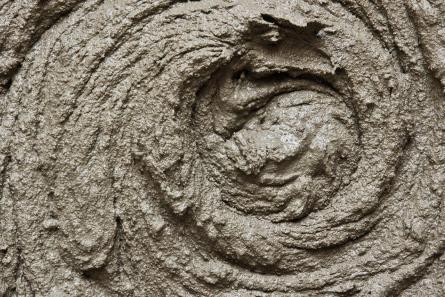
After treatment, concentrated radioactive waste is often immobilised in a stable solid matrix. One of the most common methods is cementation, in which the waste is incorporated into cement. Other methods include bituminisation, in which waste is incorporated into bitumen, and immobilisation in polymer matrices such as polyester or epoxy resins. The choice depends on the properties of the waste and the requirements for subsequent storage and disposal.
Biological treatment
Certain microorganisms can be used in specialised processes to remove or concentrate contaminants from radioactive waste. Radiation-resistant microorganisms, such as Deinococcus radiodurans, have also been investigated for the treatment of radioactive waste containing hazardous chemical contaminants. Biological treatment is used only for suitable waste streams and is much less common than conventional physical and chemical methods.
Chemical precipitation and flocculation
Chemical agents are added to liquid waste to convert dissolved or suspended contaminants into insoluble particles. These particles aggregate into larger flocs that can be separated by sedimentation or filtration. Since the process does not remove all radionuclides, precipitation and flocculation are often combined with other treatment methods.
The Processing of Gaseous Waste
Gaseous radioactive effluents may contain radioactive noble gases, volatile iodine compounds, tritium, carbon-14 and radioactive aerosols. Short-lived radioactive gases can be retained in delay tanks or passed through delay systems, allowing their activity to decrease by radioactive decay before controlled release. Other radionuclides may require filtration, adsorption or other treatment. All gaseous effluents are monitored before release and must comply with authorised discharge limits.
Gaseous effluents may also contain radioactive aerosols. These solid particles can be removed by high-efficiency filters and subsequently managed as solid radioactive waste. Volatile radionuclides such as iodine can be captured by suitable sorbents, for example activated charcoal or specialised filter materials.
The Processing of Solid Waste
Compaction
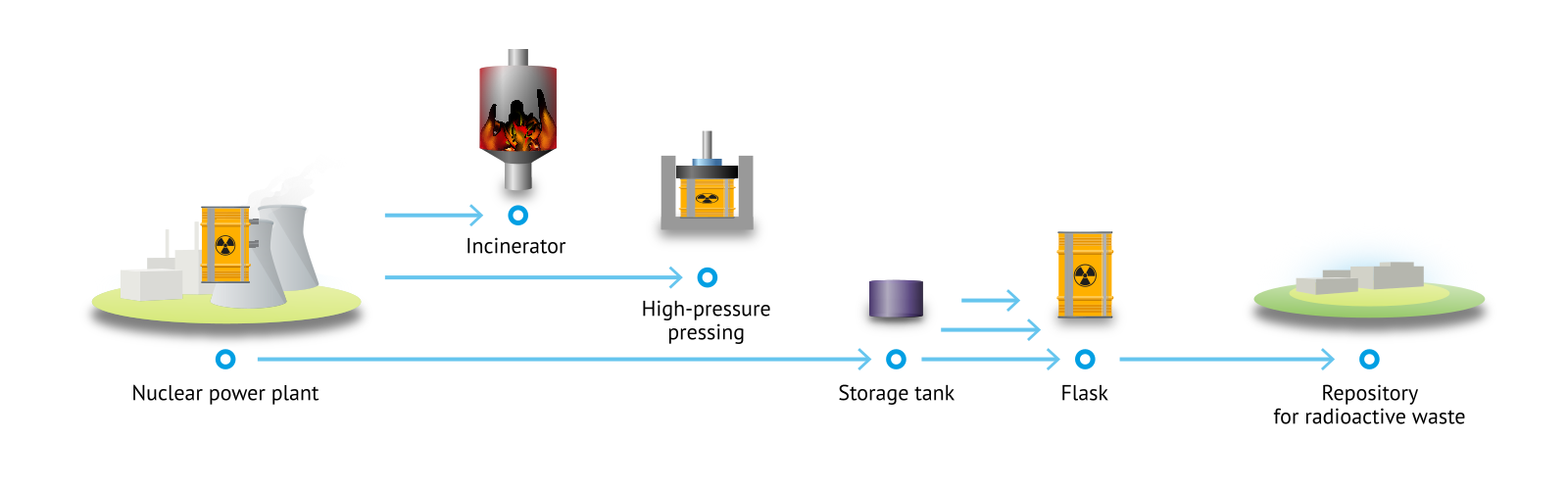
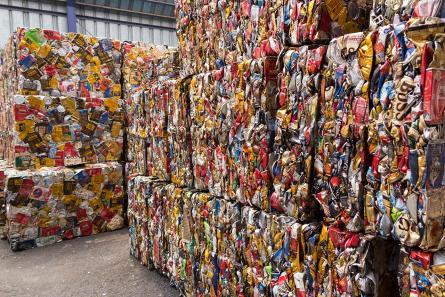
Compaction is one of the simplest methods for reducing the volume of compressible solid radioactive waste. Waste may be compacted directly into drums, while supercompaction uses much higher pressure to compress filled drums into dense packages or "pucks". This can substantially reduce the volume required for subsequent storage and disposal and makes waste handling more efficient.
Incineration
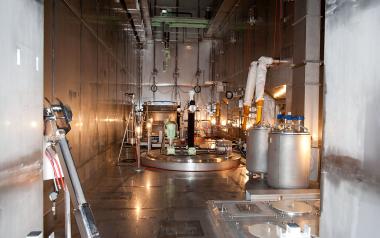
Combustible radioactive waste may be incinerated, producing a much smaller volume of ash in which most of the non-volatile radionuclides are concentrated. The resulting ash is subsequently conditioned as radioactive waste. Gases and aerosols produced during incineration pass through treatment and filtration systems before controlled release.
Synrock (synthetic rock)
Synroc (synthetic rock) is a ceramic waste form developed in Australia in the late 1970s for the immobilisation of radioactive waste. It incorporates selected radionuclides into durable mineral-like crystalline structures. Several compositions of Synroc have been developed for different waste streams, particularly for highly radioactive and long-lived waste.
Packaging
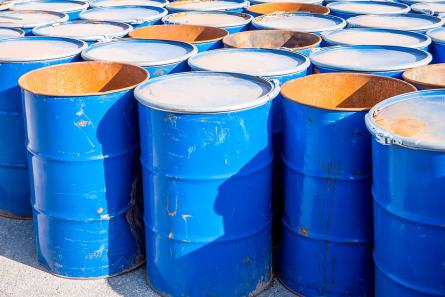
After treatment and conditioning, solid or solidified radioactive waste is placed in suitable containers to form stable waste packages. Depending on the type of waste and its intended storage or disposal route, containers may be made of steel, concrete or other durable materials and may also provide additional shielding and mechanical protection.
Vitrification
Vitrification is widely used to immobilise high-level liquid waste produced during the reprocessing of spent nuclear fuel. The concentrated waste is mixed with glass-forming materials and heated until it becomes incorporated into a molten glass, usually borosilicate glass. The molten material is poured into durable metal canisters, where it cools and solidifies. Glass provides a stable and highly durable waste form with low leachability, making vitrification particularly suitable for immobilising high-level and long-lived radioactive waste for eventual geological disposal.
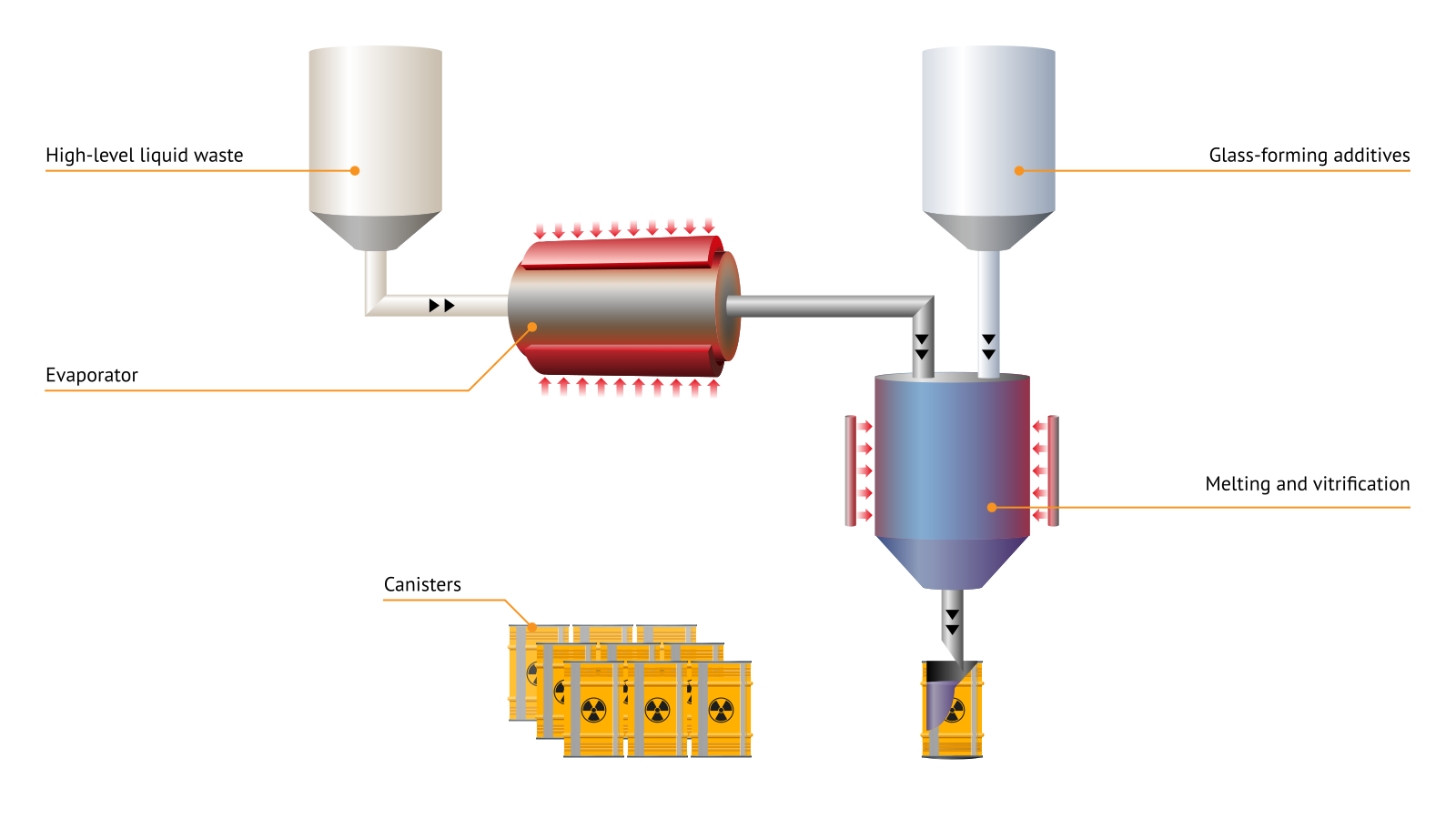
Vitrified high-level waste is usually poured into stainless-steel canisters while molten and allowed to cool into a solid glass waste form suitable for long-term storage and eventual geological disposal.
Keep reading
Articles
Radioactive Waste
Radioactive waste is classified as low-level, intermediate-level, or high-level; as solid, gaseous, or liquid. Each type needs different handling.
3 min read
Production of Radioactive Waste
Radioactive waste, produced in medicine or industry, is low-level or intermediate-level waste. Spent nuclear fuel is high-level radioactive waste.
3 min read
Types of Radioactive Waste
The radioactive waste is classified by radioisotope content, activity level (low, intermediate, high-level), or state (solid, gas, liquid).
4 min read
The Disposal of Radioactive Waste
For radioactive waste with short-lived isotopes, a surface repository is sufficient, while long-lived isotopes must be isolated in a deep repository.
3 min read