Jaroslav Kores, Ph.D.
Why does water in a kettle bubble before it reaches the boiling point (90° +) and when the kettle turns off and the thermometer reads 100 °C, it no longer does?
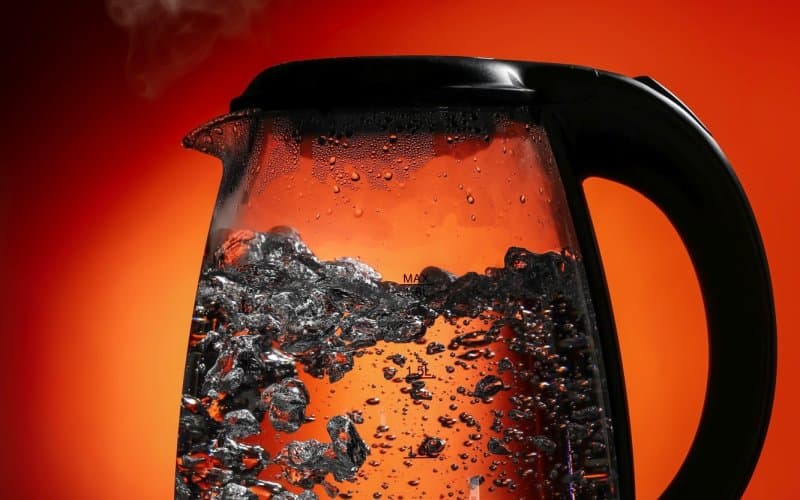
Boiling is a special case of evaporation — its peculiarity is that it occurs at a specific temperature (the boiling point) and at this temperature, evaporation takes place throughout the entire volume of water (which are the mentioned bubbles) and not just on its surface.
The boiling point of water depends on the pressure above the surface of the liquid. Although we all say that water boils at 100 °C, that is the boiling point at normal atmospheric pressure, which is 1,013 hPa. The value of atmospheric pressure depends on the weather (which we surprisingly use in weather forecasting) and altitude. The higher we are, the lower the atmospheric pressure. Therefore, the given value of normal atmospheric pressure is adjusted to sea level. For example, I live in a city that is 400 meters above sea level which means I will measure a lower pressure. (960 hPa). At such a pressure, water will boil at a temperature of approximately 97 °C (unless the pressure is higher or lower due to weather conditions).
The behaviour of a kettle before boiling is also caused by the fact that water is not a good thermal conductor. The water near the heating element can have a temperature higher than 100 °C and will start boiling directly at the bottom, even though the temperature of the upper layers will be slightly lower. After the kettle is turned off, the bottom remains hot and can thus heat the rest of the water but it does not have sufficient power to cause boiling. In order for water to boil, we actually need much more energy than just to heat the water.
The fact that the boiling point depends on pressure is utilized, for example, in pressure cookers (water can boil at up to, for example, 120 °C), or in nuclear power plants. Due to high pressure, we can have liquid water in the primary circuit even at temperatures exceeding 300 °C.
More mysteries
Keep exploring questions other readers asked.
Jaroslav Kores, Ph.D.
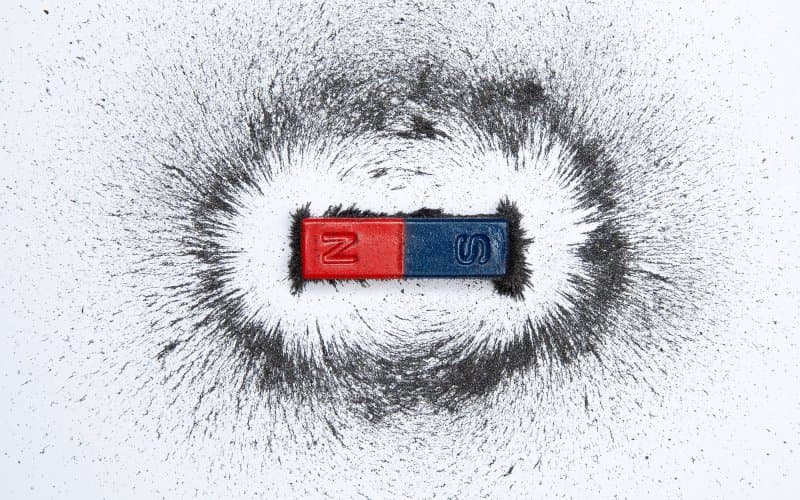
Does a permanent magnet have a permanent magnetic field? Can it be depleted?
Because electricity and magnetism are closely related (they are actually different manifestations of the same phenomenon), the magnetic properties of substances are related to electrons. Each electron is a (very small) m…
Read the answer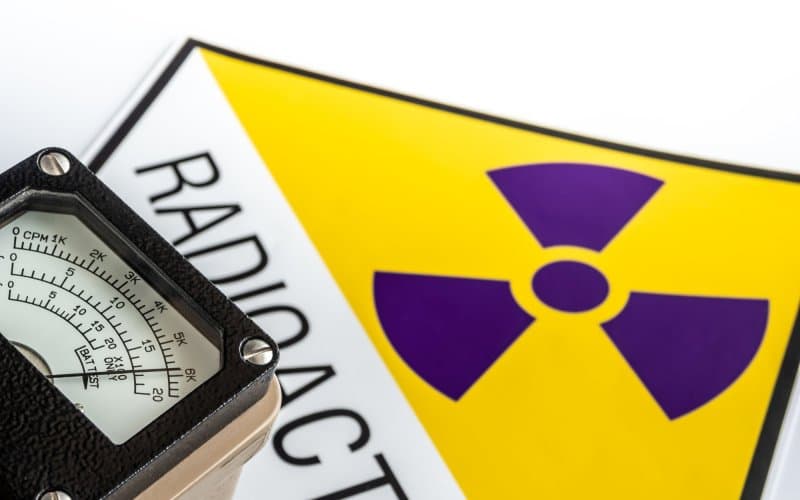
Jaroslav Kores, Ph.D.
Does temperature affect the rate of radioactive decay?
Temperature does have an effect on the speed of particle movement, but this effect is minimal compared to the influence of nuclear forces and therefore, (except under extreme conditions) the half-life of nuclei at differ…
Read the answer
Jaroslav Kores, Ph.D.
How are calories burned in your body? How is it calculated how many calories I burn during various activities?
First, I need to clarify the difference between calories and units of energy, which are joules. Calories were previously used to determine the value of heat and it has been shown (for example in the First Law of Thermody…
Read the answerWant to ask something?
Send us an e-mail with the subject "Physics mysteries" to the address below, or use the contact form.
We can't wait to tackle your interesting questions!