Jaroslav Kores, Ph.D.
Where does all the light go when I turn the lights off?
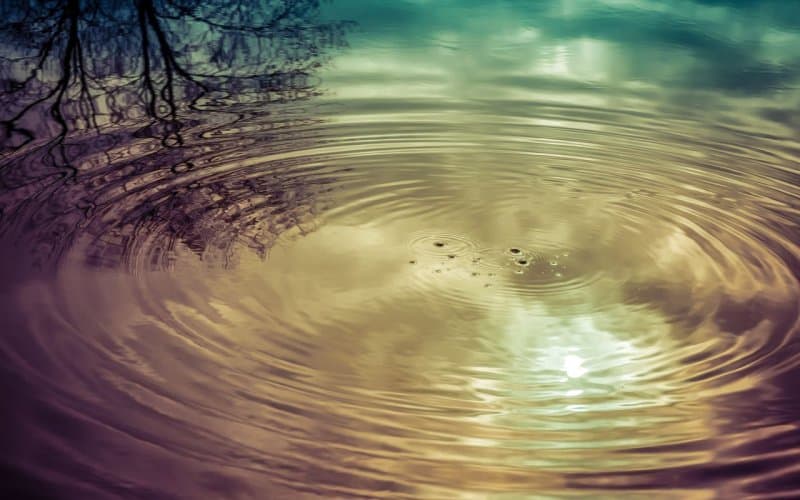
Like sound or waves in water, light is a wave, only in the case of light, it is an electromagnetic wave while sound is a mechanical wave. So if I describe the waves on the water surface, we can imagine the behavior of light in the same way. Instead of a room without windows, we will describe an arbitrarily large swimming pool with water. If we throw a stone into a pool, we will see the waves propagate from the point of impact. Their height determines how intense the waves are (or how loud the sound is or how much light shines). The waves will propagate through the swimming pool and we will see how their height decreases when they touch the edge of the swimming pool the waves will bounce and propagate back.
When they bounce, their height decreases again. Over time, the wave deflection will be so small that we will be no longer able to observe it. The reduction in the height of the waves is caused by the loss of energy — both when bouncing off the swimming pool wall and during the propagation itself. The same phenomena occur with light — there are energy losses caused mainly by reflection and refraction (refraction is the transition of light from the room to the material of walls). We will register a wave reduction in the pool, but with light, it will be completely dark immediately after the source is switched off. How is it possible? This is because light is about 100,000 times faster than waves in water. If 10 seconds elapse between throwing the stone in the swimming pool and the surface calming, the light would dim from extinguishing into darkness in 0.0001 seconds. And we cannot register this with our eyes. I would just like to point out that this is a model example in which I wanted to describe what happens and why, and the times mentioned do not correspond to the real processes.
More mysteries
Keep exploring questions other readers asked.
Jaroslav Kores, Ph.D.
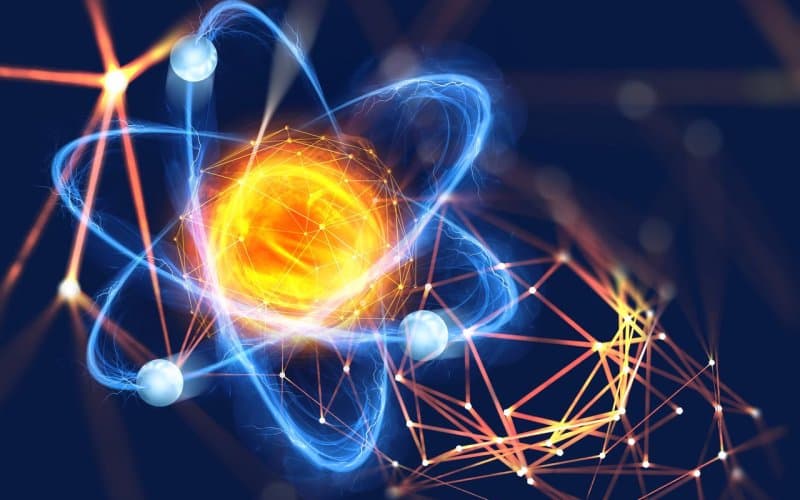
What is the shape of an electron?
Unfortunately, I am not a particle physicist, so I hope that I will not be fundamentally wrong in the fact that my answer is: we do not know. More precisely, we do not know and will not know. In our world (in terms of si…
Read the answer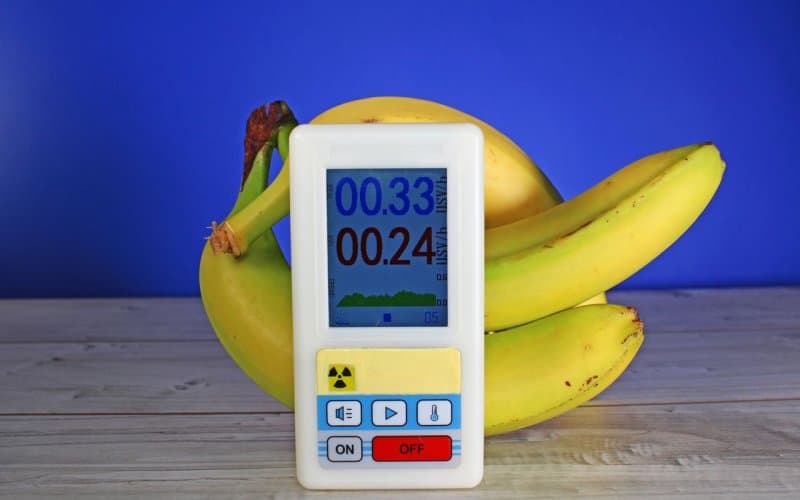
Jaroslav Kores, Ph.D.
How many bananas can I eat so not to get radiation sickness?
Personally, I wouldn't be afraid that someone could die of a banana overdose. Although the "banana equivalent" is given as an auxiliary unit describing radiation, I do not think that its value reflects the real effect of…
Read the answer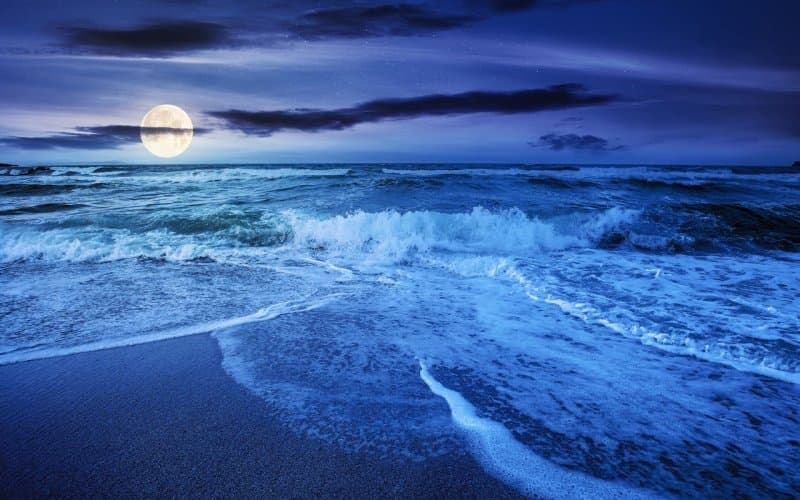
Jaroslav Kores, Ph.D.
Why is a tidal wave at the opposite side of the Earth than the Moon?
You correctly describe that the tide is caused by the gravitational force of the Moon. The magnitude of the gravitational force depends, among other things, on the distances of the bodies. Therefore, gravity acts the mos…
Read the answerWant to ask something?
Send us an e-mail with the subject "Physics mysteries" to the address below, or use the contact form.
We can't wait to tackle your interesting questions!