Jaroslav Kores, Ph.D.
What phenomenon explains that I have much more power with a pulley and I can pull a heavier object than when I lift it normally?
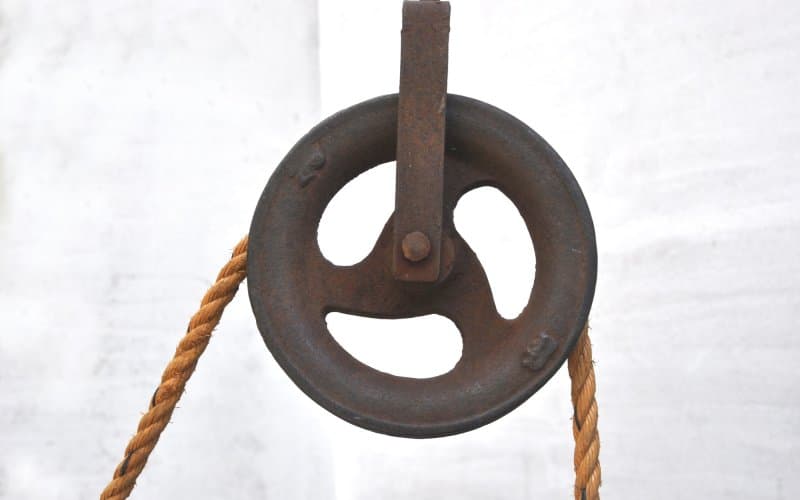
Although it may seem that a pulley (or an inclined plane or a lever) are special machines, using some strange aspect of physics, the opposite is true — these machines (we call them collectively simple machines) prove that everything works as it should and confirms the most basic principles of physics. Specifically, they confirm one of the building blocks of physics — the law of conservation of energy. Energy is closely related to work and we use simple machines exactly for work. In this context, it is necessary to realize that simple machines do not save (reduce) our work but they simplify it. Because if they saved us work, we would be in divergence of the law of conservation of energy. Any simple machine will (ideally) do as much work as the work we put into it. The total amount of energy thus does not change. The amount of work done depends on the amount of force we apply and the path the body has taken. If you imagine a pulley or maybe a lever, then we pull the rope (press the lever) and thanks to this, some weight on the other side moves. If I act on a simple machine with half the force of the weight of the weight and move the machine by e.g. 1 metre, the weight on the other side will rise by half (i.e. half a metre). The work I did on one side of the machine (I moved a certain path by force) is the same as the work done by the simple machine on the other side (it exerted twice the force but half the path). Mathematically it would look like this: F1 × s1 = F2 × s2
There are many types of simple machines and mainly their applications (lever — scissors, hoist, screw, and wheel on a shaft) but the principle is still the same — the less force I apply, the more distance I have to cover. From a purely physical point of view, simple machines are therefore "no win", because in the end, thanks to resistance forces, they increase the amount of work that we have to do but from a practical point of view, thanks to them, we are able to multiply the magnitude of the force that we want to exert on a body. But since nothing is for free, we will have to do it longer (over a longer path).
More mysteries
Keep exploring questions other readers asked.
Jaroslav Kores, Ph.D.
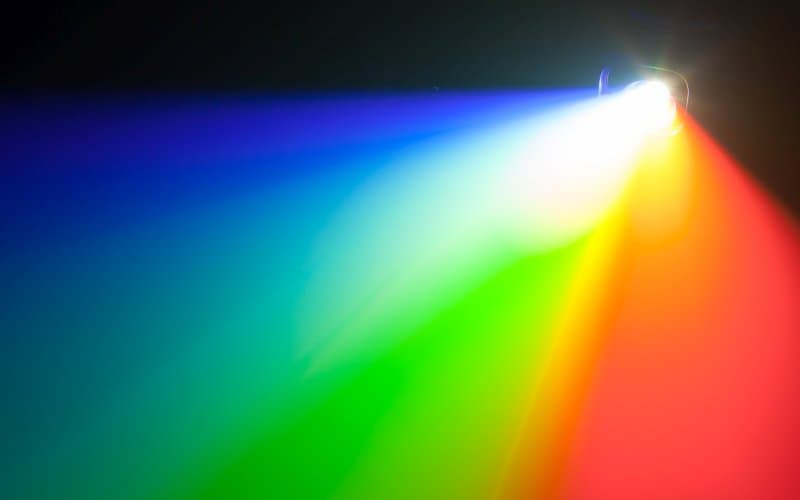
How is it possible to compose any colour from RGB (red, green and blue)?
Our eye has 2 types of light-sensitive cells — retinal rods and cones. While rods respond to less intense light but not to colours, cones are less sensitive to light intensity but respond to colours. That's why we see th…
Read the answer
Jaroslav Kores, Ph.D.
Why and how does a rainbow form?
The formation of a rainbow is one of the proofs that light is an (electromagnetic) wave. When the wave encounters an obstacle, it can bounce off or pass through the obstacle. In the case of passage into an obstacle (and…
Read the answer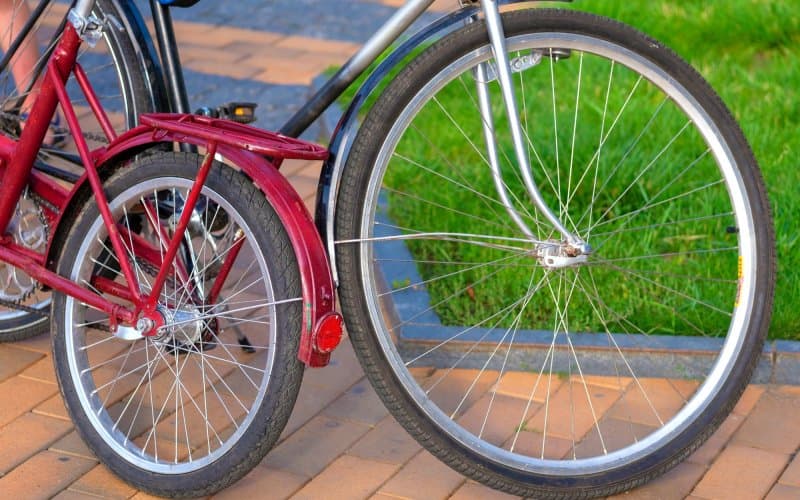
Jaroslav Kores, Ph.D.
Why is it better to ride a bike on the road with bigger wheels than with smaller ones?
Different drag forces act against the movement of bodies, this situation is described as rolling drag. The size of the rolling drag depends on several quantities — the force that pushes the wheel on in our case, the ridi…
Read the answerWant to ask something?
Send us an e-mail with the subject "Physics mysteries" to the address below, or use the contact form.
We can't wait to tackle your interesting questions!