Edita Bromova
How long does it take for a new star to ignite thermonuclear reactions?
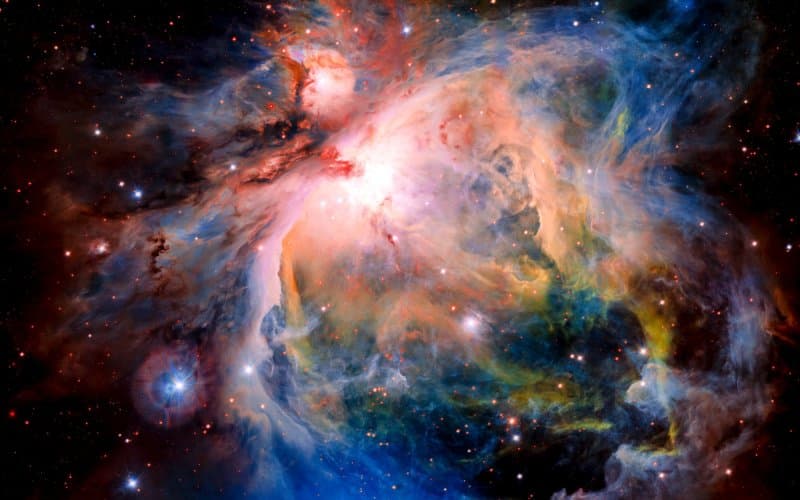
From a cosmic point of view, it happens quite quickly, only a few tens of millions of years are enough. A star begins its life as a large ball of hydrogen that has condensed from a hydrogen cloud. In order for fusion reactions to occur, the hydrogen sphere must shrink enough to increase the pressure in its centre sufficiently. This raises the internal temperature above 15 million degrees which is a necessary condition to ignite the fusion reaction. The compression of the hydrogen sphere is done only by its own gravity and only as fast as the nascent star can get rid of its energy. This is lost in the form of light emitted from the surface and due to how much gas has to "settle" here, the whole process takes 10 million years or more. Then sufficient pressures and temperatures are reached in the core of the protostar and fusion is ignited. As the energy from the fusion offsets the loss of energy from the surface, the star's contraction stops.
A new star is born. Or, also, a new natural fusion reactor.
Compared to how long did it take our sun to ignite fusion, the fact that we still don't have it fully under control after some hundred years of research is quite acceptable.
More mysteries
Keep exploring questions other readers asked.
Edita Bromova
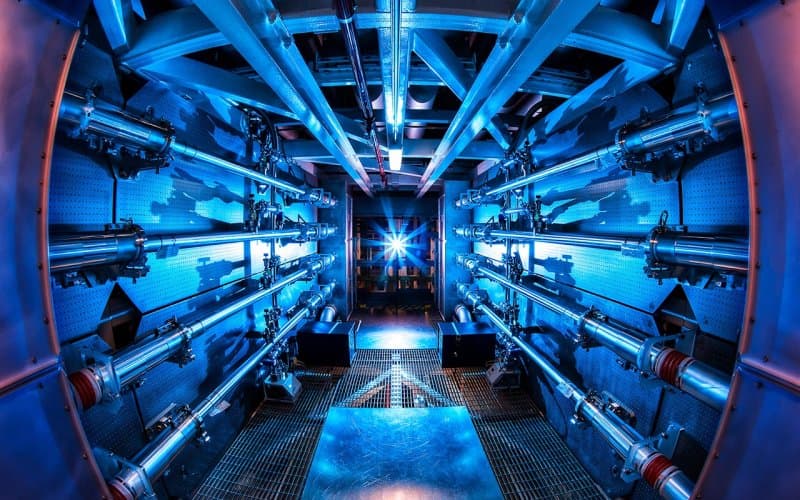
The NIF announced that they had finally achieved fusion. Does this mean we will soon have a fusion power plant?
The success of the National Ignition Facility in an experiment on December 5, 2022, which released 3.15 MJ of energy in a fusion reaction using only 2.05 MJ of energy for the lasers required to ignite this reaction, is u…
Read the answer
Edita Bromova
How big a bucket of water would you need to put out the Sun?
No bucket of water will be big enough to extinguish the Sun. On the contrary, the more water you pour on the Sun, the more it will burn. The fire we normally encounter on the Earth, whether it is a campfire or a candle f…
Read the answer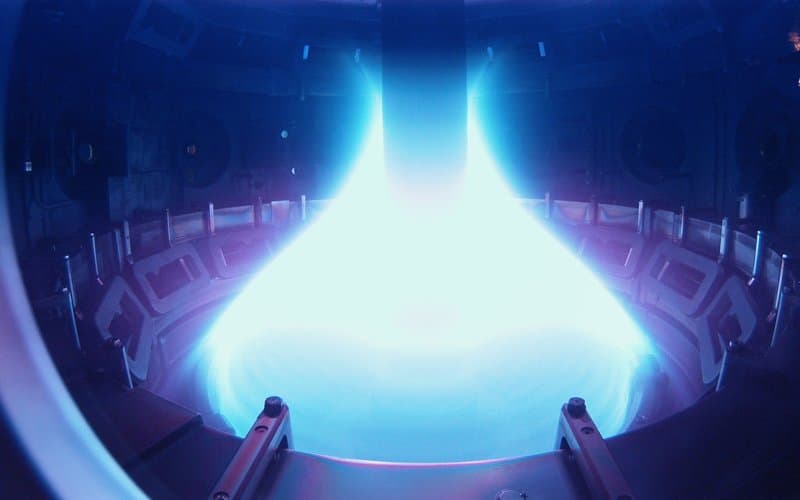
Edita Bromova
How is it that everything around the tokamak doesn’t immediately burn to ashes when it has a temperature of 150 million degrees inside?
If matter was in direct contact with an object 150 million degrees hot, it would certainly not only melt, but also vaporize and immediately turn into plasma. But the extremely hot plasma core in the tokamak is not in suc…
Read the answerWant to ask something?
Send us an e-mail with the subject "Physics mysteries" to the address below, or use the contact form.
We can't wait to tackle your interesting questions!