Jaroslav Kores, Ph.D.
Why is a higher pressure at depth when the water is incompressible?

The fact that there is higher pressure in greater depth is not related to compressibility of the fluid but with its weight. Air, unlike water, is compressible and there is also higher pressure at sea level than in the mountains. The air pressure calculation is more complicated than water because for water, we assume that its density is still the same (because it is incompressible).
What is fluid pressure caused by? I will try to explain it with the example of air.
For example, above our head, there is a column of air which reaches a height of about 100 km. All this air is being pulled to the Earth. So we all have a column of air above our heads that weighs about 3 tons (I take the head as a circle with a diameter of 20 cm). It's similar with the water. If we dive to a depth of 10 meters, we have a column of water above our heads which again weighs about 3 tons. If we dive to 2x greater depth, the water column will have 2x more weight. And therefore there will be the impact of two times more pressure on us.
It's not that easy with air. When we are at an altitude of 50 km, we will be in the middle of the atmosphere. There will be a 50 km column of air above us, but because the air is compressible, its density will not be half, but 1,000 times smaller at the higher altitude and therefore, there will be 1,000 times lower pressure. Finally, I will specify that water is in fact also compressible (although minimally and under high pressure) so the above calculations only work at relatively small depths.
More mysteries
Keep exploring questions other readers asked.

Jaroslav Kores, Ph.D.
How would the atomic bomb explosion look like in outer space?
Whether we eliminate aggressive aliens or giant asteroids in movies, an explosion in space is always a spectacular thing. How would the explosion of an atomic bomb in space vacuum really look like? I am not an expert on…
Read the answer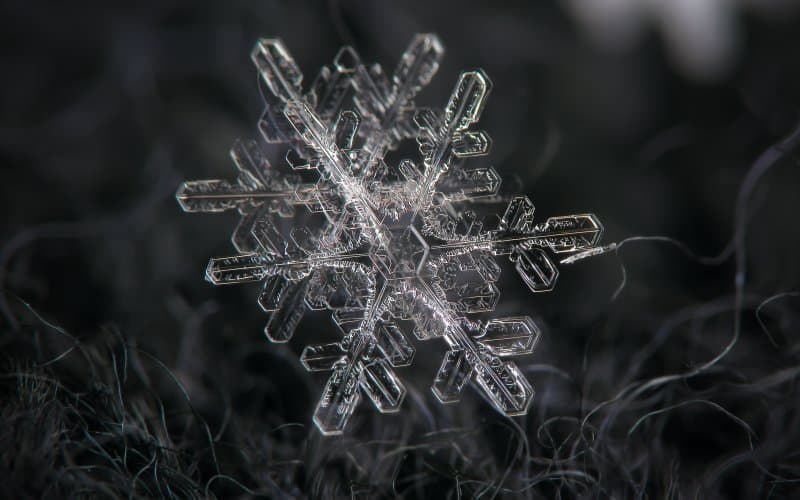
Jaroslav Kores, Ph.D.
Is it possible to create two identical snowflakes?
I wouldn't say two identical snowflakes can't exist — it's rather unlikely. There are about 10,000,000,000,000,000,000 ice crystals in a snowflake that randomly coalesce when the snowflake is formed. That's 100,000 times…
Read the answer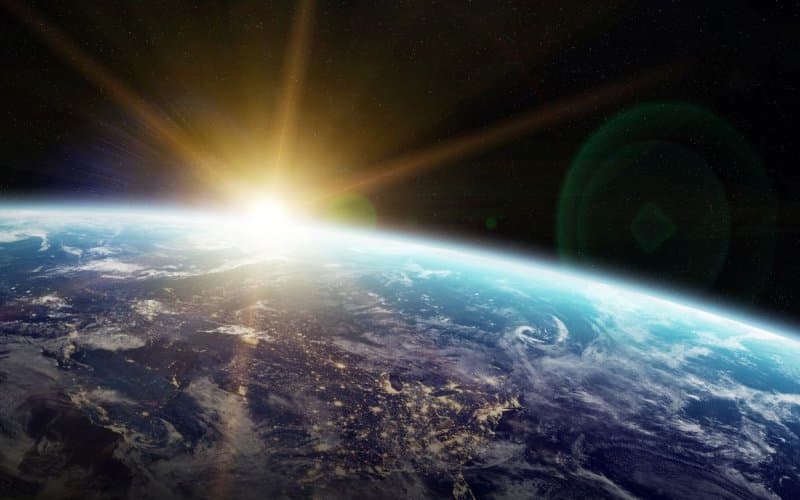
Jaroslav Kores, Ph.D.
How fast is gravity?
The special theory of relativity shows that it is not possible for any information to spread faster than the speed of light. Thus, the Earth would "learn" of the disappearance of the Sun at the same time that the light f…
Read the answerWant to ask something?
Send us an e-mail with the subject "Physics mysteries" to the address below, or use the contact form.
We can't wait to tackle your interesting questions!