Jaroslav Kores, Ph.D.
Is the electricity returning to the power plant?
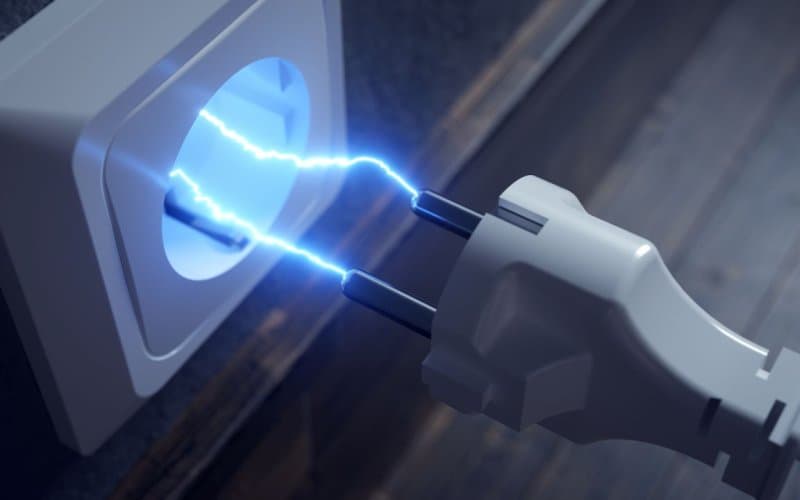
I will try to explain the question with an analogy of the postal services. We use electricity to fulfil its work and the post office to send packages. In the case of the electricity, charged particles (especially electrons, but also ions) do the work. At the post office, the postman does the work (in the case of Amazon, a drone is planned). In the case of the post office, it is clear that it is best for us that the postman would return to the post office after delivering the letters so that he can continue the next day.
It's the same with electricity — we also need the electrons to come back so that they can do the work in the electrical circuit again. The postman and the electron are the ones who do the work and we need them to do the work constantly (more precisely, that the postman would return to work). We will achieve this with the postman with money — he will receive a salary for the work done and it will motivate him to come to work the next day. In the case of an electron, the motivation is the source of electric power (battery, power plant). Because electrons have a negative charge, they are attracted to the positive pole of the source. So such an electron is sent out from the power plant (from the negative pole) and is attracted to the positive pole. To get to it, we build it a path (conductor) and somewhere along the way we build it an obstacle (appliance), which it will have to overcome. This will do the job (the appliance will work) and the electron will reach the negative pole of the source. From its source, it is moved "against its will" to the negative pole and the whole process is repeated. This relocation requires energy and the source (power plant) obtains it, for example, from chemical reactions, light or heat. The bigger the "plus" that is in front of the electron, the faster it will move (and the harder the obstacle can be that is in its way).
The given example describes the so-called direct current (e.g. a battery). At home we have alternating current in the socket. In this case, the poles change and the electron oscillates from one side of the conductor to the other, doing the work again.
More mysteries
Keep exploring questions other readers asked.
Jaroslav Kores, Ph.D.
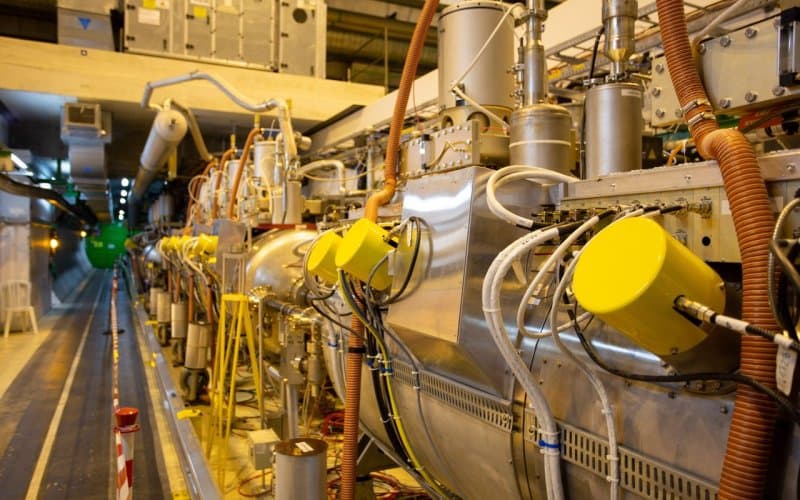
What would happen to a man inside a particle accelerator?
It could be expected that outside of sci-fi movies, we will not know how a human would end up if they were exposed to the current of really accelerated particles in the accelerator, but in the 1970s, something similar ha…
Read the answer
Jaroslav Kores, Ph.D.
How wide is the rainbow?
Light colour is made by its frequency and as you write correctly, light is a type of electromagnetic wave and is specific "only" by that it is about the frequencies we see. The frequency of the electromagnetic waves can…
Read the answer
Jaroslav Kores, Ph.D.
Text in a car’s rearview mirror
A convex mirror is used in a car's rearview mirror — this is the reason it always creates a reduced and inverted image. But the image that is created is reversed. If you want to shake your right hand with your image in t…
Read the answerWant to ask something?
Send us an e-mail with the subject "Physics mysteries" to the address below, or use the contact form.
We can't wait to tackle your interesting questions!