Jaroslav Kores, Ph.D.
Do mushrooms really contain heavy metals?

Yes, mushrooms, like other plants, contain elements that they draw into themselves from the surrounding soil. Compared to other plants, however, mushrooms can absorb a greater number of different elements. This is thought to be caused by the mycelium, a tangle of fine filaments that are in the ground and spread over a large area (the largest mycelium is said to be several square kilometres in area).
Different elements can be stored in larger quantities in mushrooms thanks to their porosity — a large number of different pores and tubes for the same volume (weight) significantly increases the surface of the mushroom, and therefore also the space where the mushroom can store unnecessary materials that it pulled from the ground.
The mass of elements (not only heavy metals) that the mushroom contains depends on the place where it grows. If it grows in a place with environmental stress or near a road, there are much more harmful elements in the ground than in a mushroom that we pick in the forest in the wild.
I even read of a case in which (edible) mushrooms pulled up so much arsenic from the subsoil that it caused poisoning — the concentration in the mushrooms was much greater than the concentration in the soil in which they were growing.
More mysteries
Keep exploring questions other readers asked.

Jaroslav Kores, Ph.D.
According to what pattern do sunrises, sunsets, moonrises and moonsets change?
The movements of bodies in the central gravitational field are described by Kepler's laws, of which only law 3 has the form of a formula. Isaac Newton used Kepler's laws to formulate (his) law of gravity ...
Read the answer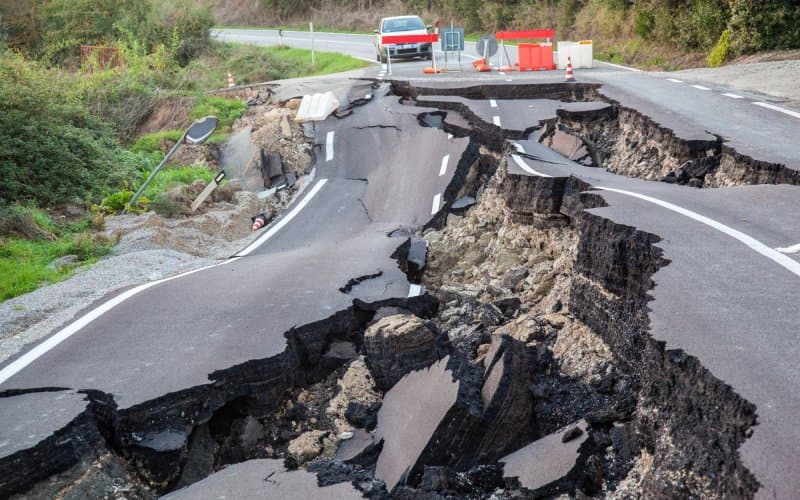
Jaroslav Kores, Ph.D.
Why is it not possible to effectively predict earthquakes?
An earthquake is caused by a sudden release of mechanical stress between (or within) lithospheric plates. I'm not a geologist, but I believe this stress is caused by temperature differences and other phenomena that occur…
Read the answer
Jaroslav Kores, Ph.D.
Why does a tsunami wave only go in one direction and not in all directions?
A tsunami wave, like other waves, spreads in all directions but the effects of a tsunami are observed only in certain places, so it may seem that the tsunami wave is moving in only one direction. Tsunami waves are caused…
Read the answerWant to ask something?
Send us an e-mail with the subject "Physics mysteries" to the address below, or use the contact form.
We can't wait to tackle your interesting questions!